
Blessed Sacrifice Empowers Villages
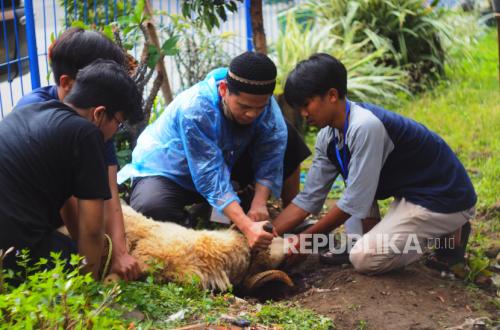
Entering this year’s Hajj season, there will once again be a colossal momentum of Islamic philanthropy, namely the Sacrifice (Kurban) ritual, as a highly recommended sunnah taught by Islam to its followers. To capitalise on this momentum, BAZNAS has recently launched the idea of “Kurban Berkah Berdayakan Desa”. The vision of BAZNAS’s kurban empowerment is not born solely from normative spaces but is grounded in the empirical realities of Indonesia’s development.
Data from the Central Statistics Agency (BPS) shows that Indonesia has more than 74,000 villages, which form the basis of life for the majority of the national population. In its rural statistics publication, BPS emphasises that villages still face structural challenges such as limited economic access, low productivity, and development disparities compared to urban areas (BPS, 2023). Thus, every economic intervention targeting villages has the potential for broad and systemic impact.
In the context of livestock farming, villages hold a highly strategic position. The Ministry of Agriculture of the Republic of Indonesia records that more than 90% of beef cattle farming businesses in Indonesia are small-scale rural people’s farms, with an average ownership of 2–3 animals per household (Directorate General of Livestock and Animal Health, Ministry of Agriculture, 2022). This means that every direct purchase of sacrificial animals directly touches village household economies. When one cow is valued at around Rp20–25 million, large-scale purchases during Eid al-Adha will become a significant flow of funds from cities to villages.
The national economic value of kurban is also substantial. The National Board of Zakat Amil (BAZNAS) records that kurban transactions in Indonesia could reach around Rp21 trillion in 2025, with Rp2.3 trillion managed by BAZNAS Committees, Amil Zakat Institutions (LAZ), and Zakat Management Units (UPZ) across Indonesia. Studies from the BAZNAS Strategic Studies Centre state that the annual kurban potential is estimated at Rp34 trillion (BAZNAS, 2025). This positions kurban as one of the largest philanthropic instruments in Indonesia, occurring simultaneously. From a regional economic perspective, this phenomenon can be understood as a domestic economic transfer from urban to rural communities, which, if managed well, will create multiplier effects for the local economy (Todaro & Smith, 2015).
Furthermore, the livestock sector is closely linked to food security and nutritional fulfilment for society. Data from the Food and Agriculture Organization (FAO) indicates that Indonesians’ animal protein consumption remains relatively low compared to the global average (FAO, 2021). Meanwhile, BPS records national beef consumption at 2–3 kg per capita per year, which is considered low compared to other developing countries (BPS, 2023). In this context, the kurban momentum holds strategic value as a mechanism for distributing animal protein to society, especially in areas with limited access to nutritious food.
A sacrificial cow can produce around 100–150 kg of meat, which can be distributed to dozens to hundreds of families. With targeted distribution, kurban can contribute to improving community protein intake, which in the long term impacts health quality and human resource development (FAO, 2021). In other words, kurban not only has a social worship dimension but also serves as a community-based nutritional intervention.
However, this great potential has not yet been fully optimised. Many kurban practices remain short-term consumptive, without links to village farmer empowerment systems. Yet, development literature emphasises the importance of a value chain approach in improving rural community welfare (Porter, 1985; Kaplinsky & Morris, 2001). In this framework, kurban should be positioned as part of the livestock ecosystem: from breeding, fattening, to distribution.
The “Kurban Berkah, Berdayakan Desa” approach offers a firm perspective, namely positioning kurban as a sustainable village economic empowerment instrument. Through farmer coaching, improved market access, and equitable distribution, kurban can drive village economic independence. Additionally, transparency and data-based reporting are crucial to meet the demands of modern society that seeks tangible impacts from every philanthropic contribution (Ebrahim & Rangan, 2014).
Kurban is not merely an annual ritual but has potential as a transformational force. It connects the spiritual dimension with the economy, channels resources from cities to villages, and strengthens food security and community nutrition. If managed strategically and data-based, “Kurban Berkah, Berdayakan Desa” is not just a slogan but a real movement towards independent and empowered villages.
This interpretation of kurban as an empowerment dimension becomes increasingly relevant when viewing the structural facts of Indonesia’s economy: money and economic activities are far more concentrated in cities than in villages. BPS data shows that rural household consumption is around Rp1.711 trillion or approximately 14% of total national consumption of Rp8.269 trillion. This means that more than 80% of the national money circulation is concentrated in non-village areas (cities). This disparity illustrates that villages remain areas with relatively low purchasing power and economic turnover.
This gap is not only evident from the consumption side but also from the economic structure. Various development studies show that industrial activities, modern services, and investments are more concentrated in urban areas, while villages still rely on primary sectors such as agriculture and livestock. As a result, there is an income distribution disparity and economic opportunities between cities and villages. Even, the