
BKPM Unveils New Strategies for Indonesia to Compete with Vietnam
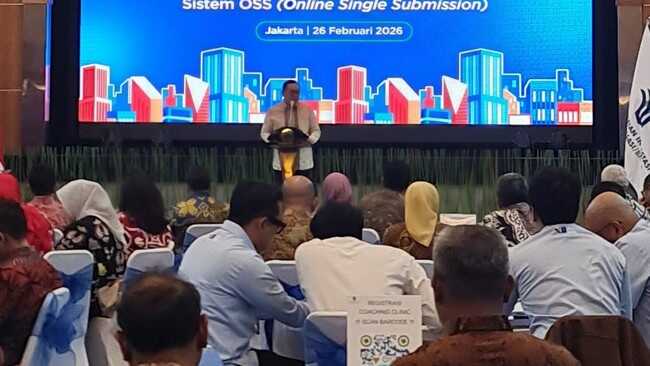
Jakarta, CNBC Indonesia - The government continues to improve the business licensing system in order to achieve an economic growth target of 8% while strengthening Indonesia’s competitiveness in the region.
Deputy Minister of Investment and Downstreaming/Deputy Head of BKPM, Todotua Pasaribu, emphasized that licensing reform through the revision of PP 28 is one of the keys to achieving current economic growth of around 5.11%, as well as competing with Vietnam, which has an economic growth of around 7%.
According to him, the licensing service plays a major role in encouraging the realization of investment. He assessed that the investment cycle in Indonesia is still relatively long compared to Vietnam, partly due to the licensing process which is considered complicated, thus slowing down the execution of investment.
Reduce Investment Cycle, OSS Continues to be Upgraded
As a concrete step, the government implements a Service Level Agreement (SLA) to provide certainty in the time for licensing services. The SLA is a service contract that sets performance standards, quality, and the responsibilities of the service provider to ensure certainty, transparency, and accountability.
For example, business licenses in the hotel sector are targeted to be issued within approximately 28 days, as an effort to accelerate the national investment cycle. This is accompanied by a post-audit scheme where the Business Identification Number (NIB) can be issued first while the technical process and subsequent licensing continue to completion.
Todotua admitted that the initial implementation of the reform through PP 28 had faced obstacles, especially on the OSS platform. Many inputs came from micro-enterprises regarding the difficulty of obtaining a Business Identification Number (NIB) due to business location requirements. The government continues to update the system based on this input.
One of the updates made is the implementation of a self-reporting mechanism for business locations through the OSS, especially for micro and low-risk businesses. This scheme allows the NIB to be issued faster because the licensing process is adjusted to the level of business risk, while technical verification is still carried out in the next stage.
The number of businesses registered on the OSS currently reaches around 15 million, an increase from around 10.9 million since the beginning of the cabinet’s inauguration last October. Although it shows positive developments, the government emphasizes that the OSS system will continue to be improved by involving stakeholders.
With licensing reform and strengthening the OSS, the government hopes that investment can increase, accelerate economic growth towards a higher target, and strengthen Indonesia’s competitiveness with competing countries in the region.
Vietnam and the Ability to Attract Investment
Vietnam is currently the prima donna of ASEAN. Vietnam’s foreign direct investment (FDI) in 2025 remains solid. Total registered foreign investment reached US$38.42 billion, up slightly by 0.5% compared to 2024, while disbursed FDI is estimated at US$27.62 billion, up 9% and the highest level in the last five years.
From a sectoral perspective, manufacturing and processing are still the main drivers. Of the total FDI realization, this sector absorbed approximately US$22.88 billion or 82.8%. The next position is occupied by the real estate sector at US$1.93 billion, followed by the electricity and gas sector at around US$914.9 million.
In the number of new projects, Vietnam issued permits for 4,054 new projects with a registered capital value of around US$17.32 billion.
The number of projects increased sharply, but the value of new project capital actually decreased, signaling a trend of smaller-sized projects.
Even so, the composition of new project sectors is still dominated by manufacturing and processing with a value of around US$9.8 billion or 56.5% of new investment, followed by real estate at around US$3.67 billion or 21.2%.
How is the Licensing Process in Vietnam?
Foreign investors entering Vietnam must go through a special foreign capital licensing system which is procedural. Basically, there are two main documents: the Investment Registration Certificate (IRC) and the Enterprise Registration Certificate (ERC), which have different functions and can be followed by additional permits according to the business sector.
The IRC is a permit that approves investment projects and allows foreign investors to invest capital and operate in Vietnam. This document contains investment details such as capital value, location, duration, and field of business, and is mandatory for most companies with foreign ownership, especially if the portion of foreign shares is significant or the business sector is limited.
After the IRC is issued, the company must obtain an ERC, which is a business license that establishes the legal status of the company. The ERC contains basic company information such as name, address, capital, and legal representative, and is mandatory for all companies in Vietnam. However, for foreign investors, the ERC can only be obtained after the IRC is approved.
The licensing process in the ERC usually takes 3-7 days while in the IRC it takes about 2-4 weeks.
CNBC INDONESIA RESEARCH
[email protected]
source on Google