
BKPM Streamlines Land-Based KKPR Procedures: Impact on Micro Enterprises
BKPM Streamlines Land-Based KKPR Procedures: Here’s How It Impacts Micro Enterprises
Jakarta, CNBC Indonesia – The Ministry of Investment and Downstreaming/Capital Investment Coordinating Board has issued Circular Letter of the Minister of Investment and Downstreaming/Head of BKPM Number 1.S Year 2026 concerning the Provisions for Issuing Land-Based Land Use Suitability Certificates (KKPR) for Micro Enterprises.
This mechanism streamlines previously complex procedures, making the process simpler, faster, and less burdensome for small businesses, without neglecting the principles of spatial planning and local government oversight.
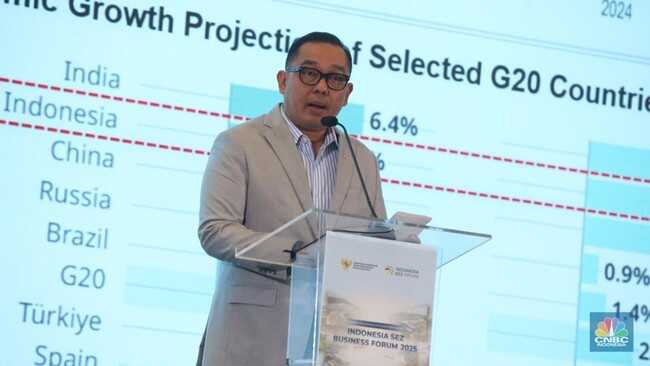
“We want micro-enterprises to no longer be burdened by complicated procedures. Through a self-declaration on the Online Single Submission (OSS), the process becomes faster and simpler, but remains accountable. This is a concrete form of support to ensure that small businesses can quickly operate legally and productively,” said Deputy Minister of Investment and Downstreaming/Deputy Head of BKPM, Todotua Pasaribu, during a press conference at the Ministry of Investment and Downstreaming/BKPM office, Jakarta (24/2/2026).
This press briefing was also attended by Deputy Minister of Micro, Small and Medium Enterprises (MSMEs), Helvi Yuni Moraza, and Director General of Spatial Planning at the Ministry of Agrarian Affairs and Spatial Planning/National Land Agency, Suyus Windayana.
Business owners simply need to fill in the business location data, including administrative information, complete address, land area, one coordinate point, and a photo of the front of the location. After the data is entered, business owners submit a self-declaration of the suitability of the business location through the OSS system. This ease of access still prioritizes the principles of spatial planning suitability, as well as oversight by local governments for business activities with high-risk levels.
To date, 14.9 million micro-enterprises have obtained a Business Identification Number (NIB) in the OSS system. This number represents 96.9% of the total number of registered NIBs. This achievement demonstrates the high enthusiasm of micro-enterprises to enter the formal sector. With the simplification of Land-Based KKPR, the business legalisation process is becoming increasingly easier and more integrated.
Furthermore, Todotua said that this policy also provides a solution for business owners who have already submitted applications.
“For micro-enterprises whose applications are still in process before this Circular Letter takes effect, we will provide the opportunity to re-submit through a simpler mechanism. This is part of our commitment to ensure that no micro-enterprises are hindered by transitional policy procedures,” he said.
This policy is part of the commitment of the Ministry of Investment and Downstreaming/BKPM in strengthening the micro-enterprise ecosystem. The ease of Land-Based KKPR is expected to encourage business formalisation, expand access to financing, and increase the competitiveness of micro-enterprises. This step also reaffirms that ease of licensing is an important instrument in driving inclusive and sustainable economic growth.
For the record, OSS is an integrated electronic business licensing system managed by the Ministry of Investment and Downstreaming/BKPM. Through OSS, business owners can manage Business Identification Numbers (NIBs), risk-based licenses, and various technical approvals online without having to go through repetitive administrative processes.
This system is integrated with ministries/agencies and local governments, ensuring a more efficient and coordinated licensing process. As part of business licensing reform in Indonesia, OSS supports increased ease of doing business, accelerated investment, and strengthened formalisation and competitiveness of business actors, especially micro, small and medium enterprises (MSMEs).
(miq/miq) Add as a preferred source on Google [Gambas:Video CNBC]