
BKPM Reveals Major Potential for Downstreaming in Non-Mining Sectors
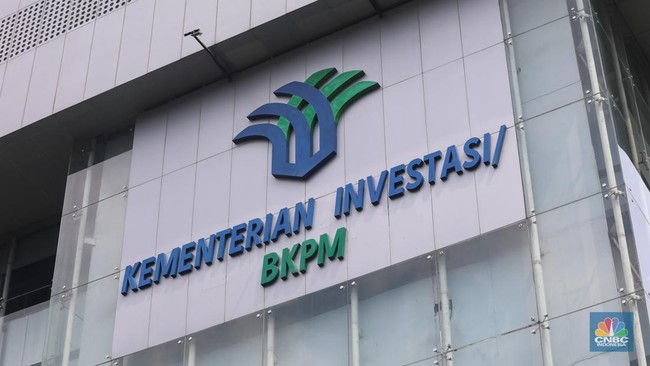
Jakarta, CNBC Indonesia - The downstreaming agenda is not limited to the mining sector. Other sectors also offer significant potential in the downstreaming process.
Deputy Minister of Investment and Downstreaming/Deputy Head of the Investment Coordinating Board (BKPM), Todotua Pasaribu, stated that downstreaming is implemented to obtain added value from various domestic commodities. The downstreaming agenda is also pursued to drive economic growth, job absorption, and knowledge transfer.
“We all understand that our natural resources in minerals, coal, oil, and gas will one day run out. However, our natural resources also have enormous potential when we talk about the agriculture, plantation, and forestry sectors,” Todotua explained during the CNBC Indonesia Economic Update 2026, themed ‘Performance Achievements and Direction for Strengthening Priority Programmes’, on Wednesday (24/6/2026).
In the agriculture sector, Indonesia has the potential of palm oil. According to him, this commodity can be utilised as a source of renewable energy.
“We are entering the B40 concept, and now we even want to move towards the B50 concept. Why? Because we have strength in our CPO and its utilisation,” Todotua elaborated.
Beyond palm oil, renewable energy such as biofuel or ethanol as an alternative to petrol and gas can also be obtained from various agricultural products containing glucose.
“Sugarcane, maize, cassava, aren palm, sorghum, and so on,” he added.
Furthermore, the government is currently establishing a mandatory E20 bioethanol fuel type. This petrol type, blended with 20% bioethanol, is set to be implemented by 2028.
“To get there, we need a consolidation of approximately 5 million kilolitres of ethanol. The existing consolidation plan in Indonesia is only around 120,000 kilolitres,” he revealed.
According to him, the government will conduct a groundbreaking for an ethanol plant in Lampung Province this coming August. This plant will have a total consolidation capacity of 240,000 kilolitres.
“Why Lampung? Because Lampung has everything. Lampung has all the sources. It is the largest producer of cassava, maize, and so on,” he said.
He also addressed the downstreaming agenda for fisheries. According to him, the government will encourage the shipbuilding industry to maximise the potential of fish in Indonesian waters.
The government has already provided support in the form of 1,500 fishing vessels through the Kampung Nelayan (Fishermen’s Village) programme.
“Kampung Nelayan. This is our programme to upscale. We have to look at these potentials,” he asserted.