
BKPM Responds to Letter from Chinese Businessmen to Prabowo
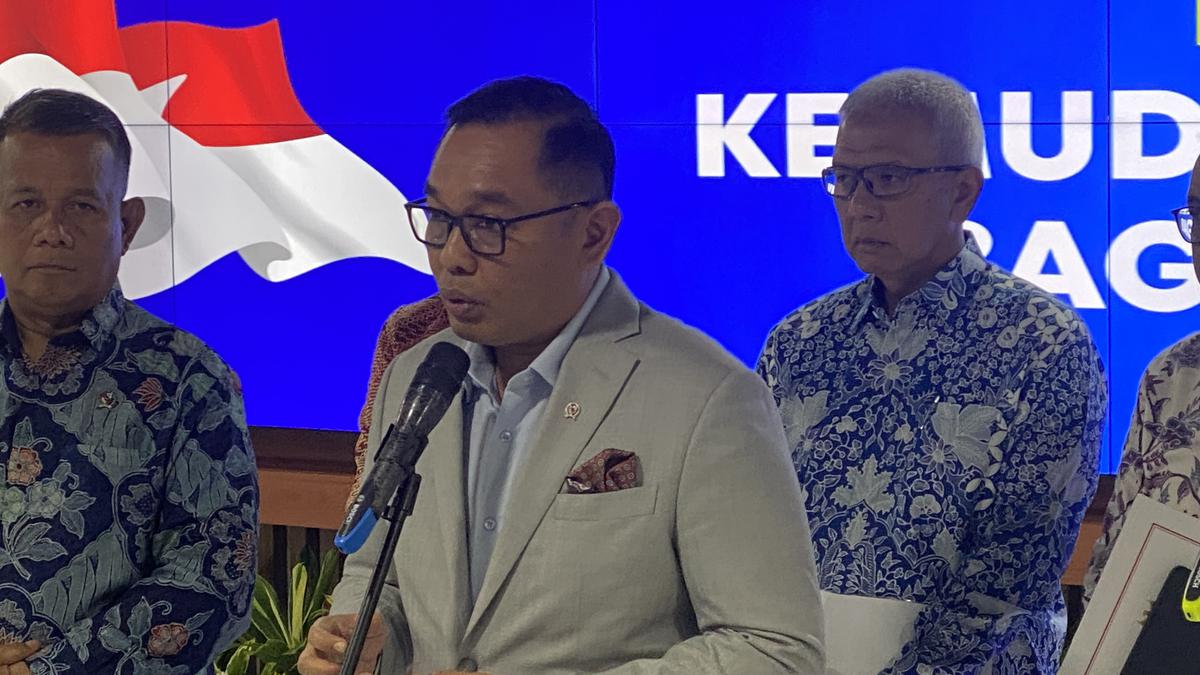
The Ministry of Investment and Downstreaming/Investment Coordinating Board (BKPM) has responded to a letter sent by the China Chamber of Commerce in Indonesia (Chinese Kadin in Indonesia) to the government regarding the state of the investment climate in the country.
Deputy Minister of Investment and Downstreaming/Deputy Head of BKPM, Todotua Pasaribu, considers the letter as positive input for the government in improving the national business and investment climate.
“We regard it as something positive that provides input to the government,” Todotua stated, quoted from Antara on Wednesday (13/5/2026).
According to him, the content of the letter essentially contains concerns from Chinese investors about several challenges they see in conducting business in Indonesia.
“It’s quite normal. They even note conditions that pose challenges in this country and provide input to the government,” he said.
Previously, the China Chamber of Commerce in Indonesia sent a letter to President Prabowo Subianto containing various highlights related to investment regulations, export proceeds obligations (DHE), tightening of nickel mining rules, issues with work visas, and law enforcement.
Chinese investors also assess that several new policies have increased operational costs and affected business certainty in strategic sectors such as the nickel industry and energy.
Nevertheless, the government views this input as an important part of maintaining communication with foreign investors.
Indonesia Has Major Advantages
Todotua emphasised that BKPM has the responsibility to create a conducive and competitive investment climate so that Indonesia remains a primary global investment destination.
In his view, Indonesia still possesses various major advantages that keep foreign investors interested in injecting capital.
“This country has various natural resource potentials, then one of the largest market demands with a large population, and also a strategic location. We hope that Indonesia becomes a destination for investment growth,” he said.
He explained that the government is currently focusing on implementing the downstreaming programme, which is one of the main agendas of the Prabowo administration.
The programme is aimed at increasing the added value of various national commodities through domestic processing.
Through downstreaming, the government hopes Indonesia will no longer just be an exporter of raw materials but will be able to produce high-value industrial products.
In addition to increasing state revenues, the policy is also expected to create new jobs and accelerate national economic growth.
Communication with Chinese Investors
Todotua stated that the government continues to encourage the development of processing industries for various strategic sectors, from coal, oil and gas, agriculture, to manufacturing industries.
“The hope is that various commodities in our country, whether coal, oil and gas, agriculture, industry, can be processed here, so that the benefits can be realised and also create jobs, boost economic growth,” he explained.
Regarding communication with Chinese investors, the government assures that space for dialogue will remain open to discuss various investment challenges that arise in the field.
BKPM also considers input from foreign investors important for maintaining Indonesia’s competitiveness amid global competition in attracting investment.
The government hopes that regulatory certainty, policy stability, and strengthening of the downstreaming programme can continue to increase investor confidence in Indonesia.
On the other hand, the letter from the China Chamber of Commerce signals that foreign business actors still pay great attention to the direction of Indonesia’s economic policies, particularly in the energy, mining, and processing industries sectors.