
BKPM: Natural Resource and Green Energy Sectors Most Attractive to Investors
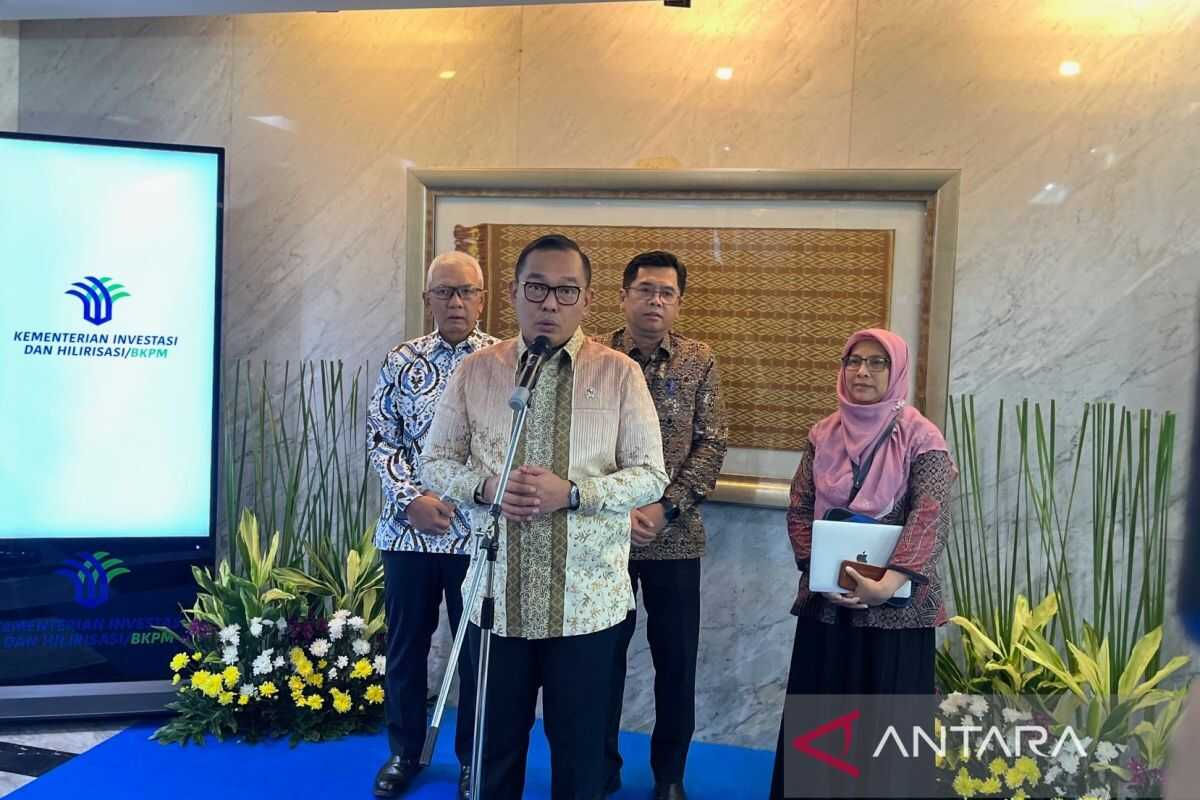
Jakarta (ANTARA) - Deputy Minister of Investment and Downstream Industries/Deputy Head of the Investment Coordinating Board (BKPM), Todotua Pasaribu, stated that sectors based on natural resources (SDA) and green energy are the most sought-after for investment in Indonesia.
“The most sought-after sectors are undoubtedly those related to our resource strengths,” he said when met in Jakarta on Thursday.
Todotua made these remarks in response to questions regarding the dynamics of the United States’ (US) tariff policies and investment sector interests in Indonesia.
He elaborated that the mineral sector, including oil and gas, agriculture, forestry, and maritime industries, are major attractions because Indonesia possesses diverse and abundant natural resource reserves.
Furthermore, the downstream processing of these sectors is also a significant contributor to investment, as it directly involves the processing of natural resources within the country to increase added value.
According to him, the growth of investment in the industrialization and manufacturing sectors also drives increased investment in the logistics sector, as the need for supply chains increases.
“If there is growth in the industrialization and manufacturing sectors, then logistics will also undoubtedly grow,” he said.
The green energy sector is in demand because Indonesia has a large potential for utilization, reaching around 3,700 gigawatts, ranging from solar to geothermal energy.
However, he reminded that the main challenge is to ensure that the investment climate remains conducive, competitive, and sustainable.
According to him, Indonesia must be able to guarantee that the cost of processing resources domestically is not more expensive than in other countries to remain attractive to investors.
“Because we must ensure that the processing of natural resources here is not more expensive than processing in other countries. This is a major challenge for us,” he said.
On Thursday (February 19), the Indonesian and US governments officially signed a reciprocal tariff agreement. In this agreement, 1,819 tariff lines for Indonesian products receive facilities with import duties of up to zero percent.
The products covered include palm oil, coffee, cocoa, spices, rubber, electronic components including semiconductors, and aircraft components.
In addition, the two countries also agreed to eliminate import duties of zero percent for Indonesian textile and garment products through a specific quota scheme.
However, a day after the agreement, on Friday (February 20), the US Supreme Court ruled that President Trump did not have the authority to impose global tariffs based on the International Emergency Economic Powers Act (IEEPA).
The ruling caused the US to begin implementing a temporary global tariff of 10 percent, with plans for the White House to increase it to 15 percent.
Before Congress, Trump stated that almost all countries and companies want to maintain the tariff agreement that was made before the US Supreme Court ruling.
Meanwhile, the Indonesian Coordinating Ministry for Economic Affairs ensured that there would be further discussions with the US after the Supreme Court’s decision, which canceled Trump’s reciprocal tariff policy.