
BKPM Accelerates Business Licensing to Attract Investors
Indonesia’s Ministry of Investment and Industrial Downstream Processing/Investment Coordinating Board (BKPM) is working to attract more investors to Indonesia by accelerating the business licensing process.
This effort is being realised through the issuance of Business Identification Numbers (NIB) strengthened by the refinement of Government Regulation (PP) Number 28 of 2025. Additionally, the online single submission (OSS) system is being optimised to encourage increased realisation of national investment.
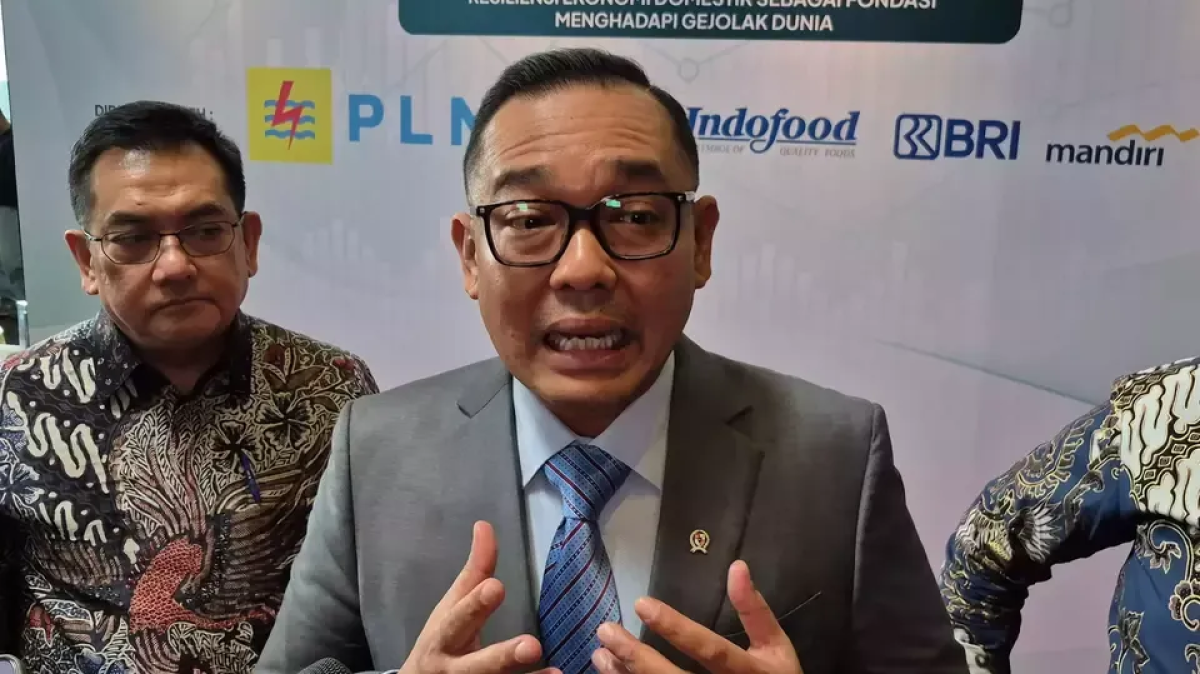
Deputy Minister of Investment and Industrial Downstream Processing/Deputy Head of BKPM, Todotua Pasaribu, stated that licensing plays an important role in determining the speed of investment realisation.
“Licensing services are one of the factors that make a significant contribution to investment realisation. Licensing is the most fundamental matter,” said Todotua at the Ministry of Investment and Industrial Downstream Processing office in Jakarta on Thursday, 26 February 2026.
Approximately 15.4 million business operators have been registered through the NIB. The effectiveness of regulatory improvements and the OSS system will be measured through two main indicators: an increase in the number of business operators and growth in investment realisation.
The government is targeting investment realisation of approximately IDR 13 trillion over the next five years. One important change in PP 28/2025 is the easing of licensing for micro-business operators.
Previously, the requirement for clarification of approval of conformity with spatial utilisation activity (PKKPR) or location permits often hindered NIB issuance. However, micro-business operators can now declare location permits independently through the OSS.
“Now micro-business operators can make their own declarations independently. By simply stating the location permit, the NIB can be issued immediately,” said Todotua.
This policy is considered important because approximately 90% of national business operators come from the micro-business segment.
BKPM is also strengthening the implementation of service level agreements (SLA) with technical ministries and applying the principle of positive fiction. Under this scheme, permits can be issued within agreed timeframes, whilst technical requirements are fulfilled through a post-audit mechanism.
“Previously, you had to wait for all permits to be complete before starting operations. Now we are transforming this so that it runs in parallel, allowing the investment cycle to be shorter,” said Todotua.
As an example, the hotel sector is targeted to obtain permits within 28 days. Even though technical processes such as environmental impact assessments are still ongoing, the NIB can still be issued in accordance with the time commitment, with the technical obligations that business operators must still fulfil.