
BKKBN Promotes Remote Job Access for Equitable Development
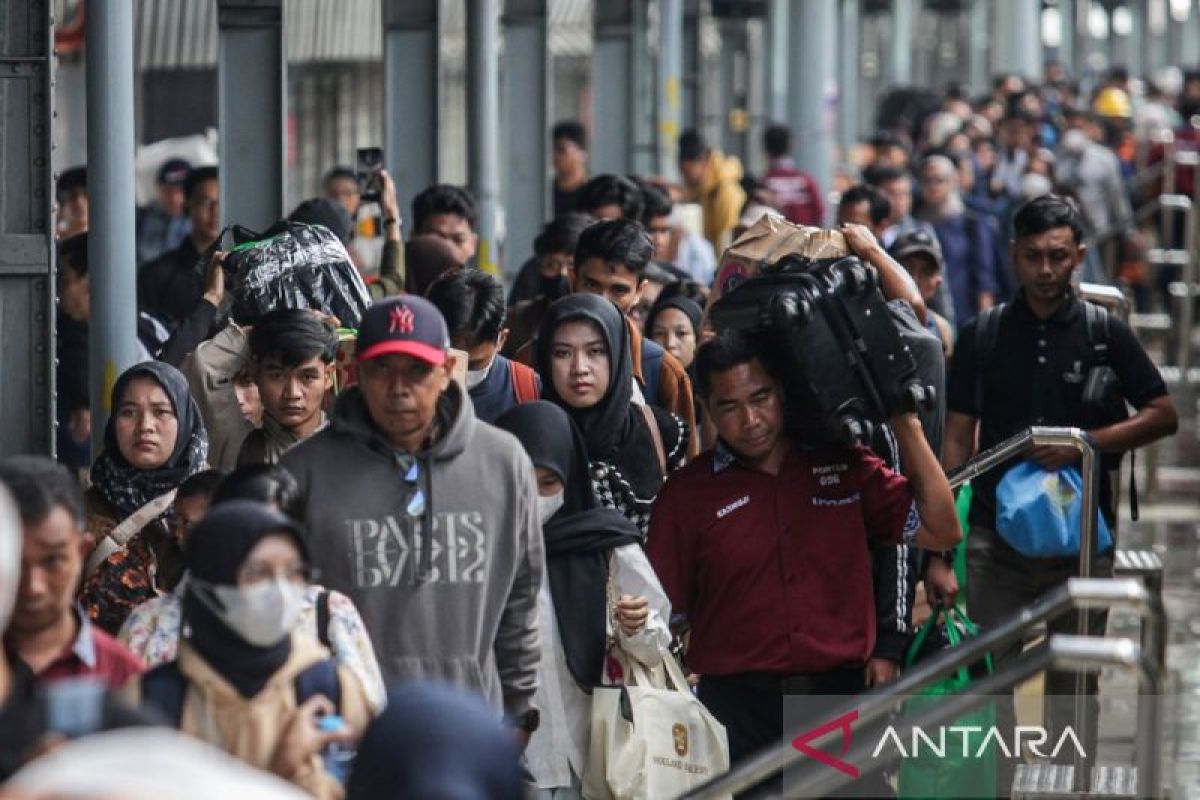
With the support of digitalisation and skill improvement, the productive-age population can continue working without having to relocate to the city.
Jakarta (ANTARA) - The Ministry of Population and Family Development (Kemendukbangga)/BKKBN is promoting wider access to employment that can be reached from anywhere to advance and equalise population development, particularly in villages.
Deputy for Population Control at Kemendukbangga/BKKBN, Bonivasius Prasetya Ichtiarto, stated that the reverse flow is now becoming an increasingly complex phenomenon because many returnees go back to the city with family or relatives to seek jobs and a better life.
“With the support of digitalisation and skill improvement, the productive-age population can continue working without having to move to the city. If job opportunities can be accessed from anywhere, urbanisation can be curbed, and villages will no longer just be sources of labour but new growth centres,” said Bonivasius when contacted in Jakarta on Monday.
Therefore, the work-from-home (WFH) policy currently being discussed by the government to anticipate the energy crisis due to global conflicts is becoming an important alternative in equalising the workforce and reducing accumulation that has so far only occurred in big cities.
He also explained data on economic disparities visible from Gross Regional Domestic Product (GRDP) per capita, where regions like DKI Jakarta and East Kalimantan record GRDP per capita above Rp300 million, while many other provinces are still below Rp60 million. The inequality index, which stands at around 0.38–0.40, also indicates an uneven income distribution.
“Through the Population Development Roadmap (PJPK), BKKBN encourages local governments to strengthen village local economies, starting from precision agriculture, integrated fisheries, to creative economy and ecotourism,” he said.
In that context, he continued, the WFH policy is seen as part of the equitable development strategy. The Eid reverse flow phenomenon can no longer be seen as mere seasonal mobility but has developed into a new wave of urbanisation that increases pressure on big cities, including in energy consumption.
He emphasised that the reverse flow, which is larger than the outbound flow, must serve as an alarm for national population policy. Without proper intervention, the demographic bonus risks turning into a demographic burden.
“The demographic bonus will only be optimal if villages become new growth centres. That way, people no longer need to flock to the city, and development can be more equitable and sustainable,” he stated.