
Bitter Reality for Oil Markets: No Recovery Even if US-Iran Peace Deal Is Reached
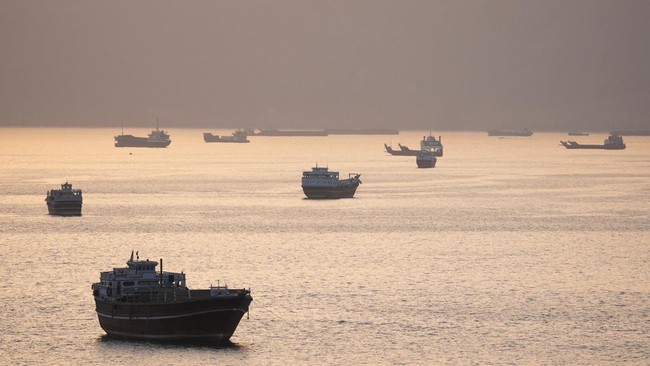
Jakarta, CNBC Indonesia – Global oil markets face a new reality post-Iran conflict, with exports through the Strait of Hormuz unlikely to return to normal levels. This stems from shipowners now weighing the risk of sudden combat in the Persian Gulf region. Citing CNBC International report on Monday, 1 June 2026, Western commercial vessels are likely to hesitate traversing the Strait of Hormuz if the route remains under Iran’s de facto control. This concern is exacerbated by the requirement to coordinate with Iran’s Revolutionary Guard Corps, risking US sanctions violations. This bleak scenario has highly unpredictable consequences given the Strait of Hormuz’s critical role in global energy markets. Freedom of navigation in the strait had never been seriously challenged until Iran closed the maritime route in response to the US and Israel’s offensive launched on 28 February. Iran’s blockade of the Strait of Hormuz has triggered the largest oil supply disruption in history, pressuring the US to quickly reach an agreement as global economic threats escalate. Tehran appears to be leveraging this significant influence to strengthen its control over the strait in any peace settlement aimed at ending the war. Middle Eastern leaders believe Iran has now fully seized control of the Strait of Hormuz. This was stated by Amos Hochstein, former senior adviser on energy and national security for former US President Joe Biden. ‘No matter what happens, Iran will control the Strait of Hormuz in the near future. What’s in the agreement no longer matters. Everyone in the region believes this,’ Hochstein told CNBC. Oil tanker traffic through the Strait of Hormuz prior to the conflict may represent the peak of transit for the foreseeable future. This view was expressed by Helima Croft, Global Commodities Strategy Head at RBC Capital Markets. ‘Any end to the conflict that allows Iran to maintain operational control and influence over the Strait of Hormuz will result in significantly lower flows through the waterway, in our view,’ Croft stated in a client note on Thursday. Traffic under full Iranian control is projected to rebound to only 60-70% of pre-war volumes. This forecast was made by Richard Meade, Editor-in-Chief of Lloyd’s List, during a briefing on 21 May. ‘This will not trigger a recession like some of the doomsday scenarios we previously discussed, but it precludes a return to pre-war conditions,’ Meade added. Meade continued that the situation creates something far more dangerous for international trade. ‘This creates something more dangerous: a permanently divided strait where access depends on political alignment rather than freedom of navigation,’ Meade added. Red Sea Crisis Offers Bitter Lesson The geopolitical crisis that crippled shipping in the Red Sea serves as a stark example of how political instability can disrupt major trade routes far longer than initially anticipated. The Iran-aligned Houthi militant group began attacking commercial vessels in November 2023 in response to Israel’s war in Gaza. Attacks commenced on 19 November with a cargo ship hijacking and continued with missile and drone strikes for two full years. As a result, daily traffic through the Bab el-Mandeb Strait, the main route connecting the Red Sea to the Gulf of Aden, plummeted by over half—from 75 vessels on 19 November 2023 to just 31 by 30 January 2024. Even over two years after the incident, shipping traffic through the strait has not returned to pre-crisis levels. One of the biggest lessons from the Red Sea crisis is that a group does not need a massive naval fleet to cause major disruptions to global maritime trade routes. This theory was outlined by Tomer Raanan, a maritime risk analyst at Lloyd’s List. Although the Houthis have not attacked ships in the Red Sea since late last year, this has not been sufficient to restore shipping volumes to 2023 levels. This was explained by Jack Kennedy, Head of Middle East Country Risk at S&P Global Market Intelligence. It remains uncertain whether the Strait of Hormuz will experience shipping paralysis similar to the Red Sea crisis. Commercial shipowners are forced to decide whether they trust any US-Iran agreement, if solidified, to provide adequate security assurances for their vessels. The current ceasefire is likely to persist temporarily as the Trump administration appears to prioritise improving commercial vessel access through the Strait of Hormuz, Kennedy noted, citing a shift in US policy focus. However, if Iran ultimately agrees to open the Strait of Hormuz unconditionally for international transit, traffic recovery to levels