
'Bitcoin Toll' in Strait of Hormuz, Legislator Urges Government to Mitigate Indonesian Ships
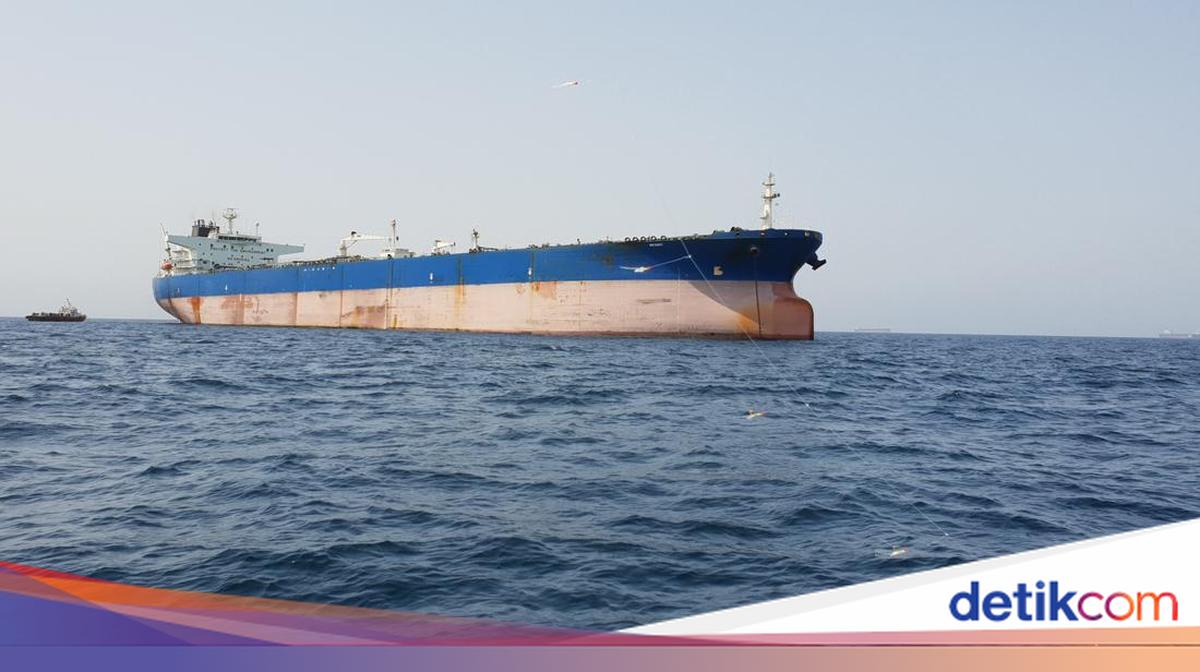
NasDem Deputy Chair of the DPR RI’s Inter-Parliamentary Cooperation Agency (BKSAP), Amelia Anggraini, has spoken about the fate of two Pertamina-owned tankers that remain detained in the Strait of Hormuz. She warned that the vessels could potentially be subject to a ‘bitcoin toll’ levy in response to Iran’s new policy.
“I view the situation of the two Pertamina tankers currently detained in the Persian Gulf area as a matter that requires serious collective attention, particularly from the government,” Amelia told reporters on Saturday (10/4/2026).
This member of DPR RI’s Commission I stated that there has been no news regarding the Pertamina tankers in the Strait of Hormuz. She said the government must prepare mitigation steps before Indonesian ships are subjected to the cryptocurrency levy.
“To date, we in Commission I of DPR RI have not received any information or certainty about whether the two ships will be subjected to the levy, but with Iran’s new policy, the potential remains open. Therefore, mitigation steps must be taken immediately, both through diplomatic channels and international maritime security coordination,” she said.
Amelia emphasised that the most important thing at present is to ensure the safety of the crew, the security of national energy cargoes, and the certainty of distribution routes. Commission I of the DPR will request an official explanation from the Foreign Ministry regarding the current geopolitical situation.
“Regarding the meeting with the Foreign Ministry, at the first opportunity, we in Commission I of DPR RI will request an official explanation from the Ministry of Foreign Affairs regarding developments in this situation in the near future,” said Amelia.
“We in the DPR also need to ensure that the state is present in protecting national interests, including strategic assets such as energy ships and the safety of Indonesian citizens. In addition, we will also push for active Indonesian diplomatic steps, both bilaterally and through international forums, to maintain regional stability and guarantee freedom of navigation,” she added.
It is known that Iran has begun requiring ships passing through the Strait of Hormuz to pay a “toll fee” in the form of crypto assets. The amount of the crypto tariff imposed is equivalent to US$1 or Rp17,122 per barrel of oil cargo on the ship during a two-week ceasefire with the United States (US).
Spokesman for the Iranian Oil, Gas, and Petrochemical Products Exporters Union, Hamid Hosseini, explained that this step is one of Tehran’s strategies to avoid international sanctions by utilising financial systems beyond the reach of the US.
In its implementation, ships wishing to cross the Strait of Hormuz must first send an email to Iranian authorities about what cargo they are carrying. After that, they will be charged the appropriate tariff, and only after payment is received may they pass through.
“Once the email arrives and Iran completes its assessment, ships are given a few seconds to pay with bitcoin, to ensure they cannot be tracked or seized due to sanctions,” said Hosseini to the Financial Times, quoted Friday (10/4/2026).