
BI's Full Decision: Rate Raised to 5.25% to Support the Rupiah
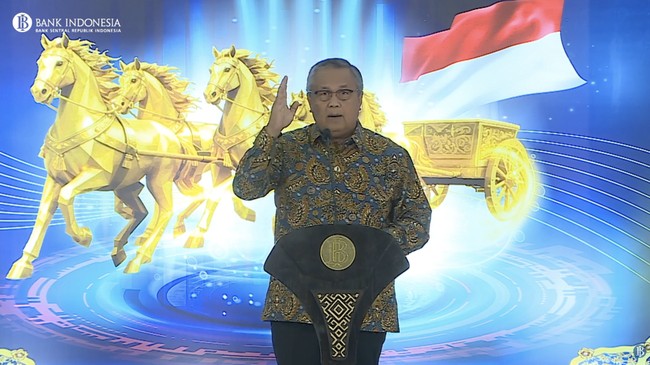
Jakarta, CNBC Indonesia - The Bank Indonesia Board of Governors’ meeting on 19-20 May 2026 has officially decided to raise the BI Rate to 5.25%. The increase in the BI Rate is a sharp rise of 50 basis points, after the policy rate had remained at 4.75% since November 2026. The BI Rate increase in this round is accompanied by a 50 basis-point rise in the Deposit Facility rate to 4.25%, and a 50 basis-point rise in the Lending Facility rate to 6.00%.
BI Governor Perry Warjiyo said the move is a further measure to strengthen the stabilisation of the Rupiah against the impact of heightened global volatility stemming from the war in the Middle East. “As well as a pre-emptive step to keep inflation in 2026 and 2027 within the government-set target range of 2.5±1%,” Perry said at a press conference in Jakarta, Wednesday (20/5/2026).
Perry emphasised that the decision aligns with a pro-stability monetary policy focus to bolster Indonesia’s external resilience against global volatility. Meanwhile, macroprudential and payments policy remains oriented to support growth (pro-growth).
Looser macroprudential policy is also being reinforced to promote growth by increasing credit/financing to the real sector while maintaining financial system stability. As for the payments policy, it continues to be directed to support digital economy activity and inclusive financial services through expanding digital payment acceptance, strengthening the structure of the payments-system industry, and improving the reliability and resilience of payment-system infrastructure.
The stance of the monetary, macroprudential, and payments policy mix to strengthen stability and support sustainable economic growth is also backed by the following policy measures:
- Strengthen the effectiveness of monetary policy implementation to stabilise the Rupiah and keep inflation in 2026 and 2027 within the target 2.5±1%, by:
increasing the intensity of foreign exchange intervention to reinforce Rupiah stabilisation via Non-Deliverable Forward (NDF) transactions in offshore markets and spot transactions and Domestic Non-Deliverable Forward (DNDF) in the domestic market;
improving the structure of interest rates on pro-market monetary instruments in line with the BI Rate rise to continue attracting portfolio inflows to domestic financial assets; and
maintaining adequate liquidity in the money and banking markets by ensuring double-digit growth in Primary Money (Uang Primer) in line with monetary expansion, including through transactions of Government Securities (Surat Berharga Negara, SBN) in the secondary market in a measured manner.
- Strengthen loosening of macroprudential policy to enhance flexibility in liquidity management and promote banking intermediation, including non-credit financing and non-DPK funding, while maintaining financial stability through:
loosening the Macroprudential Intermediation Ratio (RIM) policy by expanding coverage and strengthening criteria for securities/corporate sukuk owned and issued by banks used as the basis for RIM calculations, effective from 1 July 2026;
increasing the Macroprudential Liquidity Incentives (KLM) by offering an additional incentive up to 0.5% of DPK for banks meeting the RIM values within BI’s stipulated range but not yet utilising the maximum KLM incentive of 5.5%, effective from 1 August 2026;
strengthening further synergy with the Government and other stakeholders to promote high credit/financing from the supply side of banking and the demand side of business through the Indonesia Intermediation Acceleration Programme (PINISI);
publishing a transparency assessment of the Base Lending Rate (SBDK) with a deeper focus on lending rates by priority sectors under the KLM coverage.
- Strengthen the implementation of digitalisation of the payments system in accordance with the Indonesia Payment System Blueprint (BSPI) 2030 to further expand digital economic activity and inclusive finance through:
expanding the QRIS Jelajah Indonesia 2026 programme with a target of 47 million QRIS merchants in 2026 to boost inclusive digital financial activity, including SMEs;
implementing Indonesia-China cross-border QRIS as an effort to broaden cross-border digital payments connectivity after the success of QRIS connectivity with Malaysia, Singapore, Thailand, Japan, and South Korea;
hosting the Digital Innovation Centre Indonesia (PIDI): Digdaya and Hackathon through advanced training programmes to further expand the creation of entrepreneurship and inclusive digital ventures (digital business entrepreneurship) in financial services, SMEs, and general services as a source of new growth and job creation.
Strengthen foreign exchange market transaction policy by implementing a reduction in the cash threshold for purchasing foreign currency against the Rupiah without underlying to USD 25,000 per participant per month, effective June 2026, to support Rupiah stability and deepen the domestic financial market.
Accelerate the deepening of the money market and the foreign exchange market in line with the Money Market Deepening Blueprint (BPPU) 2030 to support Rupiah stability through:
further expansion of offshore CNH-Rupiah transactions using spot and swap in the domestic FX market as the use of Local Currency Transactions (LCT) grows for settlement of trade and investment;
expanding bank participation in offshore NDF transactions.