
BIPI Shifts Revenue Engine from Coal to Gas with ENRG Partnership
PT Astrindo Nusantara Infrastruktur Tbk (BIPI) has partnered with PT Energi Mega Persada Tbk (ENRG) in a move that could strengthen the former’s gas business narrative, particularly towards future LNG development.
The collaboration goes beyond merely channelling raw natural gas, with potential to form an important foundation for developing a broader gas supply chain in the future.
Through the signing of a Memorandum of Understanding (MoU), both companies have agreed to explore cooperation in the distribution and utilisation of natural gas. Under this scheme, ENRG serves as the gas supplier from oil and gas blocks under its management, whilst BIPI provides support on energy infrastructure and logistics.
This synergy is logical given each company’s position. ENRG possesses upstream oil and gas assets with substantial gas reserves, whilst BIPI is undergoing transformation into a more integrated energy infrastructure company.
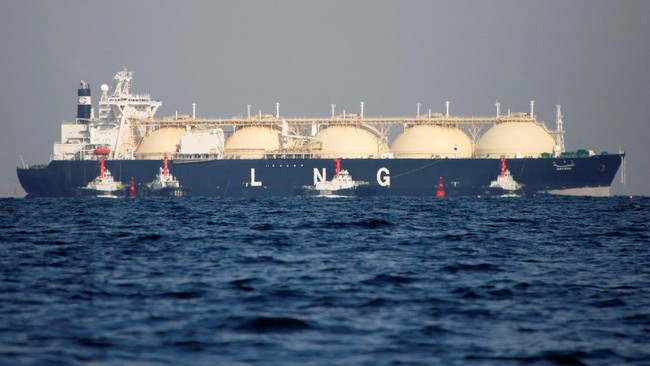
With this combination, gas produced by ENRG can not only be channelled through pipelines but also potentially be processed into LNG for shipment across regions and islands, opening export opportunities. The economic value is significantly higher than relying solely on conventional gas distribution.
From an infrastructure standpoint, BIPI has opportunities to develop facilities such as small-scale LNG terminals or regasification facilities. This infrastructure can be used to distribute gas from ENRG’s blocks to areas previously unreached by pipeline networks.
If this plan succeeds, BIPI would not merely function as a distribution pathway provider, but also enter the energy value chain with higher margins.
The collaboration also provides supply security advantages. LNG projects require stable gas supplies as primary feedstock. With direct cooperation with ENRG, BIPI has access to clear feed gas sources, making gas value-chain projects more realistic for long-term execution.
Looking back, BIPI is indeed in a business transformation phase. The company was previously known as a mining services provider, but following various expansion steps including the acquisition of PTT Mining, its focus has shifted towards energy infrastructure provision.
The company’s revenue has remained heavily dependent on coal logistics activities and global commodity prices.
On the other hand, a rather aggressive capital structure results in relatively high interest burdens, frequently pressuring profitability. Nevertheless, BIPI’s operational cash flow has remained positive.
As a note, until the first nine months of 2025, BIPI still faced pressure from high financial burdens reaching US$53.59 million. This figure is substantial when compared with the company’s operating profit of approximately US$18.9 million.
The aggressive capital structure makes interest expense a primary factor pressuring the company’s profit performance. Consequently, through September 2025 BIPI recorded a net loss of US$4.2 million.
Nevertheless, there is one important matter worth noting. The company’s operational cash flow remains recorded as positive, demonstrating that the infrastructure business fundamentally operated by BIPI remains capable of generating cash flows to support operations and meet short-term obligations.
The entry of gas projects through cooperation with ENRG then has potential to become an important step in diversifying revenue sources.
BIPI’s exposure to the coal sector has thus far been considerable, so the presence of gas business can provide more stable and recurring revenue streams.
Additionally, BIPI can maximise its infrastructure assets without bearing the exploration risks typically faced by upstream oil and gas companies. By serving as an infrastructure provider and gas distributor, the company can still enjoy margins from the volume of gas channelled.
Other potential benefits come from gas reserves held by ENRG in several blocks such as Bentu and Kangean. If this cooperation develops into long-term contracts, BIPI would have opportunities to secure cash flow certainty from gas projects for years.
Nevertheless, the financial impact of this cooperation may not be immediately apparent in the near term. The MoU currently signed remains at an exploratory stage.
Real contribution to new revenue will only be felt if this cooperation continues into commercial agreements and the infrastructure projects truly commence operations.
Overall, the BIPI and ENRG collaboration could be a strategic step expanding both companies’ positions in the national energy supply chain.
If LNG development truly materialises, it is entirely possible that BIPI will transform from merely a logistics infrastructure provider into an important player in Indonesia’s gas and LNG ecosystem.