
Biofarma Chief Responds to BPOM's WHO Listed Authority Status
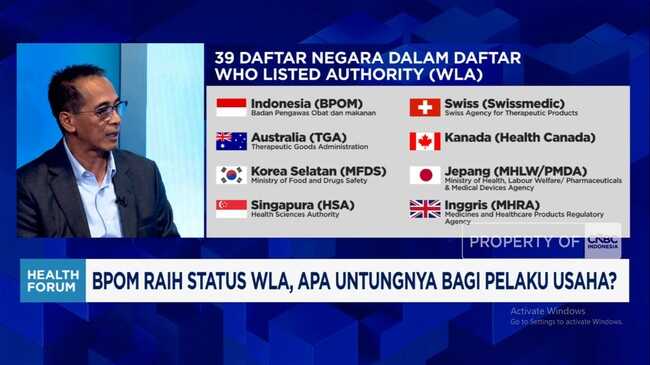
Jakarta – Shadiq Akasya, Director-General of Bio Farma, has responded to Indonesia’s pharmaceutical regulatory authority, the Food and Drug Supervisory Agency (BPOM), obtaining WHO Listed Authority (WLA) status from the World Health Organization. According to him, the WLA status serves as evidence of equivalence that ensures the quality of Indonesian medicines is recognised internationally.
“With WLA, we anticipate easier certification procedures, and we can expand our market network. This should also enable WHO to have greater confidence in our products, which are now accepted in various countries,” Shadiq stated at the CNBC Indonesia Health Forum on Friday, 27 February 2026.
This recognition places BPOM on the same level as leading regulatory authorities in developed nations worldwide, such as the Therapeutic Goods Administration (TGA) of Australia. Achieving WLA status will have strategic implications for Indonesia, including strengthening domestic pharmaceutical production and supporting self-sufficiency in medicines and vaccines.
In detail, Shadiq noted that Indonesia requires greater efforts in the upstream sector of pharmaceutical production. Meanwhile, Bio Farma is capable of producing 20 antigens and exporting to 150 countries globally.
“Certainly, with WLA status, this will be highly attractive, as products will be more trusted and command premium pricing. With WLA, our standards are also becoming easier to manage because they align with international ones. This will likely drive greater development of the upstream sector,” Shadiq explained.
Bio Farma has achieved pharmaceutical and vaccine exports accounting for up to 54% of its production capacity. Additionally, the company is expanding its export profile with immunisation products tailored to individual country markets. Shadiq also identified several countries as potential markets, including Nigeria and Pakistan, which have relatively high birth rates.