
Bioethanol: Strategic nexus of energy and trade opportunity
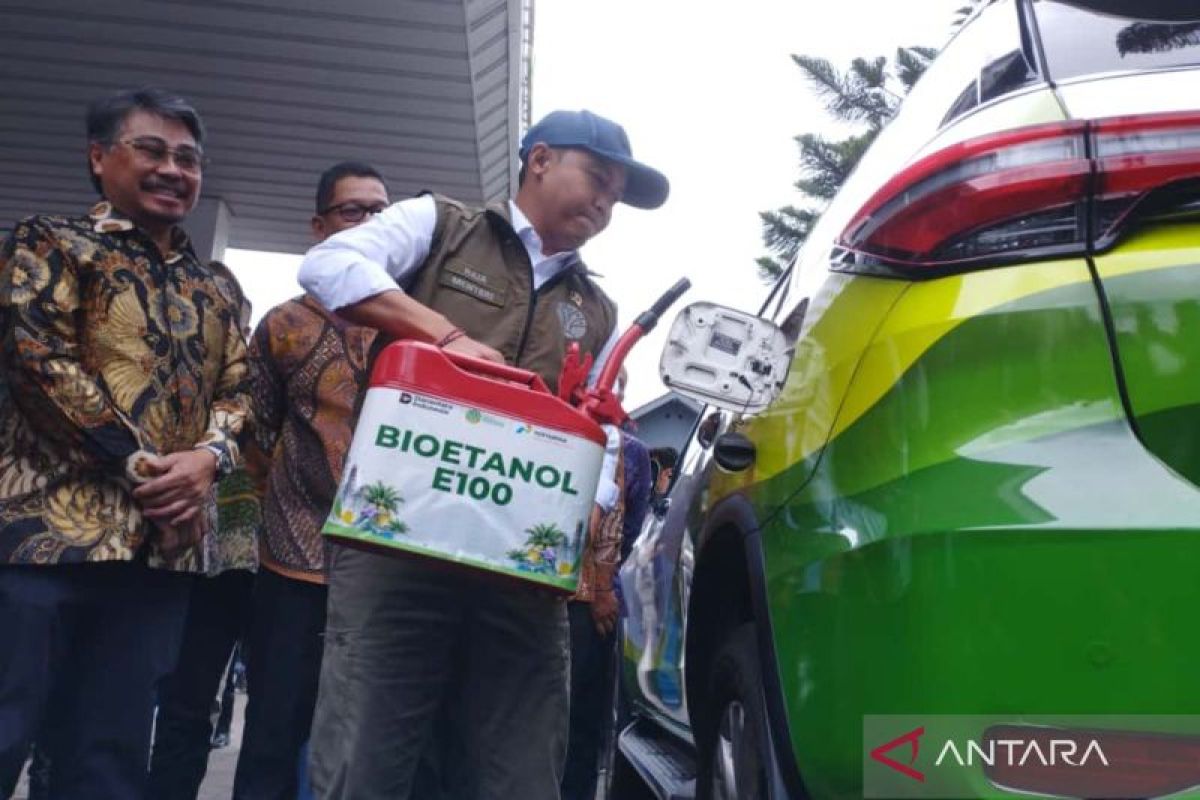
Jakarta — Among the various provisions in the Agreement on Reciprocal Trade (ART) 2026 between Indonesia and the United States, there is a strategically significant clause affecting multiple Indonesian sectors: the commitment not to obstruct the entry of American bioethanol into Indonesia and the obligation to blend bioethanol into vehicle fuel progressively.
This is outlined in targets of 5 per cent, 10 per cent, and potential 20 per cent bioethanol blending in petrol. In another section, it was agreed that Indonesia will ensure ethanol purchases from the United States exceed 1,000 metric tonnes (equivalent to 1 million kilolitres) annually.
E5 means petrol containing 5 per cent bioethanol, E10 means 10 per cent bioethanol, and E20 means 20 per cent bioethanol blended in regular petrol. Setting these percentages is intended to support a cleaner energy transition while reducing dependence on fossil fuel imports.
At first glance, these provisions appear to be mere trade obligations, but viewed through the lens of energy economics and industrial structure, this clause actually opens space to design broader value-addition strategies. Bioethanol is not simply an imported commodity but a product that can connect various sectors such as energy, chemicals, manufacturing, and value-added exports.
Ethanol and Gross Domestic Product
Between 2020 and 2024, Indonesia’s ethanol industry experienced growth driven by increased demand during the COVID-19 pandemic. The implementation of ethanol blending into petrol fuel since 2023 shifted ethanol’s role from pure chemical industry to the energy sector.
Ethanol’s contribution cannot be isolated in a single line item but is included within the chemicals, pharmaceuticals, and traditional medicine subsector under the broader processing industry sector. According to data from the Central Bureau of Statistics and Bank Indonesia, in 2024 the gross value added (at 2010 constant prices) of this subsector reached IDR 357.3 trillion.
Additionally, ethanol downstream activities have driven increased demand for raw materials such as sugarcane and cassava within the agricultural sector. In 2025, ethanol downstream processing became a key driver of agriculture’s significant 14.35 per cent contribution to GDP. This demonstrates the significant multiplier effect of the ethanol industry on Indonesia’s GDP.
Foreign Exchange Pressure
Admittedly, Indonesia currently requires fossil fuel imports to overcome domestic production limitations. As a result, when global oil prices surge, the foreign exchange outflow increases pressure on Indonesia’s foreign reserves. Although the government is actively promoting crude oil production and realising renewable energy alternatives, this still requires time and must keep pace with rising petrol demand.
Data from recent years shows continued rising fuel imports. In 2025, oil and gas component import volume reached 55.33 million tonnes worth USD 32.77 billion. Compare this with 2020, when oil and gas import volume was 37.65 million tonnes worth USD 14.26 billion. This naturally raises the question: will not ethanol imports under the RI-US ART 2026 mandate similarly impact Indonesia’s foreign exchange, just like fuel imports?
It is worthwhile examining this more closely within the framework of Indonesia’s economic strategy. We must ensure energy independence materialises whilst also being prudent in maintaining economic stability.
The RI-US ART 2026 clause concerning E5 through E10 implementation, with potential progression to E20, should be read within the framework of long-term energy policy. Bioethanol blending in transport fuels has potential to reduce carbon intensity whilst lowering fossil fuel import pressure. Provided infrastructure readiness and supply are adequate, this policy can strengthen national energy resilience.
Ethanol imports in this context should not merely be viewed as dependence but rather as part of an energy diversification strategy during transition to a more sustainable system. The key lies in managing supply, price, and incentives so that E5-E20 implementation remains efficient and does not create fiscal distortions or domestic price pressures.