
Biennale Rejects Wounds
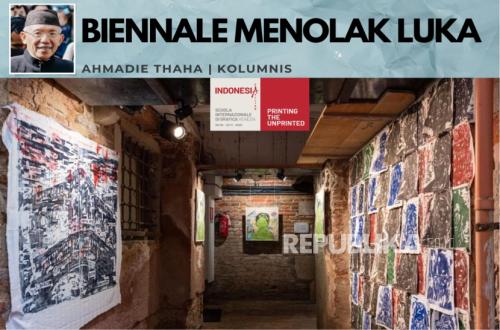
Venice is a city that seems to defy logic. This northern Italian city stands on water, bound by canals, gondolas, and ancient buildings resembling a giant museum left open since the Middle Ages. The distance from Jakarta to Venice is over 11,000 kilometres. By plane, with multiple stopovers, the journey can take longer than a DPR session discussing the fate of ordinary citizens. And ironically, when Indonesians arrive in Venice, they see other nations showcasing the future while their own country remains preoccupied with nostalgic memories of the past. The 61st Venice Biennale, one of the world’s most prestigious art festivals, often called the “Olympics of Visual Arts”, took place here. This major international contemporary art event, featuring 99 countries, ran from May to 22 November. The Venice Biennale is a biennial international visual arts exhibition. Often dubbed the “Olympics of World Art”, participation is a prestigious event for contemporary artists. Indonesia returned after a six-year absence. Indonesia’s pavilion featured the exhibition ‘Printing the Unprinted’, showcasing works by seven artists exploring maritime epics and alternative readings of manuscripts. The festival comprises a central exhibition curated by the artistic director, national pavilions organised by each country, and independent exhibitions across Venice. The Biennale’s parent organisation also hosts regular festivals in architecture, dance, film, music, and theatre. Beyond the main international exhibition, participating countries produce their own performances, known as pavilions, as national representations. Countries with their own pavilion buildings, such as the 30 in the Giardini, are responsible for their own maintenance and construction costs. Those without dedicated buildings construct pavilions at the Venice Arsenale or in palaces across the city. Imagine Jakarta Fair, TIM Cikini, ArtJog, film festivals, theatre, concerts, exhibitions, political protests, ideological debates, and global opinion wars—all thrown into one floating city called Venice. However, here artists do more than display works—they bring national identity, historical wounds, and even geopolitical grudges. This year’s main theme, ‘In Minor Keys’, was conceptualised by Koyo Kouoh, an African curator who passed away before the festival opened. The theme is like a piano whisper amid tank warfare: soft, minor, yet holding global sorrow. Indeed, this Biennale resembled a global courtroom more than a mere art exhibition. Protests erupted everywhere before the main event. The Israeli pavilion was protested, the Russian pavilion questioned, and the United States criticised for its war-hungry foreign policy. Judges resigned en masse, refusing to award prizes to countries whose leaders are accused of war crimes by the International Criminal Court, particularly Israel, where President Benjamin Netanyahu has been labelled a war criminal. This is no longer just about paintings or installations. The Biennale has transformed into a global political theatre set against Italy’s classical architecture. This year’s Biennale has written its own history, distinct from its inception in 1895.