
BI warns of risks of street money exchange and urges use of official services
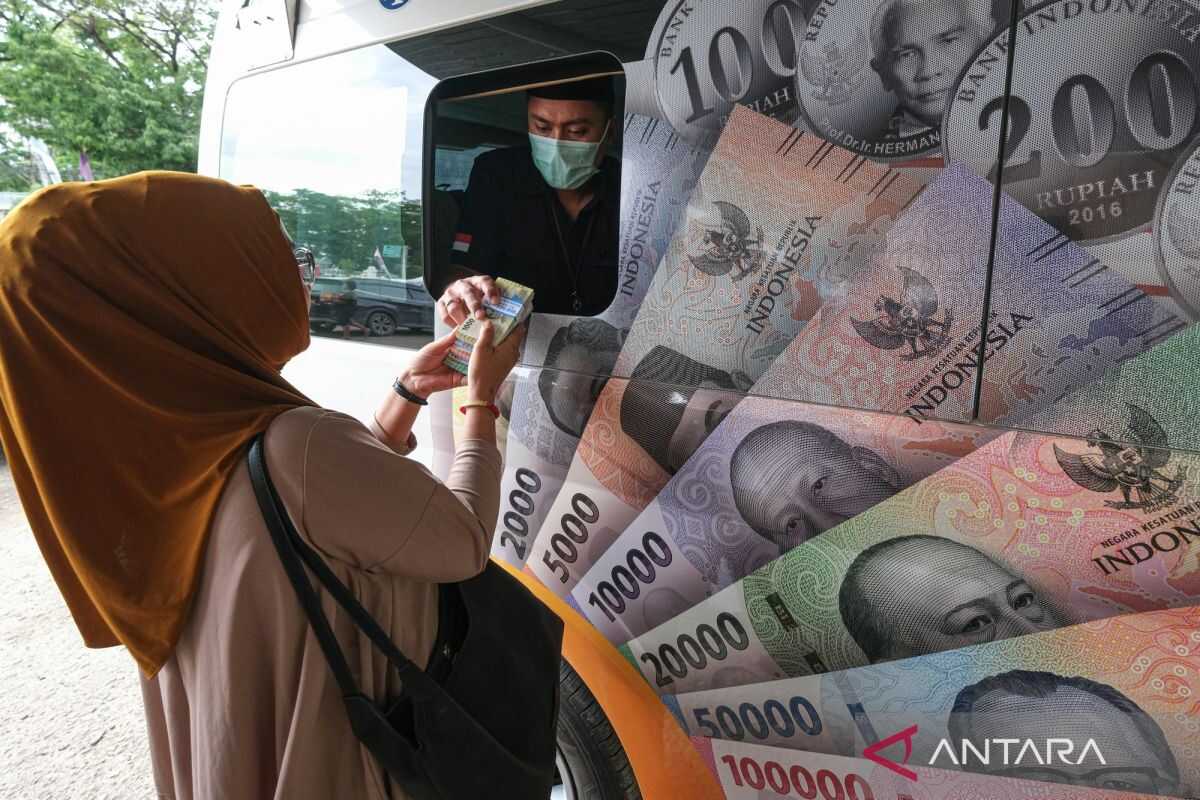
Bank Indonesia (BI) has warned the public about the risks of exchanging rupiah through informal, street-based mechanisms, where authenticity cannot be guaranteed, amounts are difficult to verify, and fraud could lead to losses. In response to the growing phenomenon of street money changing services, the central bank urged people to conduct exchanges only via official BI and banking services, to guarantee authenticity, exact amounts, and secure handling.
“Concerning this phenomenon, Bank Indonesia continues to strive to provide better services to the public, including expanding cash exchange services through mobile cash desks at various locations, including at sites with high demand for these services,” said Ramdan Denny Prakoso, Executive Director of the BI Communications Department, in writing to ANTARA in Jakarta on Friday.
BI, together with the banking sector, provides rupiah exchange services to meet the availability of fit-for-circulation notes for the public during Ramadan and Eid al-Fitr 1447 Hijri.
To meet demand during Ramadan and Eid al-Fitr, BI is running the Semarak Rupiah Ramadhan dan Berkah Idul Fitri (SERAMBI) 2026 programme, which runs from 13 February to 15 March 2026.
Under the programme, BI has prepared fit-for-circulation cash amounting to Rp185.6 trillion. Of this total, Rp177 trillion is allocated to meet banking needs, including cash withdrawals via ATMs and bank branches.
This year, BI has set aside Rp8.6 trillion for currency exchange services, with a denomination of Rp5.3 million per package. Exchange services are available at 2,883 points, providing a total of 8,755 services by BI and the banking sector across Indonesia.
Currency exchange services can be accessed via various channels, including mobile cash desks, general bank branches, and integrated exchange services at strategic locations such as places of worship and community activity centres.
Currency exchange orders can be made through the PINTAR app at pintar.bi.go.id. Through the PINTAR app, the public can select their exchange schedule and location according to their needs.
“Bank Indonesia appreciates the public’s strong enthusiasm, reflected in the rapid uptake of exchange quotas across Indonesia via the PINTAR App,” Ramdan said.
To date, more than one million exchange participants across Indonesia have been scheduled for rupiah exchange through the PINTAR App, he added. BI will continue to strengthen coordination and synergy with the banking sector to ensure rupiah distribution runs smoothly, targets are met, and public needs are addressed.
“Besides the SERAMBI 2026 points of service, bank customers can also contact their nearest bank for currency exchange services in accordance with each bank’s policy,” Ramdan added.
BI emphasises ongoing public education to recognise and care for rupiah through CBP Rupiah (Cinta, Bangga, Paham) education, both offline and online.
The central bank urged the public to ensure the authenticity of banknotes. A simple way is to apply the 3D method (Dilihat, Diraba, Diterawang) or use tools such as UV lamps and magnifying glasses.
Additionally, BI urged the public to consistently care for and handle rupiah properly to facilitate authenticity recognition, including adopting the “5 Jangan” on money: don’t fold, don’t doodle, don’t staple, don’t crumple, and don’t wet.