
BI Responds to Rupiah Weakness, Optimises Monetary Instruments Amid Global Crisis
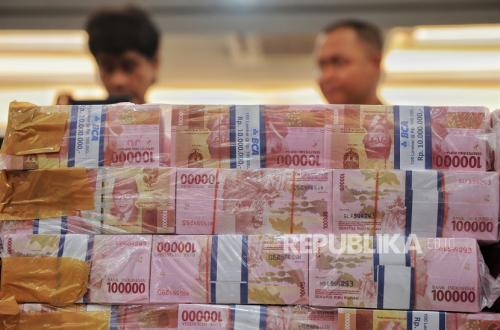
Bank Indonesia (BI) responded to the rupiah’s weakening towards Rp17,100 per US dollar on Tuesday (7/4/2026). The central bank stated that the correction in the Garuda currency occurred alongside high global uncertainties due to the escalation of war in the Middle East.
“In the midst of very high global uncertainty, stability is currently the top priority for Bank Indonesia (BI). Therefore, BI will optimise the use of all monetary operation (OM) instruments it possesses and also OM policies to maintain exchange rate stability,” said BI Senior Deputy Governor Destry Damayanti in her statement on Tuesday (7/4/2026).
Destry assured that BI will consistently and measurably remain in the money market, both in the spot market, DNDF, and NDF in the offshore market. Thus, rupiah stability can be maintained.
“The impact of the Middle East conflict is two-way, where rising commodity prices and Indonesia’s position as an exporting country can provide a positive effect on our economy, thus offsetting the pressure on the exchange rate due to that escalation,” she explained.
It is known that, citing Bloomberg, the rupiah weakened by 70 points or 0.41 percent to the level of Rp17,105 per US dollar at the close of trading on Tuesday (7/4/2026). In the previous trading, the rupiah was at Rp17,035 per US dollar.
Currency and Commodity Analyst Ibrahim Assuaibi said that the ongoing war in the Middle East is an external sentiment for the rupiah’s weakening. Especially the impact from the closure of the Strait of Hormuz.
“Investors are preparing for potential escalation in the Middle East ahead of the deadline set by US President Donald Trump for Iran to reopen the Strait of Hormuz. Disruptions in tanker traffic in recent weeks have tightened supply expectations and increased risk premiums across oil markets,” said Ibrahim in his statement on Tuesday (7/4/2026).