
BI Records Foreign Inflow of US$3.3 Billion Up to April
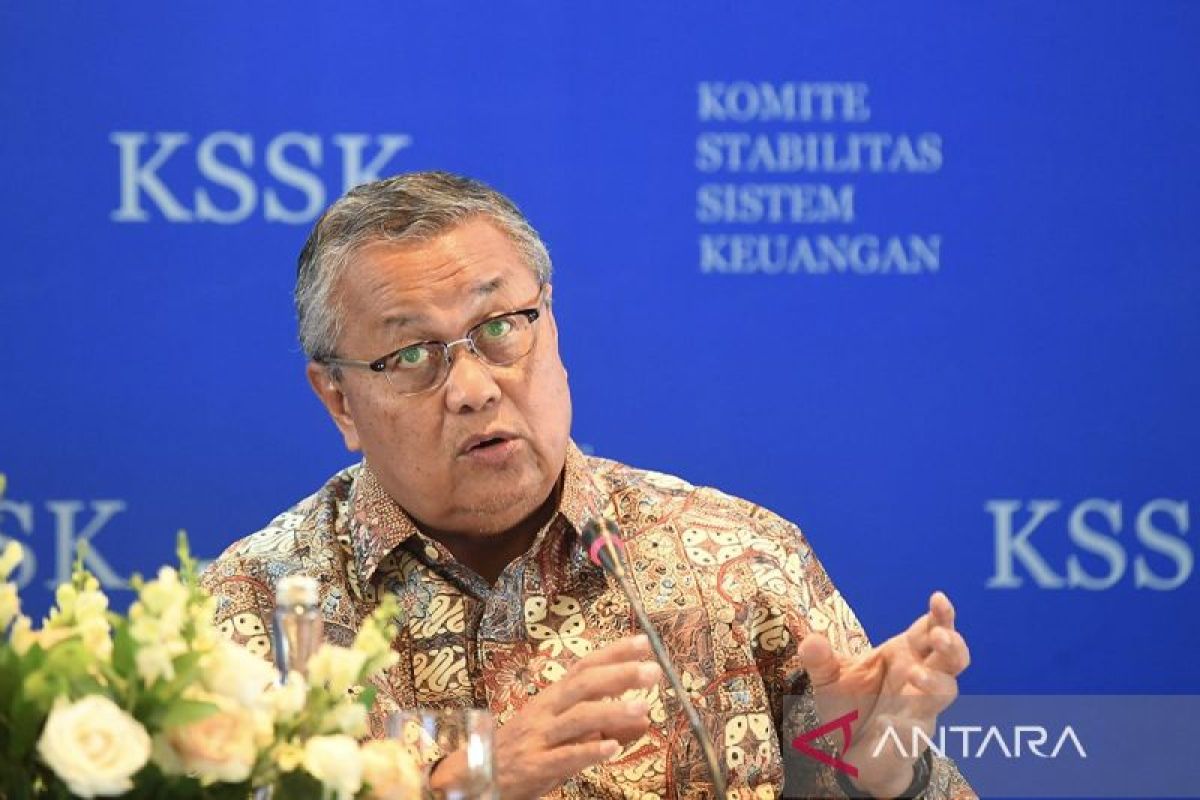
Jakarta (ANTARA) - Bank Indonesia Governor Perry Warjiyo stated that foreign portfolio investment experienced an inflow of US$3.3 billion in early Q2 up to 30 April 2026, mainly supported by inflows into SRBI instruments.
Perry, during a press conference of the Financial System Stability Committee (KSSK) in Jakarta on Thursday, said this development followed net outflows of US$1.7 billion in Q1 2026.
On a year-to-date basis, he mentioned that SRBI instruments saw larger inflows compared to SBN, which still recorded outflows.
“Inflow from SRBI year to date was Rp78.1 trillion, outflow in stocks Rp38.6 trillion. SBN, although inflows in recent weeks, but year to date Rp11.7 trillion outflow,” said Perry.
It is known that BI is implementing a strategy to strengthen the SBRI interest rate structure to attract foreign inflows. This effort is undertaken to support rupiah exchange rate stabilisation.
Perry emphasised that the central bank is going all out to maintain the rupiah exchange rate through various policies, including interventions in the offshore Non-Deliverable Forward (NDF) market as well as spot and Domestic Non-Deliverable Forward (DNDF) transactions in the domestic market.
“Interventions are not only domestic, not only cash and DNDF, but around the world, around the clock. We intervene in the offshore NDF market. In Hong Kong, Singapore, London, New York, we intervene. That’s not business as usual, that’s all out,” said Perry.
In addition, the central bank has also relaxed the ban on NDF foreign exchange selling transactions against the rupiah in the offshore market for certain dealers or banks.
Perry assured that foreign exchange reserves are more than sufficient to support rupiah stabilisation efforts, with a position of US$148.2 billion at the end of March 2026.
“Please remember, foreign exchange reserves were accumulated during the ‘harvest’ of large inflows. That’s why we use them during the ‘famine’, during outflows. The amount (of reserves) is large,” he said.
Perry also emphasised that the weakening exchange rate is not only experienced by Indonesia but also other emerging market countries in line with heightened geopolitical tensions in the Middle East and rising global oil prices.
“Likewise, US interest rates are high at 4.41 percent. The dollar is also strong and foreign investors are outflowing from all emerging market countries. The global conditions are like that. Those are the main global factors related to the rupiah weakening,” said Perry.