
BI-Rate Maintained at 4.75% for Rupiah Stability
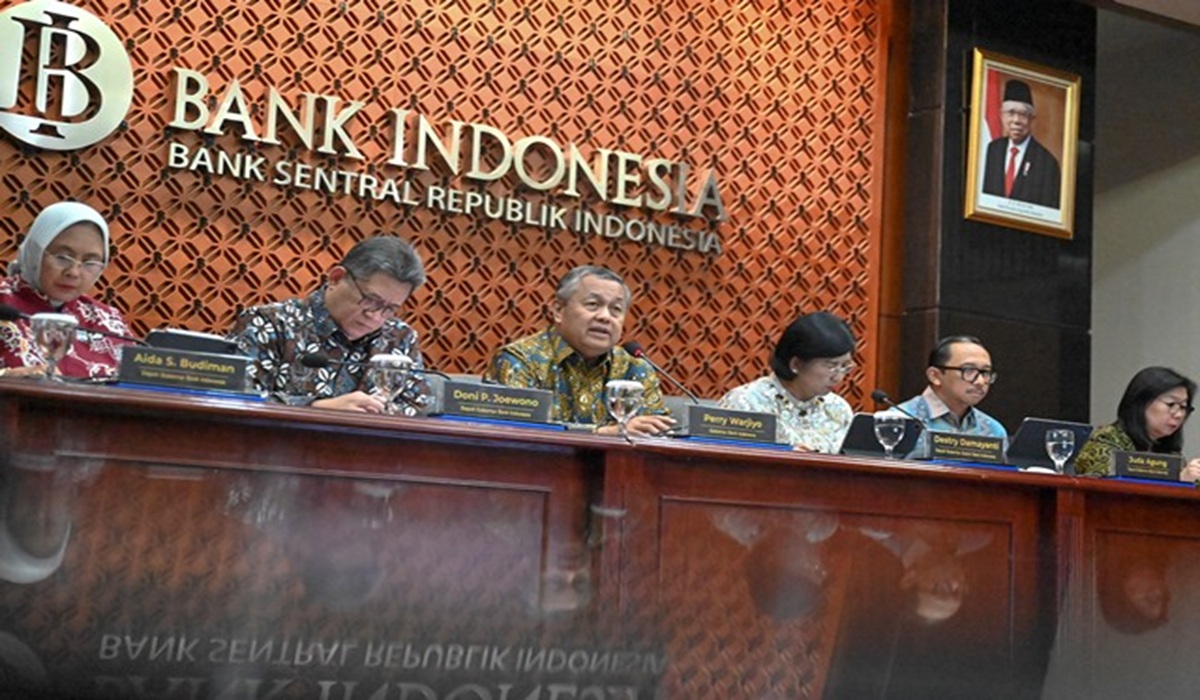
Bank Indonesia has decided to maintain the BI-Rate on 17 March 2026 at 4.75% to strengthen the rupiah. The Deposit Facility rate stands at 3.75%, whilst the Lending Facility rate is set at 5.50%. This decision was made during the Bank Indonesia Board of Governors Meeting (RDG) held on 16-17 March 2026.
“This decision is to strengthen the stability of the rupiah’s exchange rate from the impact of deteriorating global conditions due to the Middle East war and to maintain the achievement of the 2026-2027 inflation target within the range of 2.5±1%,” said Bank Indonesia Governor Perry Warjiyo during a press conference on the March 2026 RDG Results, held online on Tuesday (17 March).
Perry stated that the Middle East conflict, which began in late February 2026, has worsened global economic conditions and prospects. The surge in global crude oil prices has negatively affected international trade supply chains, reducing global economic growth prospects and increasing global inflationary pressure.
“Global financial markets have also deteriorated with the strengthening of the US dollar, rising US Treasury yields, and capital outflows from emerging markets. Global economic growth in 2026 is estimated to be slower at 3.1% from the previous forecast of 3.2%, despite the reduction in US reciprocal tariffs,” he said.
Additionally, the US dollar index against developed country currencies (DXY) has strengthened. The deterioration in global economy and financial markets due to the Middle East conflict is increasingly pressuring emerging market currencies and complicating their economic management.
“This requires strengthening responses and synergy between fiscal and monetary policies to maintain external resilience whilst continuing to support domestic economic growth,” he stated.
In terms of monetary policy direction, macroprudential measures, and payment systems to maintain stability, Bank Indonesia is implementing several policy steps. First, strengthening rupiah exchange rate stabilisation through intervention using both Non-Deliverable Forward (NDF) transactions in overseas markets and spot transactions and Domestic Non-Deliverable Forward (DNDF) in domestic markets.
The bank is also strengthening foreign exchange market transaction policies that will take effect in April 2026 to support rupiah exchange rate stability. This is accomplished through adjusting the cash foreign exchange purchase threshold against the rupiah from US$100,000 per actor per month to US$50,000 per actor per month.
Subsequently, the DNDF/Forward sales threshold has been increased from US$5 million per transaction to US$10 million per transaction, and the buy and sell Swap threshold has been increased from US$5 million to US$10 million per transaction.
“Bank Indonesia continues to strengthen policy coordination with the Government, including close synergy between monetary policy and fiscal policy to mitigate the impact of global uncertainty caused by the Middle East war on the domestic economy so that economic stability and growth remain well-maintained,” said Perry.
“Additionally, Bank Indonesia is also strengthening and expanding international cooperation in the central banking area, including payment system connectivity and transactions using local currency, as well as facilitating investment and trade promotion initiatives in priority sectors in cooperation with relevant institutions,” he added.