
BI: Number of Counterfeit Rupiah Findings Decreases Over the Last Three Years
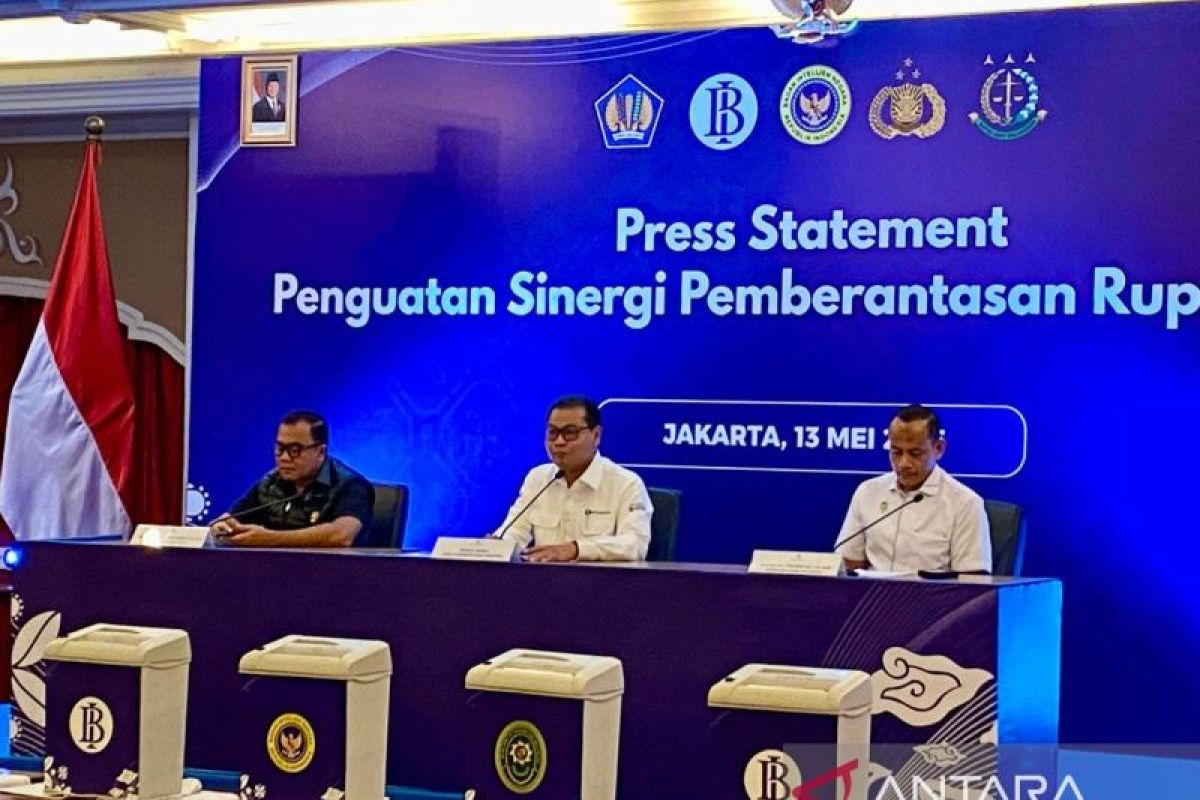
Jakarta (ANTARA) - Bank Indonesia (BI) has recorded a decrease in the number of counterfeit rupiah findings over the last three years, from a ratio of 5 pieces per million (ppm) or 5 notes per 1 million in circulation in 2023 to 1 ppm in April 2026. “Ppm means pieces per million, so 5 notes per 1 million in circulation. It has decreased, now approaching 1 (ppm). So for every 1 million in circulation, 1 counterfeit note is found,” said BI Deputy Governor Ricky P. Gozali at the BI Head Office in Jakarta on Wednesday. Ricky stated that the rupiah is becoming increasingly difficult to counterfeit due to improvements in quality, including materials, printing technology, and modern security features. According to him, this achievement in reducing the trend of counterfeit findings is inseparable from the close synergy and coordination among various elements of the Counterfeit Rupiah Eradication Coordinating Agency (Botasupal), namely the State Intelligence Agency, Indonesian National Police, Attorney General’s Office, Ministry of Finance, including the Supreme Court and District Courts. Ricky noted that the enhanced quality of the rupiah has received international recognition, one of which is reflected in the award for the 2022 Emission Year Rupiah Notes as the Best New Banknote Series at the IACA Currency Awards 2023. Additionally, in November 2024, the Rp50,000 2022 Emission Year banknote received second place globally for the most secure and hardest-to-counterfeit denomination (World’s Most Secure Currencies) with 17 advanced security features, according to BestBrokers. In line with the mandate of Law No. 7 of 2011 on Currency and to ensure public transaction safety using rupiah, Ricky emphasised that the central bank is fully committed to supporting all efforts to eradicate counterfeit rupiah. This commitment is realised through verification of questionable rupiah authenticity, conducted via expert examinations or laboratory tests. Ricky stressed that the public has an increasingly vital role in preventing the circulation of counterfeit rupiah. Therefore, the public is urged to become more knowledgeable in verifying the authenticity of rupiah banknotes using the “3D” method: look, feel, and tilt. Furthermore, BI also advises the public to always handle rupiah properly to maintain its recognisability. This can be done by following the “5 Don’ts”: do not fold, do not scribble on, do not staple, do not crumple, and do not wet.