
BI: "Low base effect" from administered prices drives high February 2026 inflation
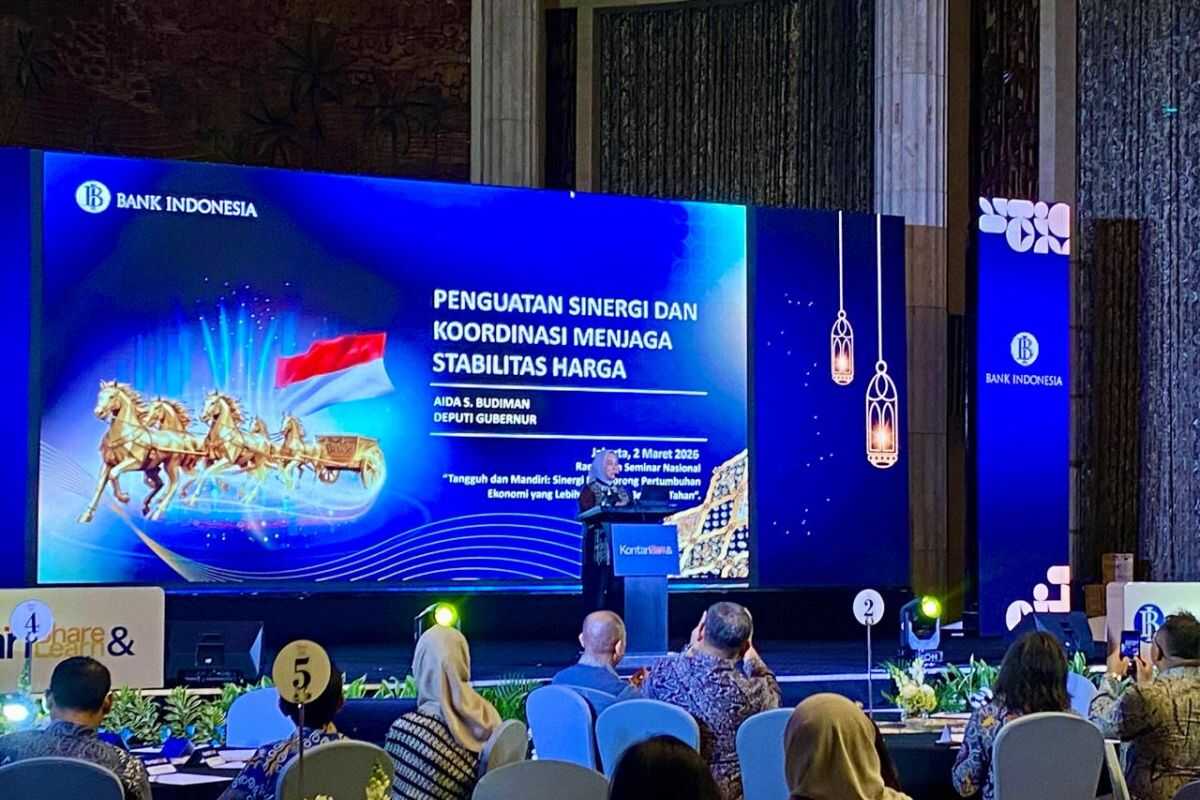
Jakarta (ANTARA) - Bank Indonesia (BI) has explained that the “low base effect,” resulting from the government’s electricity tariff discount policy that induced deflation last year, has driven February 2026 inflation to surge to 4.76 per cent year-on-year.
“We must interpret this correctly. The 4.76 per cent inflation figure exists because administered prices in January and February 2025 received price discounts,” said Deputy Governor of Bank Indonesia Aida S. Budiman in Jakarta on Monday.
From January to March 2025, the government-regulated price category (administered prices) recorded deflation, with the deepest decline occurring in February 2025 at minus 9.02 per cent year-on-year.
By contrast, in February 2026, the same category experienced inflation of 12.66 per cent. This sharp difference is what has caused year-on-year inflation to appear sharply elevated.
Regarding the impact of national religious holidays, Aida explained that inflationary pressure typically begins building before the celebrations, peaks during the festivities, and subsides afterwards. Generally, price increases during this period tend to be higher than in ordinary months.
The highest pressure typically occurs in the volatile food price category. These increases are driven by surges in seasonal demand that can disrupt supply chains, making prices more prone to fluctuation.
On the same occasion, Head of BI’s Department of Economic and Monetary Policy Firman Mochtar added that the general trend in volatile food inflation shows a decline.
In February 2026, volatile food inflation was recorded at 2.5 per cent month-on-month and 4.64 per cent year-on-year. This figure, Firman noted, remains within the target range of the Central Inflation Control Team (TPIP), set below 5 per cent for the volatile food component.
He stressed that going forward, BI is confident that inflation will remain controlled within a range of 2.5 per cent plus or minus 1 per cent. Additionally, BI remains committed to maintaining stability amid persistent global uncertainties whilst continuing to support economic growth.
As part of its inflation control efforts, Firman also explained that BI maintains 46 representative offices across Indonesia, which strengthen co-ordination of inflation control efforts with the central and regional governments through the Central and Regional Inflation Control Teams (TPIP and TPID).
The bank is also working to ensure smooth distribution channels, including through inter-regional co-operation when supply shortages occur in particular areas, whilst reinforcing the management of inflation expectations to keep them well-anchored.
“We are working to ensure food prices remain reasonable—neither excessively high nor too low. That is why we are targeting volatile food inflation at a maximum of 5 per cent. This is what we continue to manage and co-ordinate,” said Firman.