
BI: Local Currency Transaction Volume Reaches USD 22.61 Billion Through April 2026
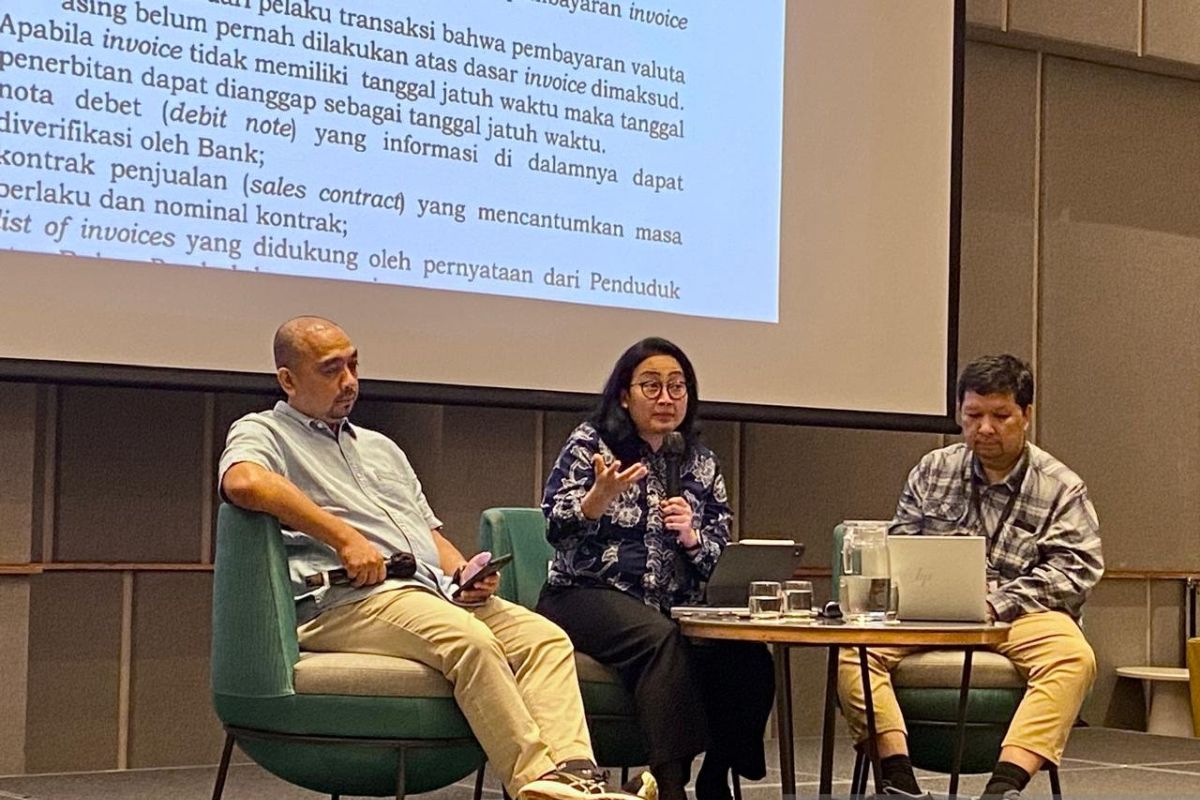
Makassar – Bank Indonesia (BI) has disclosed that the volume of local currency transactions (LCT) in the year to date, from January to April 2026, reached USD 22.61 billion. This is a sharp rise from USD 7.33 billion recorded in January–April 2025. For 2025, LCT volume stood at USD 25.72 billion. ‘This volume has risen sharply. It encourages diversification of currencies; transactions need not all pass through the US dollar,’ said Ruth A. Cussoy Intama, Director of the Financial Markets Deepening Department at BI, in a media briefing in Makassar, South Sulawesi, on Friday. Based on BI records, the main partner economies for LCT are China, Japan and Malaysia, with shares of 89%, 6% and 3% respectively. BI also notes that the number of LCT participants continues to grow. From the start of the year through April 2026, the average monthly number of LCT participants reached 5,265. Ruth explained that direct use of local currencies in bilateral transactions is more efficient than routing via the US dollar as an intermediary. Cross-border transactions typically use cross-rate schemes, for example from rupiah to USD before converting to the destination currency, incurring additional costs due to two currency conversions. Therefore, BI views LCT as a solution to reduce transaction costs while expanding the use of local currencies in economic and financial activities among partner countries and regions. In addition to currency diversification, Ruth added that LCT development is aimed at deepening regional local currency markets and broadening market participation. ‘We are not avoiding or unwilling to use the US dollar; we know the global economy still uses the dollar. But for countries that can transact directly domestically, why should we use the dollar first?’ she said. Regarding the mechanism, Ruth explained that LCT implementation is conducted through designated banks as Appointed Cross Currency Dealers (ACCD), i.e., banks agreed by partner central banks to facilitate transactions using local currencies. Through this mechanism, exporters and importers can transact directly in the domestic currency without going through the US dollar. Ruth said BI continues to broaden LCT cooperation with various partner countries. Indonesia currently cooperates with Malaysia, Thailand, Japan, China, South Korea and the United Arab Emirates. In the near term, LCT is also to be expanded with Saudi Arabia, Singapore and India. BI notes that demand for the US dollar typically rises from April to June, in part due to payments related to the Hajj and Umrah. Accordingly, cooperation with Saudi Arabia under LCT is expected to promote direct rupiah–riyal Saudi (SAR) transactions, reducing reliance on the US dollar and helping stabilise the rupiah’s exchange rate. ‘We know there is strong SAR demand; this is what we are working on. If possible, we want LCT to exist directly with Saudi Arabia,’ Ruth said.