
BI Kepri pushes pesantren towards economic independence through inter-pesantren trading of commodities and services
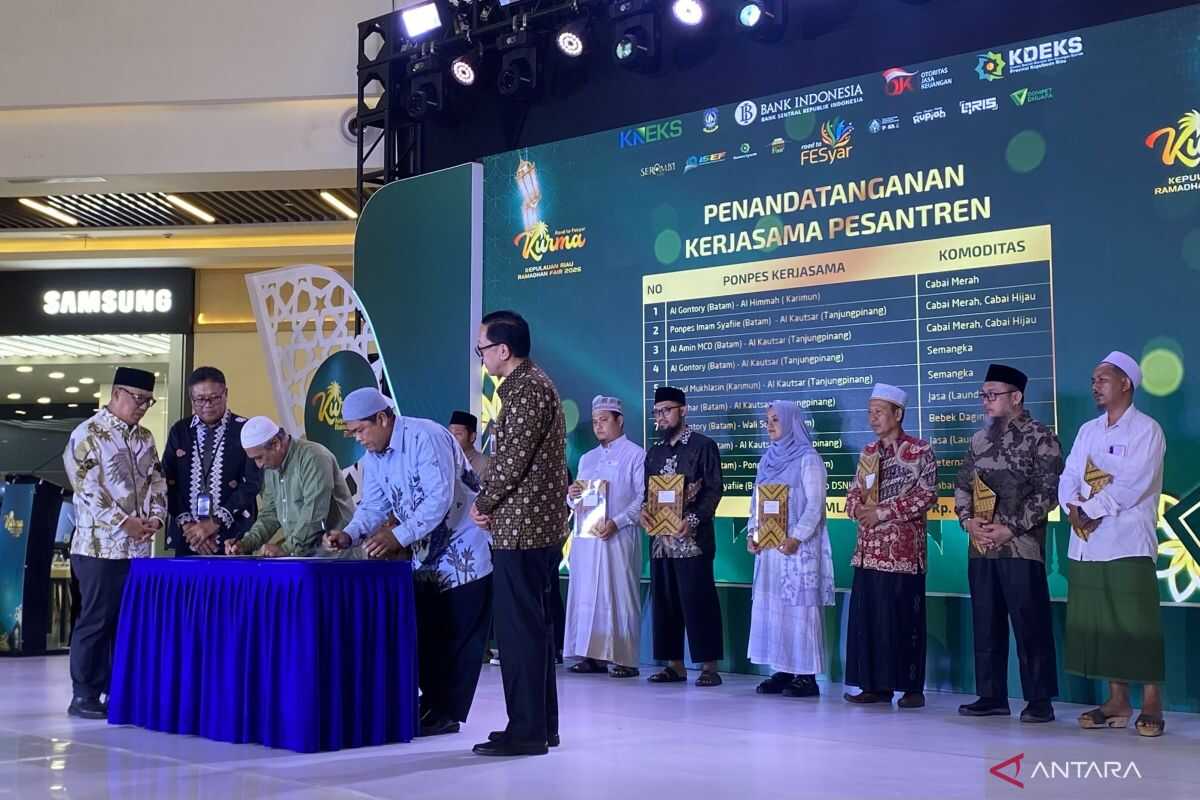
Batam — The Bank Indonesia Representative Office for the Riau Islands Province (KPw BI Kepri) is promoting the empowerment of pesantren by building an ecosystem for inter-pesantren trading of commodities and services to realise economic independence. The head of KPw BI Kepri, Rony Widijarto, said they aim for pesantren not only to be centres of religious education but also to be economically self-reliant. ‘Conventional economy has dominated. We want the Islamic economy to grow as well. One of them is to target pesantren to be economically independent and able to develop each of them,’ he said in Batam on Wednesday. According to Rony, the concept is to form an inter-pesantren business ecosystem through the Pesantren Business Association (Hebitren). Of the 59 pesantren recorded, about 14 are currently active and developing in the pilot scheme. Rony explained that the scheme connects pesantren in buying and selling commodities and services with prices more competitive than the general market. ‘Pesantren trade commodities among themselves. For example, if one produces red chilies and another needs chilies, they buy from there. The same applies to other commodities such as watermelons, laundry services, and duck meat,’ he said. At the opening of the Kepulauan Riau Ramadan Fair (KURMA) 2026, representatives of pesantren signed inter-pesantren cooperation agreements for the scheme. Several collaborations include Ponpes Al Gontory Batam with Al Himmah Karimun for red chilies; Ponpes Imam Shafi’i Batam with Al Kautsar Tanjungpinang for red and green chilies; and Al Gontory Batam with Wali Songo Batam for broiler ducks. Ten inter-pesantren collaborations were signed, with supporting funds amounting to Rp1.4 billion. Rony noted that all pesantren in this ecosystem are encouraged to have business units that mutually support one another. ‘We want firstly the independence of each pesantren. After that, to raise Hebitren’s independence. If it is strong, only then sell to the public. Thus the Islamic economy rises,’ he said. To support the program, BI Kepri is preparing infrastructure support and training tailored to each pesantren’s needs. ‘We can provide infrastructural assistance, training, or study visits abroad. We can send pesantren that are more experienced and advanced so they can acquire knowledge,’ he said. Kepri Vice Governor Nyanyang Haris Pratamura praised BI Kepri’s move to advance the Islamic economy in the province. ‘KURMA is part of government efforts to strengthen the Islamic ecosystem, where economic growth is not only high but also inclusive,’ he said.