
BI Hikes Key Rate to Boost Rupiah Appeal
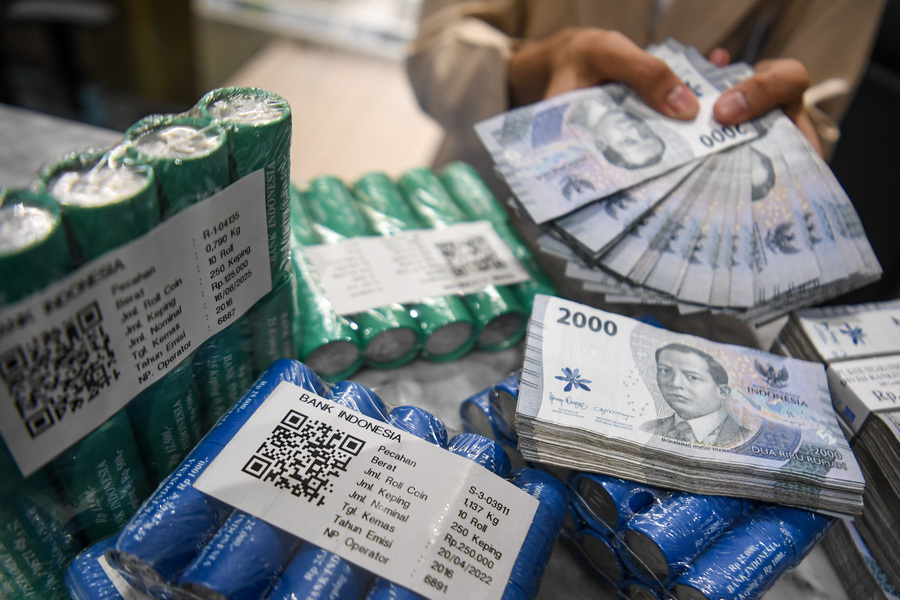
Deputy Governor of Bank Indonesia (BI) Destry Damayanti explained that the decision to raise the benchmark interest rate (BI Rate) by 50 basis points to 5.25% was made to maintain rupiah stability amid high global uncertainty. The policy was implemented to make rupiah-based financial instruments attractive again for investors and to encourage foreign capital inflows into domestic financial markets.
“We are pushing for an interest rate hike because we need to make rupiah instruments attractive once more,” Destry said at the National Conference on Regional Economic Development at Balai Kartini on Monday (25 May).
She stressed that the BI Rate increase is an adjustment to global conditions, not solely to pressure the real sector.
“This BI Rate hike is necessary, not for any other reason but to adjust to global conditions,” she said.
She noted that the global situation is currently in a ‘higher for longer’ phase, where interest rates are expected to remain elevated for an extended period. This is evident from rising US Treasury yields, persistent US inflation, and the strengthening of the US Dollar Index (DXY) against most world currencies.
“So we are facing a situation where stability is crucial,” she said.
Destry said that besides raising the BI Rate, BI has taken various intervention measures to maintain rupiah exchange rate stability. Interventions were conducted in the spot market, forward market, Non-Deliverable Forward (NDF) market, and Domestic Non-Deliverable Forward (DNDF) market.
Additionally, BI purchased Government Securities (SBN) to maintain liquidity and control the rise in bond yields, preventing them from spiking too sharply. The central bank is also monitoring high domestic dollar demand, including unclear underlying requests.
Destry assessed Indonesia’s economic fundamentals remain sufficiently strong, reflected in Q1 economic growth of around 5.6%, one of the highest in the region. Consumer confidence indices have also improved, and several corporations’ sales performance is recovering.
“If we talk about fundamentals, it means assessing the country’s economy,” she said.
However, she acknowledged that global sentiment remains the dominant factor pressuring the rupiah’s exchange rate. This is exacerbated by high US dollar demand domestically in mid-year, including dividend payments, fund repatriation, and Hajj-related needs.
“Now there are issues due to sentiment, as global conditions remain volatile and unresolved,” she said.
Destry is optimistic that rupiah stability will improve with strong domestic economic fundamentals, widening yield differentials, and clearer government programs moving forward.
“This will restore confidence among the public and investors,” she concluded. (E-4)