
BI Governor: Room for BI-Rate Cuts Increasingly Limited Amid War
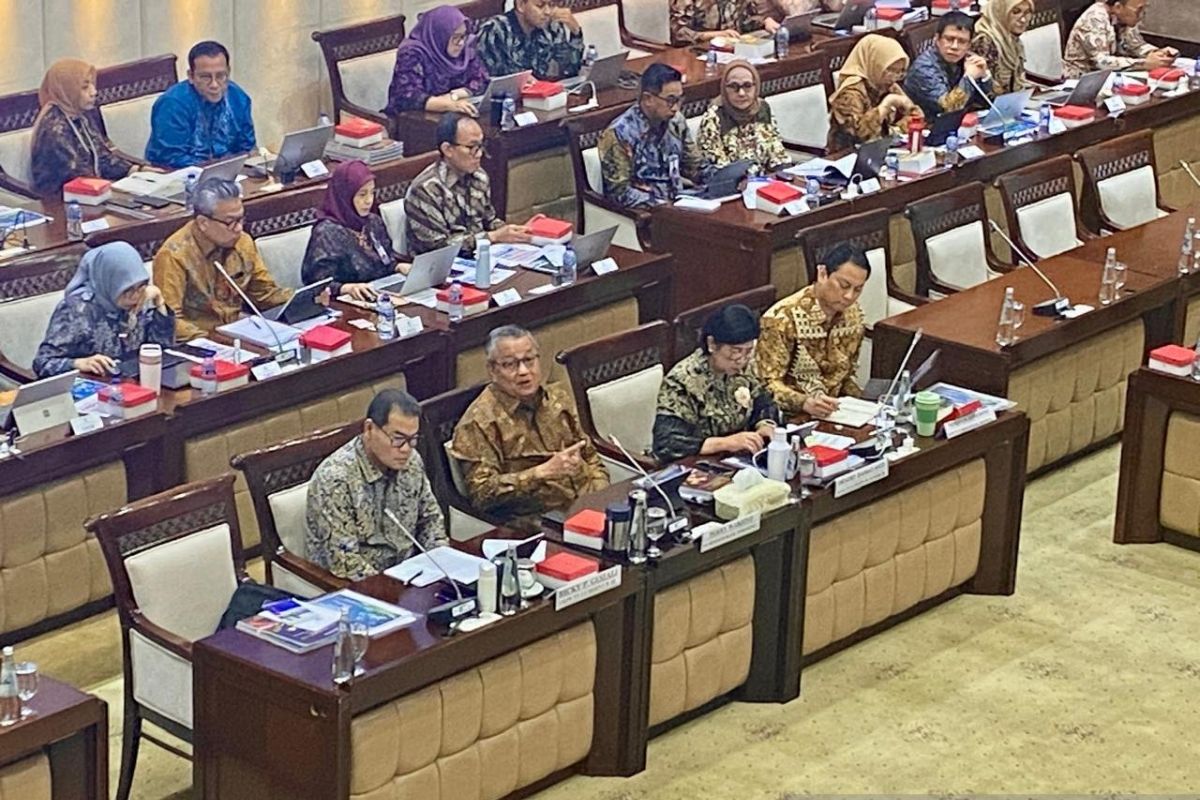
Bank Indonesia (BI) Governor Perry Warjiyo stated that in the future, the room for lowering the policy interest rate or BI-Rate is likely to become increasingly limited amid global uncertainties caused by the war in the Middle East.
“Although we have maintained the BI-Rate at 4.75 percent, it appears that the room for its reduction in the future may become more and more closed, and we must also respond to ensure stability,” Perry said during a working meeting with Commission XI in Jakarta on Wednesday.
He added that the central bank has also begun to strengthen auctions of Bank Indonesia Rupiah Securities (SRBI) since the beginning of the year to balance the needs of stabilising the rupiah exchange rate, interventions, and containing outflows from becoming too large.
“SRBI, which we were able to reduce quickly last year, now requires recalibration to indeed attract inflows,” he said.
In addition, BI continues to purchase Government Securities (SBN) from the secondary market. To date, the year-to-date realisation of purchases has reached Rp90.05 trillion.
“This is some of the recalibration where monetary policy now has a greater emphasis on pro-stability,” Perry said.
He explained that the prospects for the global economy are worsening, particularly triggered by the conflict between the United States (US)-Israel and Iran. This situation impacts the global economy and finance through commodity, trade, and financial channels.
Perry noted that world oil prices have even surged since February to March, reaching $122.95 per barrel at one point and remaining volatile. Additionally, gold prices have increased throughout 2025 and remain at high levels.
The impact of global uncertainties is also evident in the rising yields on US government bonds (US Treasury), both for 2-year and 10-year tenors.
While yields tended to decline last year, the 2-year and 10-year US Treasury yields have now risen sharply since the Middle East conflict intensified. This increase is influenced, among other things, by the widening US fiscal deficit, including for war financing.
Perry noted that portfolio flows to emerging markets moved volatily with an increasing trend last year. However, since the beginning of this year, the situation has reversed, experiencing significant outflows in bonds, stocks, and other instruments.
Additionally, there has been a strengthening of the US dollar, which adds further pressure on global financial markets.
“And this is why from Bank Indonesia’s perspective, we need to recalibrate the various policies we implement,” Perry said.
“(With the) impact of the Middle East war, that is why in this statement we no longer mention the possibility of an interest rate cut. We have removed that from this statement because we may indeed continue to maintain the current BI-Rate,” Perry said on Tuesday (17/3).
In March 2026, BI again maintained the BI-Rate at 4.75 percent. This step marks the maintenance of the BI-Rate since October 2025, after a reduction of 150 bps since September 2024 or 125 bps throughout 2025.