
BI Governor Frankly Reveals the Culprits Behind Rupiah's Weakening Against the US Dollar
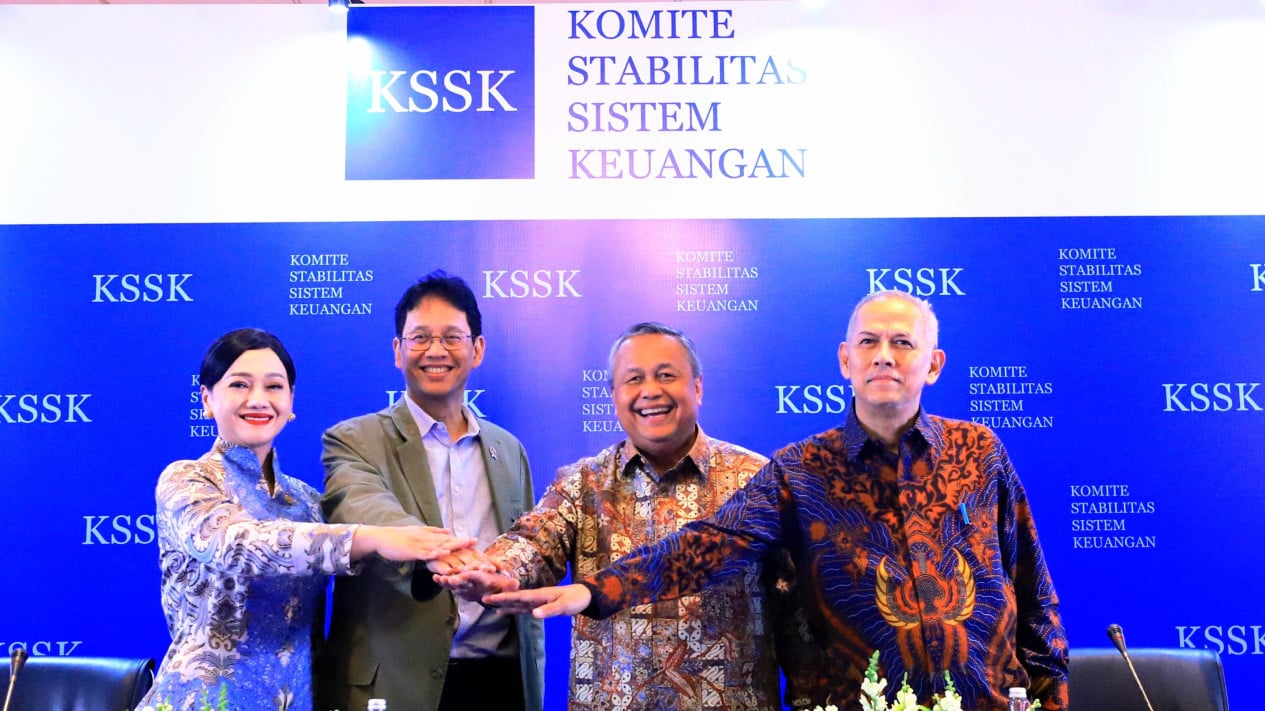
Jakarta – Bank Indonesia Governor Perry Warjiyo has candidly explained that the rupiah’s weakening is not due to any weakening of Indonesia’s economic fundamentals, but rather due to several influences from global factors.
He assured that the Q1 2026 economic growth of 5.61 per cent serves as proof that the national economic fundamentals remain solid.
Moreover, this national economic growth achievement in Q1 2026 is one of the highest among other G20 member countries.
“So, looking at the indicators, our economy is fundamentally strong. So the question is, why is there a weakening of the rupiah? Well, it’s because of global factors,” said Perry during the Press Conference on the Results of the Periodic KSSK Meeting II of 2026 at the Bank Indonesia Office Complex, Jakarta, on Thursday, 7 May 2026.
According to Perry, the positive performance of the national economy in Q1 2026 can also be seen from the controlled inflation rate at 2.42 per cent, high banking credit growth, and the trade balance recording a surplus once again.
However, Perry acknowledged that the global factors have rendered these positive indicators unable to strengthen the rupiah’s position. This is because geopolitical tensions in the Middle East have caused global oil prices to surge.
This situation is exacerbated by the sharp rise in US interest rates to 4.41 per cent, in line with the trend of capital outflows where foreign investors are flocking from emerging market countries.
“So those are the main global factors causing the rupiah’s weakening,” he stated.
Not only that, Perry continued, there are also seasonal factors that are causing a surge in demand for foreign exchange (forex), such as the umrah and hajj seasons occurring in April and May 2026.
“Seasonally, in April and May, forex demand is high. For what? For us to pray that all our people performing umrah and hajj are healthy, and we ensure their dollar needs are met, Insha’Allah,” said Perry.
“Then also in April and May, many corporations repatriate dividends and pay foreign debts, both interest and principal (debt). So the conditions are like that,” he added.