
BI Cuts Limit for Purchasing US Dollars Without Underlying to $25,000
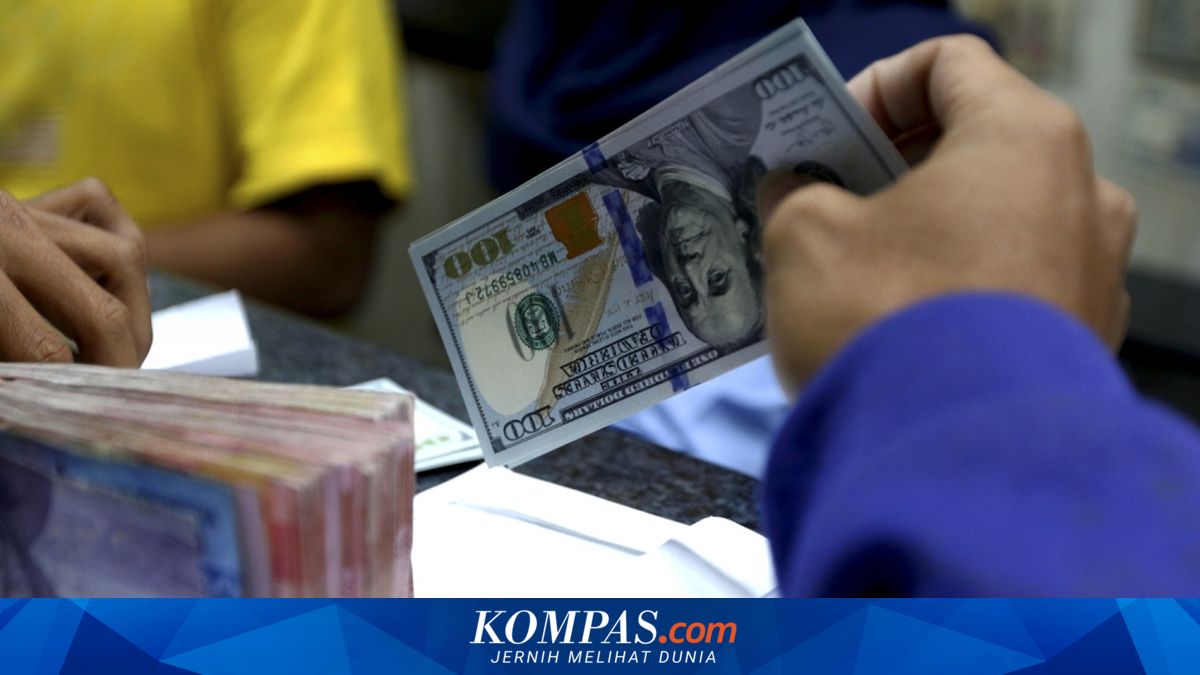
JAKARTA, KOMPAS.com - Bank Indonesia (BI) will further reduce the limit for purchasing US dollars without underlying to $25,000 US per person per month.
BI Governor Perry Warjiyo stated that the central bank had previously lowered the limit for purchasing US dollars without underlying from $100,000 to $50,000 per person per month as of 1 April 2026.
Subsequently, BI will reduce the domestic US dollar purchase limit to $25,000 per person.
With this change, transactions for purchasing foreign exchange (forex) above $25,000 will still be possible in the future, but must be accompanied by supporting documents indicating the purpose of the transaction or the need for the purchase.
Perry said this policy is one of seven measures by BI to strengthen the stability of the rupiah exchange rate, which is under pressure due to global and seasonal factors.
The short-term global factors pressuring the rupiah stem from rising world oil prices, high increases in the US benchmark interest rate, the yield on 10-year US Treasuries now at 4.47 percent, and the strengthening US dollar.
Meanwhile, for seasonal domestic factors, from April to June this year, domestic demand for US dollars is significantly increasing due to needs for dividend repatriation payments, debt payments, and Hajj pilgrims.
In addition to tightening US dollar purchases in the domestic market, BI is also striving to increase the use of local currencies, particularly between the rupiah and the Chinese currency.
The use of such a scheme is considered capable of reducing dependence on the US dollar.
“The Chinese yuan with the rupiah has already developed domestically because our local currency with the Chinese yuan and the rupiah is very high, and now a domestic market is starting to form. This reduces or diversifies from the US dollar, thereby strengthening the rupiah,” he explained.
From the supervision side, BI is increasing monitoring of banking activities and corporations that have large forex purchase needs.
This step is carried out through close coordination with the Financial Services Authority to ensure financial system stability remains maintained.
Perry emphasised that although the rupiah is currently facing short-term pressure, fundamentally the exchange rate is still undervalued. This is supported by solid domestic economic performance, including high economic growth, controlled inflation, and strong financial sector resilience.
“The current exchange rate is undervalued, and going forward we are confident it will stabilise and strengthen. Why undervalued? Our fundamentals are strong,” he stated.