
BI Calibrates Rupiah Intervention Based on Three War Impact Scenarios
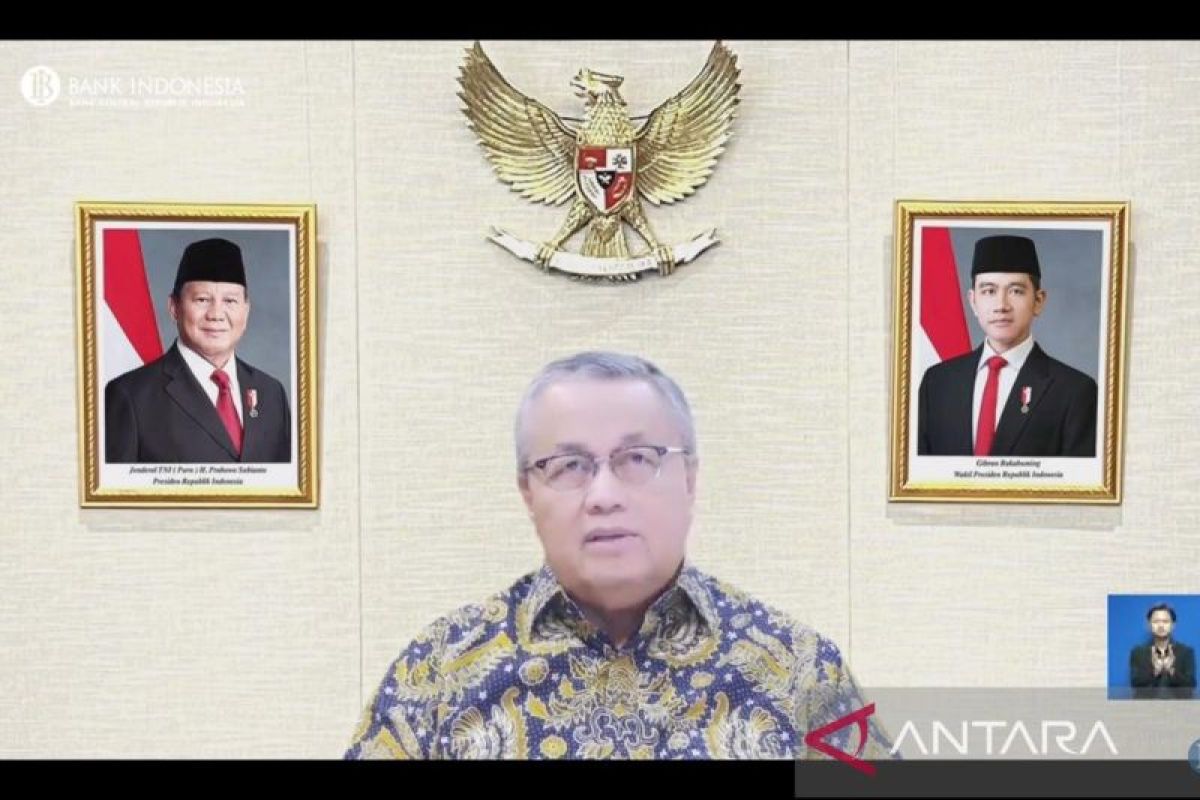
Jakarta – Bank Indonesia (BI) stands ready to calibrate its rupiah intervention instruments by adjusting its response to three scenarios of Middle East conflict impact, specifically regarding how high global oil prices will rise: not too high, moderate, or high.
BI Governor Perry Warjiyo stated that this effort would be reinforced by maintaining foreign exchange reserves and implementing an interest rate policy response.
“We continue to optimise our three monetary intervention instruments with adequate foreign exchange reserves, reinforced by interest rate policy,” Perry said during an online press conference on the results of BI’s Board of Governors Meeting in Jakarta on Tuesday.
As is known, BI’s exchange rate stabilisation policy operates through triple intervention: intervention in the offshore market through Non-Deliverable Forward (NDF), intervention in the domestic market through spot and Domestic Non-Deliverable Forward (DNDF), and purchases of government securities in the secondary market.
Perry explained that the calibration of these three instruments would depend on the extent of Middle East conflict escalation and its impact on oil prices, global economic growth and inflation, US dollar movements, portfolio outflows from emerging markets, and US Treasury yield levels.
He confirmed that over the past two days, during BI’s Board of Governors Meeting on Monday and Tuesday, the central bank had calculated scenarios to assess the possible duration, intensity, and impact of war on various economic indicators.
Perry cited the primary impact as being on global oil prices and their transmission to global economic growth and inflation, which are estimated to depress global economic growth whilst pushing inflation higher.
Global economic growth in 2026 is projected to slow to 3.1 per cent from the previous forecast of 3.2 per cent.
On the inflation side, global inflation pressure also increased from 3.8 per cent to 4.1 per cent, narrowing the room for global monetary policy cuts.
Additionally, BI also assessed the war’s impact on global financial markets. Perry conveyed that foreign portfolio capital flows have exited emerging market countries, including Indonesia.
Furthermore, pressure on the rupiah exchange rate has also increased alongside US dollar strength. Meanwhile, the high yield on US Treasury bonds affects interest rates and government bond yields in various developing countries, including Indonesia.
In light of these developments, BI made no mention of scope for BI-Rate cuts in this Board announcement, as it had in previous meetings.
“Therefore, because of this Middle East war impact, we no longer mention the possibility of interest rate reductions in our statement. We removed this because we indeed may maintain the BI-Rate at its current level to reinforce intervention and adequacy of foreign exchange reserves, and will calibrate this going forward according to future dynamics,” Perry said.
At the March 2026 meeting, BI maintained the BI-Rate at 4.75 per cent. The deposit facility and lending facility rates remained at 3.75 per cent and 5.50 per cent respectively.
BI stated this decision aims to strengthen rupiah exchange rate stability from the deteriorating global conditions due to Middle East conflict and to maintain inflation targets for 2026-2027 within the goal of 2.5 plus or minus 1 per cent.
This step marks the continuation of BI-Rate maintenance since October 2025, following a 150 basis point reduction since September 2024, or 125 basis points throughout 2025.