
BI Adjusts Bank Incentives After BI Rate Hike to Maintain Credit Growth
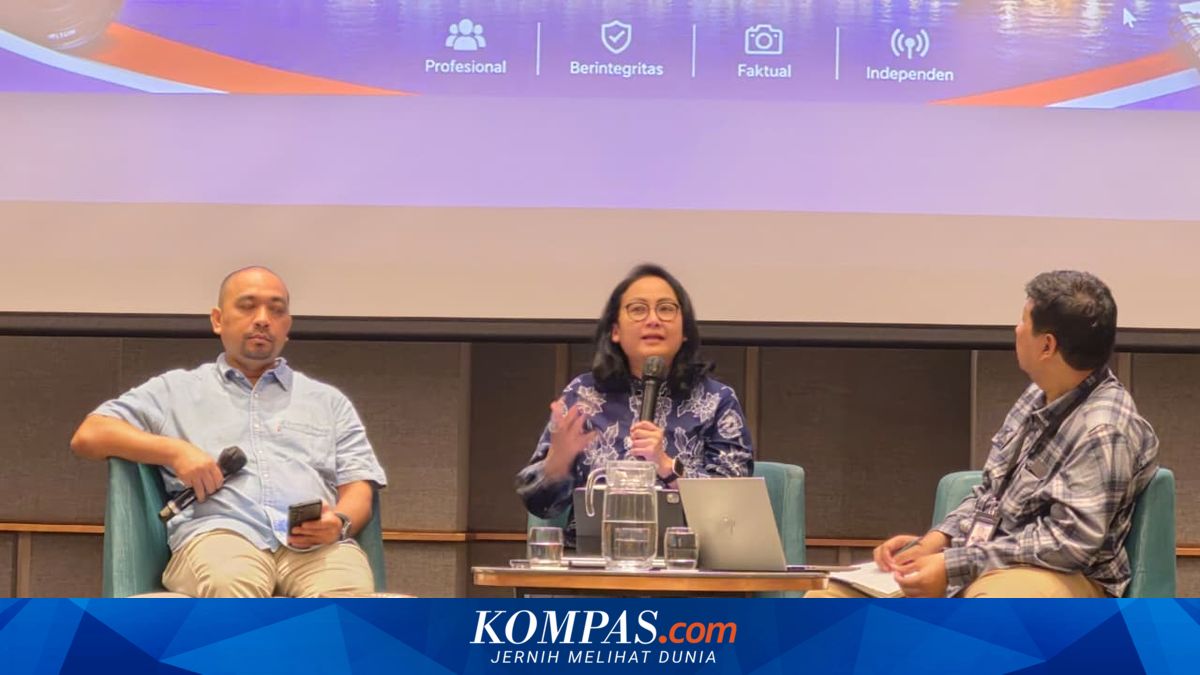
MAKASSAR, KOMPAS.com – Bank Indonesia (BI) will adjust the incentive scheme for the Macroprudential Liquidity Policy (KLM) to maintain credit growth despite rising benchmark interest rates (BI Rate).
The policy follows a 50-basis-point BI Rate hike at BI’s May 2026 Governor’s Meeting, raising it from 4.75% to 5.25%.
Dhaha Praviandi Kuantan, Director of BI’s Macroprudential Policy Department, said the changes aim to adjust the incentive mechanism for banks so they do not significantly raise lending rates when the BI Rate increases.
Under the current KLM incentive scheme, incentives are calculated based on how much banks reduce lending rates after a BI Rate cut. The revised scheme will instead base incentives on the spread between the BI Rate and bank lending rates.
‘If the BI Rate rises but banks do not significantly increase lending rates, they will receive incentives,’ Dhaha said during a media briefing in Makassar on Friday, 22 May 2026.
Previously, KLM was designed to accelerate the transmission of BI Rate cuts to bank lending rates. However, BI now aims to ensure banks’ response to BI Rate hikes is not overly aggressive.
‘The hope is that even with a rising BI Rate, credit rate increases remain manageable, allowing credit growth to continue,’ he explained.
Banks that maintain new lending rate spreads below 3 percentage points against the BI Rate will receive a maximum incentive of 100 basis points.
In addition to revising the interest-based incentive mechanism, BI is expanding KLM’s scope from focusing solely on credit (lending channel) to financing (financing channel).
This change allows the central bank to include non-traditional or non-credit financing as components eligible for liquidity incentives.
Currently, KLM incentives are provided to banks channeling liquidity to priority sectors such as micro, small and medium enterprises (MSMEs), housing, agriculture, creative economy, and other productive sectors. The scheme allows Mandatory Reserve Requirement (GWM) funds previously held at BI to be redirected for productive sector financing.
‘We added this because MSME growth remains constrained, leaving significant room for utilisation. Hence, financing is included,’ he said.
BI will also strengthen incentives for banks seeking funding outside third-party funds (DPK), including through non-traditional instruments and financial markets.
To this end, BI has added a new channel in KLM: the financing-to-funding channel. Under this scheme, banks can access up to 0.5% additional incentive space by actively seeking non-DPK funding.
‘For banks whose KLM incentives have not yet reached the 5.5% threshold, they can utilise this third channel if they pursue non-DPK funding. Since non-DPK funding requires effort and innovation, we can offer a 0.5% incentive,’ he added.