
BGN Warns Partners: Do Not Establish Cooperatives Merely as a Front for Monopoly
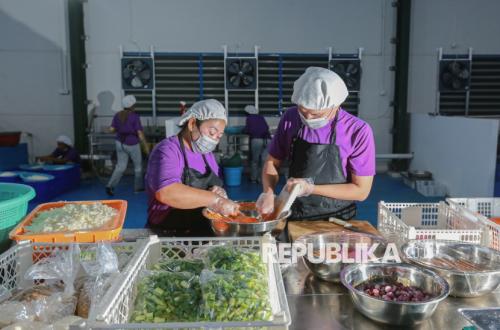
Serang — The Deputy Head of the National Nutrition Agency (BGN), Nanik Sudaryati Deyang, has warned foundations and partners against establishing cooperatives merely to monopolise and control food supply chains to Nutrition Service Provision Units (SPPG).
“These foundations and partners are creating cooperatives, which is strange,” Nanik said during an Economic People Empowerment Synergy event: Empowering MSMEs, Cooperatives, and Village-Owned Enterprises to Support the MBG Programme in Serang, Banten, earlier this week.
Under Presidential Regulation (Perpres) Number 115 of 2025, particularly Article 38 Paragraph 1, the implementation of the Free Nutritious Meals Programme (MBG) prioritises the use of domestic products and involvement of micro-enterprises, small businesses, individual proprietorships, cooperatives, merah putih village/urban cooperatives, and village-owned enterprises.
“However, these must be genuine cooperatives, not fake ones,” said Nanik.
Nanik has regularly received reports that many partners establish their own cooperatives to supply food raw materials to SPPG units. Rather than assisting small farmers, livestock breeders, and MSMEs in marketing their products, partners and foundations instead seek profit by establishing fake cooperatives.
“They establish cooperatives merely as a front to monopolise the supply of raw materials,” she said.
The Deputy Head of BGN for Public Communications and Investigation emphasised that the MBG programme must not be exploited for the business interests of a select few. The Government programme under President Prabowo Subianto is intended to foster and empower the grassroots economy.
Previously, the BGN’s Director of Community Empowerment and Participation (PPM), Tengku Syahdana, stated that his team had identified several management problems in MBG meal preparation facilities. Some SPPG units are dominated by particular parties in decision-making, including food supply.
“There are SPPG heads whose fathers hold positions or have conflicts of interest, wanting to select their own suppliers,” he said.
Additionally, some partners and foundations are excessively dominant in managing meal facilities, creating opportunities for food supply monopoly practices. “We have also found foundations that are too dominant, so that the SPPG heads cannot make decisions,” said Tengku.
However, some SPPG heads collude with partners and foundations in arranging food products and their prices. For this reason, Nanik emphasised that SPPG units must prioritise using food products from small farmers, livestock breeders, and fishers, as well as local business operators around the meal facility before seeking supplies from other regions.
“We provide solutions, such as enabling farmers to enter SPPG by gathering 10 to 15 people to establish a Trading Association or UD,” said Nanik.
Minimum 15 Suppliers Per Kitchen
SPPG units must not depend on one or two food suppliers, especially if supplies are provided by suppliers controlled by partners or foundations, including foundation-owned cooperatives. Each meal facility must engage a minimum of 15 suppliers to prevent monopolistic practices and ensure the economic benefits of the MBG programme reach local small business operators.
According to Nanik, using a limited number of suppliers could create monopolistic practices that contradict the MBG programme’s objective as an engine of grassroots economic development. “If there are only one to five suppliers, we will suspend it,” said the Chair of the Coordinating Committee of 17 Ministries and Institutions for MBG Implementation.
Each type of food product must be supplied by different business operators, from suppliers of tempe, tofu, eggs, chicken, meat, vegetables, to fruit. “There must be a minimum of 15 suppliers — a tempe supplier, a tofu supplier, an egg supplier, chicken suppliers (not just one but two), a meat supplier, fruit suppliers (not just one, but various such as banana and orange suppliers), and vegetable suppliers — all must be separate and not supplied by one entity,” Nanik explained.
Nanik emphasised that this policy is part of efforts to ensure the MBG programme operates in accordance with the grassroots economic development vision. “The programme’s benefits must be felt not only by recipients of nutritious meals, but also by MSMEs, farmers, and small business operators in the regions,” she said.
Meanwhile, Serang Deputy Mayor Nur Agis Aulia said the local government is ready to support supervision of MBG programme implementation to ensure it operates in accordance with established regulations.
“We will facilitate inter-agency coordination to ensure the MBG programme in Serang runs well and delivers economic benefits for the community,” he said.