
BGN Reminds Partners: MBG Programme Is Not a Business Venture
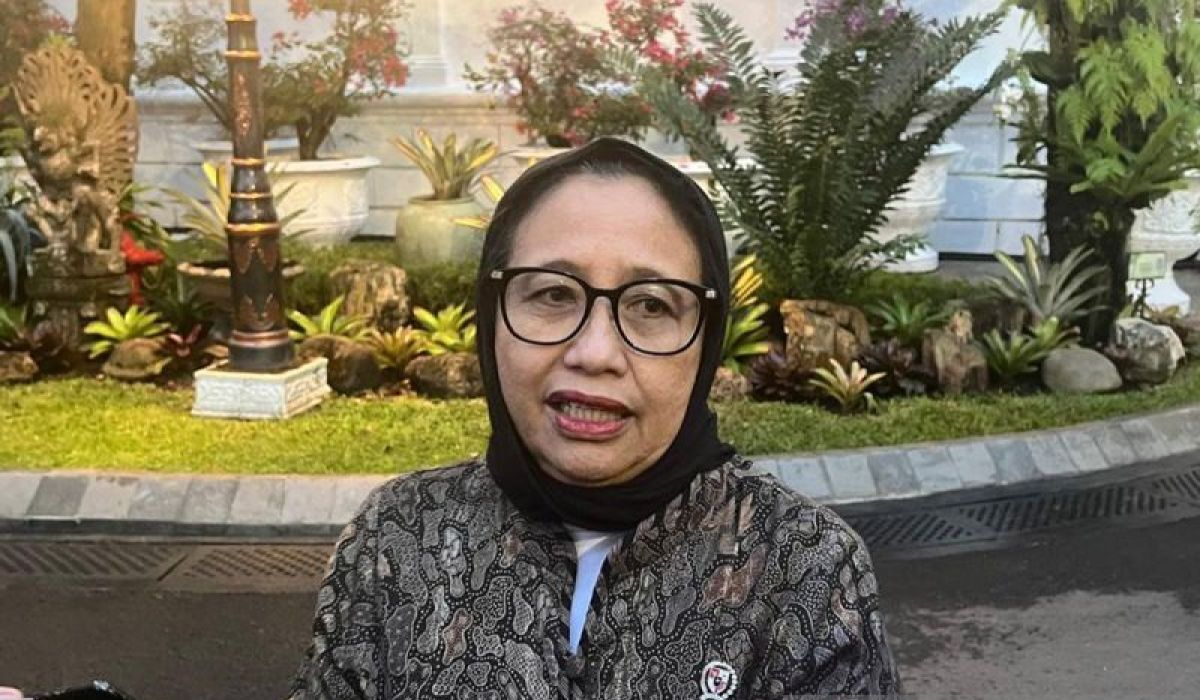
Jakarta — The Deputy Head of the National Nutrition Agency (BGN) for Communications and Investigations, Nanik Sudaryati Deyang, has stressed that the Free Nutritious Meals (MBG) Programme was never designed as a business venture. It was born from President Prabowo Subianto’s concern for society, particularly the poor.
According to Nanik, the idea originated from Prabowo’s personal experience in 2012, when he witnessed the conditions in Cilincing, North Jakarta, where residents scavenged leftovers from factory workers to take home and eat with their families.
“Prabowo was very angry at that time. From there his determination arose that if ever entrusted with the presidency, he would ensure that citizens, especially children, receive decent meals. So Prabowo regards MBG as not a business orientation,” Nanik said at a workshop titled Strengthening Communication Strategy and Public Relations Implementation in Jakarta, Saturday (7/3).
She added that MBG is designed as a social and humanitarian investment. In the initial deployment phase, the government opened partnership opportunities for organisations wishing to participate in MBG kitchen services, with priority given to foundations active in education, social work, and religious affairs.
According to Nanik, the policy aims that social organisations which have long helped the community also receive support to improve their facilities. “At the outset, partners had to be in the form of CVs or PTs, but they must be foundations. The foundations must be in education, social, or religious fields. Why? Because at the time Prabowo believed these foundations were already serving the country but lacked funds; thus incentives could be used to repair their dormitories, their schools, since meals were already funded by the state,” she said.
However, as it evolved, Nanik acknowledged that some parties exploited the opportunity by setting up foundations solely to run MBG kitchens. Some even managed numerous MBG kitchens with a business orientation.
“But what happened was unforeseen. By June or July, it was still on track. Most were genuinely non-profit foundations. But then, because the President was out and about, ‘Sir, when MBG?’, the target became very high and foundations proliferated; many people owned more than one kitchen,” she said.
She warned that such conditions could foster envy and undermine the programme’s original spirit. In some cases, she said, kitchen management became profit-oriented, with facilities and standard operating procedures neglected.
“In terms of ownership, these kitchens triggered envy because they were not run by social, educational, or religious foundations. Instead entrepreneurs posing as Foundations emerged due to the business orientation. Consequently, rooms were neglected, air conditioning was hard to obtain, and when equipment broke, replacement was avoided for financial reasons,” Nanik added.
Therefore, Nanik said she would continue evaluating all MBG partners. The cooperation contracts with partners, she said, are effectively for one year and can be extended based on evaluation results.
“They forget that the contract is only for one year and can be extended. That means we can end cooperation at any time. We will reaffirm that MBG is not a business but a humanitarian programme, a social investment. If anyone’s mind is only on money, we will remove them. There will come a time when they end because we will evaluate, evaluate, evaluate continually,” she stressed.
Nanik also reminded Heads of the Nutrition Fulfilment Service Units (SPPG) to run the programme in accordance with the technical guidelines and standard operating procedures that have been set.
“But you, as SPPG heads, must operate within the proper framework. Implement the guidance, follow the SOP,” she concluded.
Separately, 492 Nutrition Fulfilment Service Units (SPPG) in Sumatra were temporarily closed or suspended from 9 March 2026 with no end date.
PBNU launched 41 SPPG NU units based at Pondok Pesantren Darul Qur’an Bengkel, Labuapi, West Lombok Regency, West Nusa Tenggara.
The National Nutrition Agency is also empowering inmates at Purwakarta Prison to become farmers to supply MBG’s raw materials.
Nanik urged regional heads in regencies and cities to support local food supply for MBG kitchens, and lauded the DIY Provincial Government’s plan to establish the Lumbung Mataram scheme in villages as suppliers of MBG ingredients.