
BGN Invites Universities to Turn MBG into a Living Laboratory for Research and Studies
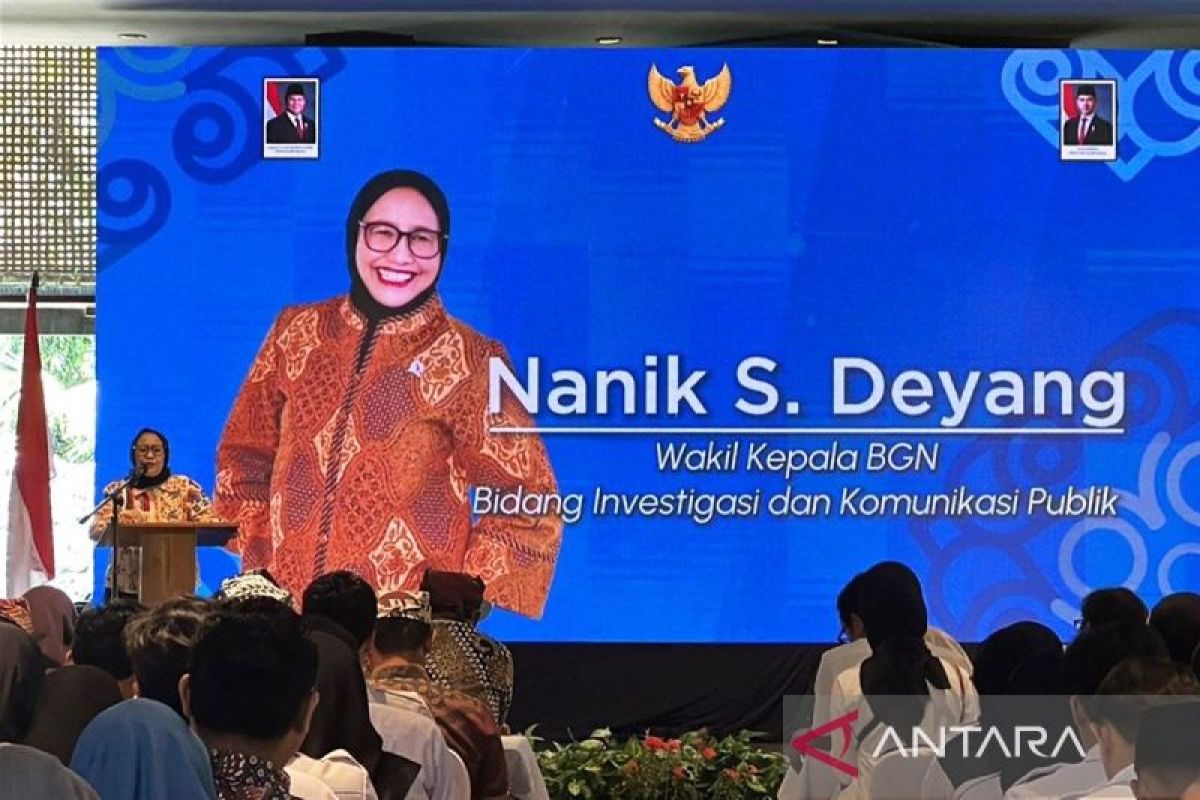
Jakarta (ANTARA) - The National Nutrition Agency (BGN) has invited the entire academic community in universities to transform the Free Nutritious Meals Programme (MBG) into a living laboratory that cultivates an ecosystem for research, studies, and quality education development.
Deputy Head of BGN for Public Communication and Investigation, Nanik S. Deyang, described the MBG Programme as a real learning space for the academic world.
“MBG is a laboratory for universities. All faculties can get involved and take on roles according to their fields,” said Nanik in an official statement in Jakarta on Tuesday.
She emphasised that the MBG Programme stems from concern over the many people who still lack access to decent food.
“There are still many of our fellow citizens who cannot eat properly. This is the main spirit of the MBG Programme,” she stated.
Through the MBG Programme, BGN opens opportunities for higher education institutions to provide input to make the programme’s implementation more effective.
Nanik also encouraged cross-sectoral involvement, including state-owned enterprises (SOEs) through corporate social responsibility (CSR) programmes for developing Nutrition Fulfilment Service Units (SPPG) in underdeveloped, frontier, and outermost (3T) regions.
Nanik cited Universitas Hasanuddin (Unhas) in Makassar, South Sulawesi, as a pioneer in establishing SPPG, which was inaugurated by the Minister of Higher Education, Science, and Technology (Mendiktisaintek) Brian Yuliarto along with BGN Head Dadan Hindayana on Tuesday (28/4).
Unhas serves as a leader for other universities in optimising the role of MBG.
“We hope Unhas will lead other universities so that MBG truly provides real benefits to society,” said Nanik.
She also appreciated Unhas’s readiness of facilities and resources, including laboratories that can assist in investigations if extraordinary incidents occur during the MBG Programme’s implementation.
Meanwhile, Unhas Rector Jamaluddin Jompa affirmed the university’s commitment to supporting the MBG Programme as part of efforts to improve national nutrition while strengthening the local economy.
Jamaluddin stated that the MBG Programme is not merely a sectoral initiative but a major cross-disciplinary agenda in the university environment.
“For Unhas, MBG is not just a programme for one faculty, but all faculties must be involved,” he said.
He emphasised that MBG is a strategic programme that universities can utilise to contribute and actively participate in improving human resource quality.
“MBG is an extraordinary programme; it would be a shame if universities only act as spectators,” said Rector Jamaluddin Jompa.