
BGN Holds Technical Training for Food Handlers to Improve Service Quality
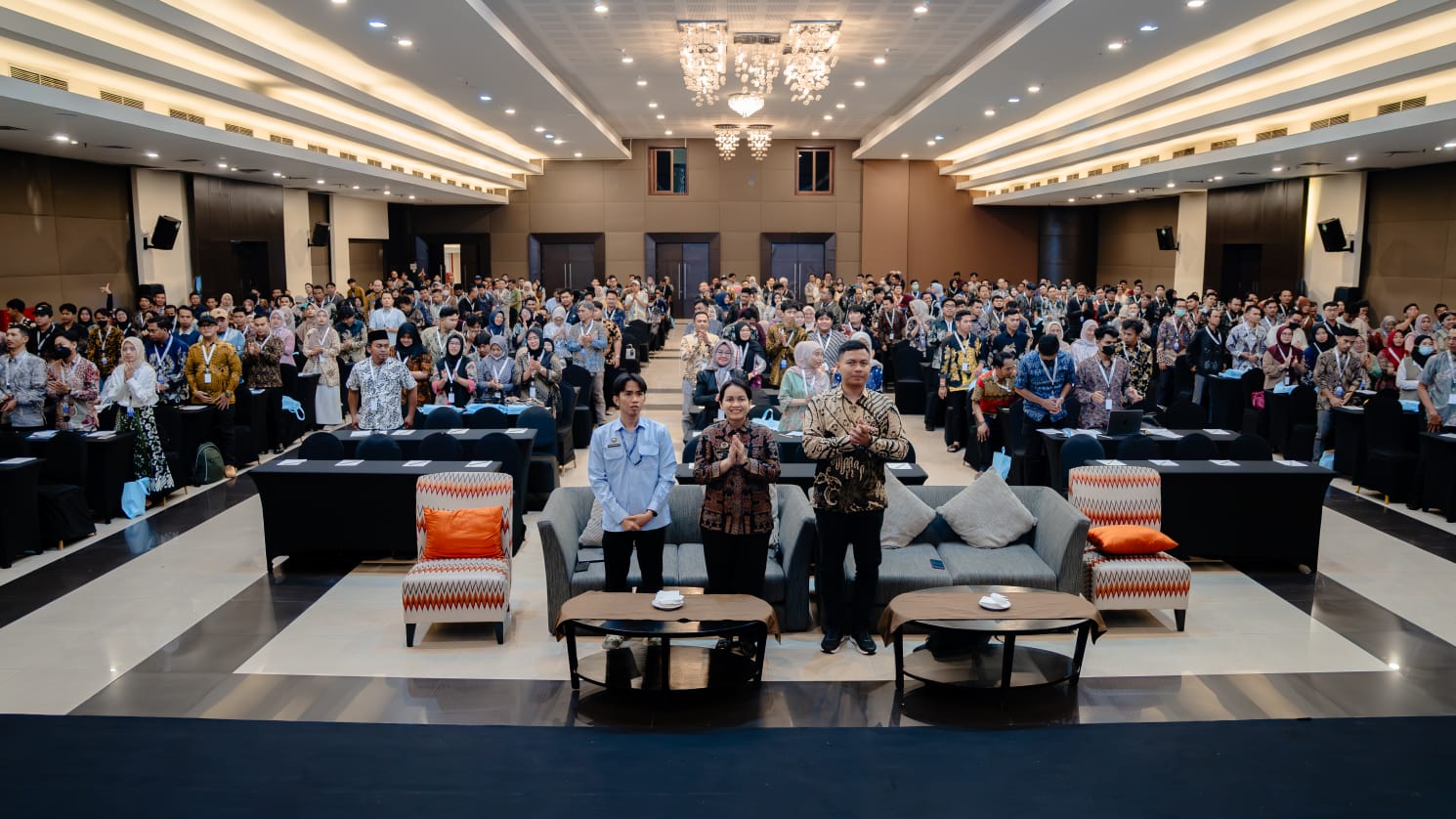
To improve the quality of providing nutritious food to the community, the National Nutrition Agency (BGN) held technical guidance (Bimtek) for Food Handlers in the Free Nutritious Food Programme (MBG) and the Acceleration of Issuance of the Certificate of Hygiene Sanitation (SLHS) on 7–8 March 2026.
The activity was conducted simultaneously in eight regions of the Programme Fulfilment of Nutrition Coordination Offices (KPPG): KPPG Jakarta, Bogor, Bandung, Cirebon, Semarang, Sleman, Surabaya, and Jember, with around 500 participants each day.
Participants comprised various stakeholders directly involved in the operations of the Nutrition Fulfilment Units (SPPG), including the Heads of SPPG, partner organisations/foundations, Nutrition Supervisors, Field Assistants (Aslap), and Cooks. The aim was to strengthen the capacity of food handlers to apply hygiene and sanitation standards, and to accelerate the process of issuing the SLHS for SPPG kitchens, a key component of MBG implementation.
The event was opened in hybrid fashion by the Deputy Head of the National Nutrition Agency (BGN) for Operational Nutrition Fulfilment, Irjen (Purn) Sony Sonjaya, who asserted that nutritious food is a right of every child in Indonesia, so the quality of food provision must be a shared concern. ‘This technical training is strategically important as a form of government commitment to improving the quality of national nutrition services through enhancing knowledge and skills of food handlers,’ he said.
Rapid Growth
Sony also stated that the MBG programme has developed rapidly, with strong community involvement demonstrated by the establishment of more than 25,000 SPPG across Indonesia, many initiated by community partners or foundations. Therefore, capacity building for the human resources involved in SPPG kitchens is a crucial step to ensure safety and quality standards are maintained.
‘Food handler training is one of the requirements to obtain the SLHS, and with this certificate, the MBG or other nutritious meals operations can be conducted in a single site where facilities are guaranteed to be clean and healthy. Hence it is named Hygiene Sanitation Feasibility,’ he explained.
He noted this point is important, and directed all KSPPG to remind their partners that from the time they are declared operational until 30 days they must register for the SLHS process. ‘If they have not registered within 30 days, BGN will suspend or halt SPPG operations,’ he added.
SPPG Inspections
As of last night, Sony continued, 25,061 SPPG had been inspected by the Directorate of Monitoring and Supervision. Some SPPG were found not to meet requirements. They were given first SP, first warning letter, second warning letter, and in some cases halted immediately.
‘For example, when I visited a site in a province, the facilities were truly unfit and we halted it immediately because the recommendations were not met. We checked air circulation, room temperature during production, and even the effluent system; some only have a septic tank,’ he added.
The event also aims to improve the percentage of SPPG meeting administrative and technical SLHS requirements. They also facilitate autonomous environmental health inspections of at least 80% and accelerate SLHS enforcement through assistance with registration in the OSS system.
Hygiene Principles
Sony emphasised that the SLHS Bimtek focuses on applying the principles of ready-to-eat food hygiene, including six pillars of Food Hygiene Sanitation, Personal Hygiene, Sanitation of Premises and Buildings, Sanitation of Equipment, and Standards of Quality.
‘Thus, this MBG programme can be implemented with improved quality, making it MBG that has a positive impact for our generation,’ he concluded.
He urged KSPPG to maintain three social media platforms; these will serve as communication channels between KSPPG and the public. ‘So SPPG must inform today’s menu, ingredients, nutritional content, and prices. For example, rice, chicken teriyaki, then steamed carrots and beans, bananas; there must be a price,’ he added.
He also asked the public to monitor on the ground and to check prices for realism. ‘For instance, how much for a banana? Rp1,500 per banana,’ he said.
If conditions on the ground are found not in line, Sony said, the public can protest on the SPPG’s social media or contact the hotline 127 or WhatsApp and telephone numbers.
Quality of Food
At the opening in KPPG Cirebon, the Deputy for Distribution and Provision at the National Nutrition Agency, Brig. Gen. (Purn) Suardi Samiran, stated that food quality is determined not only by ingredients but also by preparation, storage and presentation. He said food safety standards must be applied comprehensively at every stage of SPPG kitchen operations. He also emphasised that through the Food Handler Bimtek and SLHS acceleration, the government wants to ensure all personnel involved have adequate knowledge, skills, and awareness to carry out their duties in their respective SPPGs. ’Moreover, accelerating the issuance of the SLHS is a major priority as a form of commitment and accountability…