
BGN Emphasises Importance of Oversight and Evaluation of Free Nutritious Meal Programme
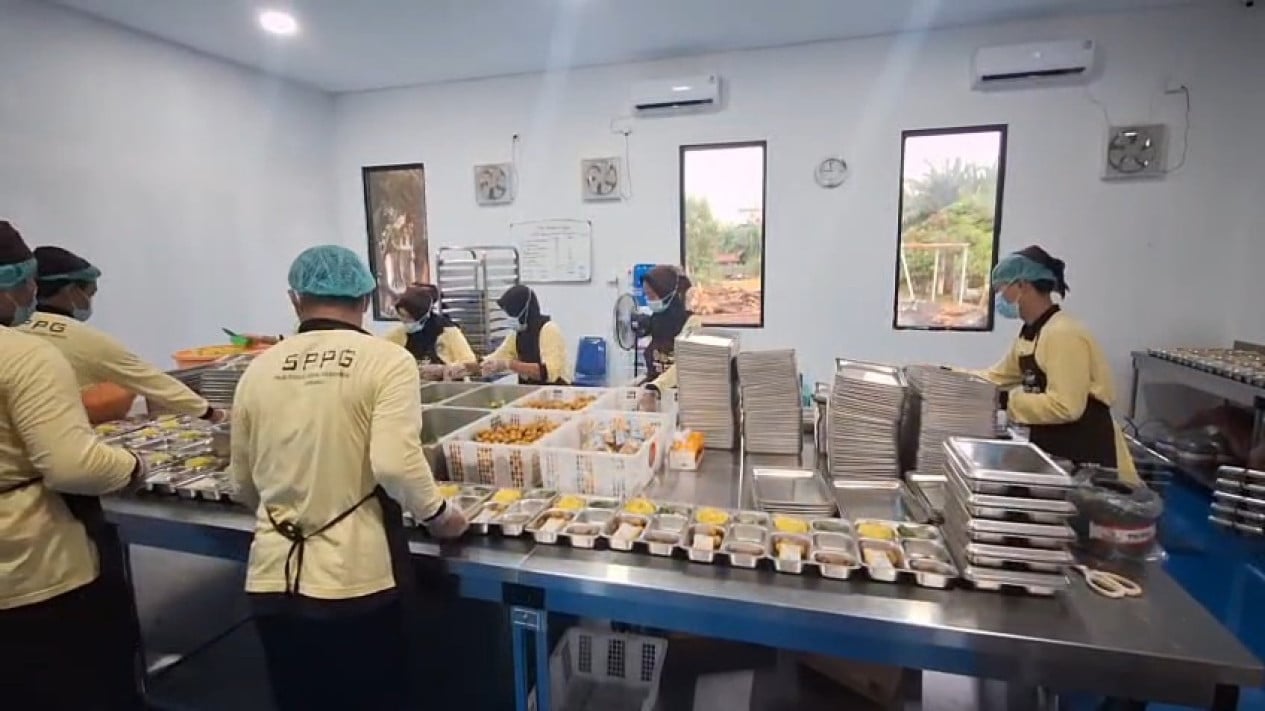
Jakarta – Implementation of the government-initiated Free Nutritious Meal Programme (MBG) continues to operate and undergo evaluation. In the field, strict oversight of Nutrition Service Delivery Units (SPPG) has become a primary agenda.
Albertus Dony Dewantoro, Director of Monitoring and Supervision for Region II at the National Nutrition Agency (BGN), stated that this oversight measure is critical to ensure that the entire food provision process, from kitchen to the dining table of children and programme beneficiaries, operates in accordance with established Standard Operating Procedures (SOP).
“On Java alone, the BGN has temporarily halted operations of 1,512 SPPG units as part of efforts to strengthen programme implementation evaluation,” Dony stated on Friday, 13 March 2026.
He said the measure is part of efforts to restructure the Free Nutritious Meal Programme (MBG) service delivery, ensuring all operational facilities meet established health, sanitation, and governance standards.
Based on evaluation data, the 1,512 SPPG units with temporarily suspended operations are distributed across several provinces in Region II: DKI Jakarta with 50 units; Banten 62 units; West Java 350 units; Central Java 54 units; East Java 788 units; and DI Yogyakarta 208 units.
Dony stated that the BGN will provide mentoring and verification to affected units so they can quickly fulfil required prerequisites. “SPPG operations that have been temporarily halted will be resumed in stages once all operational requirements and established standards have been met,” he said.
Operational challenges in the MBG programme must continue to be addressed to rebuild public confidence in the initiative. Programme managers have noted that the MBG’s public perception and image have deteriorated significantly.
Risang Rimbatmaja, researcher and behaviour change communication practitioner from the Cipta Foundation (an NGO active in health and environmental work), offered insights on how public response can differ from programme management, whilst providing recommendations for improving governance and public communication.
“The programme managers’ logic, in this case the National Nutrition Agency, and public logic differ. Statistically, incidents occurring in the MBG programme may be extremely small, only 0.00 per cent of the total meals distributed. However, for the public, one or two incidents alone constitute a sensational situation,” he said.