
BGN calls on SPPG partners in Southeast Sulawesi to improve quality of MBG kitchen facilities
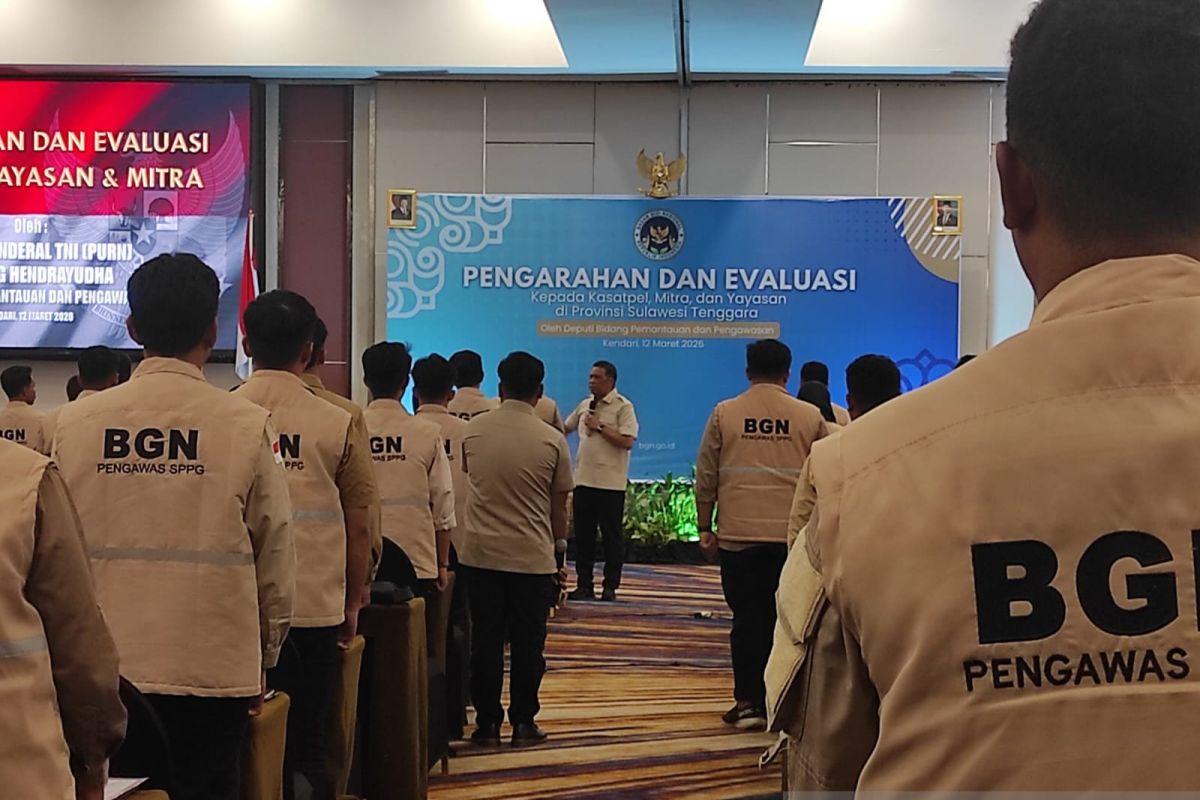
Kendari – Indonesia’s National Nutrition Body (BGN) has called on all Nutrition Service Unit (SPPG) partners in Southeast Sulawesi to improve and upgrade the quality of kitchen facilities under the Free Nutritious Meal (MBG) programme.
Dadang Hendrayudha, Deputy for Monitoring and Supervision at BGN, stated in Kendari on Thursday that improving kitchen quality is crucial for ensuring the flagship programme of President Prabowo Subianto operates effectively without generating controversy.
“Many parties wish to become MBG kitchen partners but cannot. You have been given an opportunity by the state to serve, so carry out this responsibility with utmost seriousness,” he said.
He stressed that the government has allocated substantial budgets for this programme. However, such investment will be wasted if SPPG partners fail to take responsibility for improving facility quality, addressing both minor and major deficiencies.
“Do not become partners whilst building kitchens carelessly without any sense of responsibility whatsoever,” he stated.
He revealed that BGN has mandated all MBG kitchen heads in Southeast Sulawesi to sign a commitment memorandum for SPPG improvement. This step is taken to ensure food distribution to students and beneficiaries remains free from extraordinary health incidents or other health emergencies.
Partners failing to meet this commitment will face strict sanctions from BGN, including facility closure.
“If there is no improvement within one week, we issue a first warning. Two weeks later, a second warning, and if it continues to a third warning, we recommend closure,” Dadang explained.
Beyond technical kitchen aspects, Dadang also instructed MBG kitchen heads to empower local communities as employees with monthly salaries of 2.4 million rupiah, rather than solely employing family members.
According to him, engaging local communities and micro, small, and medium enterprises (MSMEs) will drive economic growth and welfare in the region.
“If local residents are recruited at these wages, they can meet their children’s school expenses and other basic needs. That is the primary objective of this programme,” Dadang affirmed.