
BGN Becomes a Portrait of Collaboration Between Officials and Civilians to Resolve Nutrition Issues
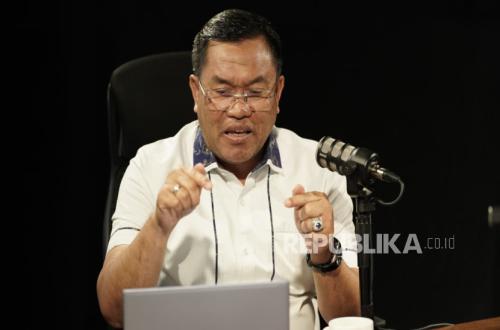
REPUBLIKA.CO.ID, JAKARTA – The Free Nutritious Meals (MBG) programme has now become one of the government’s strategic policy pillars. However, few people know that the institution leading this programme, the National Nutrition Agency (BGN), began as a small, challenging initiative in October 2024.
In the historical record of its formation, following the issuance of Presidential Regulation No. 83 of 2024 on 15 August 2024, BGN was initially driven by just two main personnel. Yet, behind that lean structure, there were 15 volunteers working day and night to lay the foundation for this major programme.
One of the key figures involved from the start, Inspector General of Police (Ret.) Sony Sonjaya, now serving as Deputy Head of BGN, recounts the struggle to convince the public in the early days. At that time, BGN lacked a complete bureaucratic apparatus, but the targets were already in sight.
“We sought out people who believed in and were willing to support this programme by becoming partners, not just vendors,” said Sony in a statement quoted on Tuesday (5/5/2026).
He views the birth of BGN as a true portrait of collaboration between civilians, the military, and the police in addressing the nation’s nutrition problems. It is a journey that proves how technological innovation combined with a spirit of dedication can provide solutions for the welfare of the people.
According to Sony, the challenges were not easy. The partners invited to collaborate had to possess substantial capital, at least Rp 900 million per month to build kitchens and provide bridging funds.
Interestingly, Sony noted, amid doubts from many parties regarding the Cooperation Agreement Letter (SPK), the volunteers moved forward with trust as their capital. Commitment to the programme’s success, he said, was the main key before all formal administration was fulfilled.
As a retired Indonesian National Police officer, Sony brought a data-based culture to BGN. He recalls how his digital literacy was honed from a young age, even being directly mentored by a police figure.
“I still remember being quickly taught to use Microsoft PowerPoint by Police Major Badrodin Haiti (former National Police Chief) when he served as Deputy Chief of Jakarta East District Police,” he reminisced. It was this systematic capability that he later transformed into the MBG Programme Reporting System.
The initial step in registering beneficiaries involved close collaboration with TNI elements. Data was collected by Babinsa in the field, then compiled in stages up to the Kodam level. This data was synchronised with Dapodik from the Ministry of Education, Culture, Research, and Technology, Emis from the Ministry of Religious Affairs, and BKKBN data.
Now, the reporting system that began as PPMBG has evolved into a more complex operational system. Drawing lessons from the pilot projects in Warung Kiara and Bojong Koneng, BGN now implements:
Fleet Management: Regulating logistics and food distribution to ensure timeliness.
Point of Process (POP): A real-time reporting system to ensure every portion of food reaches the rightful hands.