
BGN affirms it will "suspend" SPPG units without SLHS certification
Jakarta (ANTARA) - The National Nutrition Agency (BGN) has affirmed that it will suspend or halt the operations of Nutrition Fulfilment Service Units (SPPG) that do not possess Hygiene and Sanitation Certificates (SLHS) to improve the quality of the Free Nutritious Meals (MBG) programme.
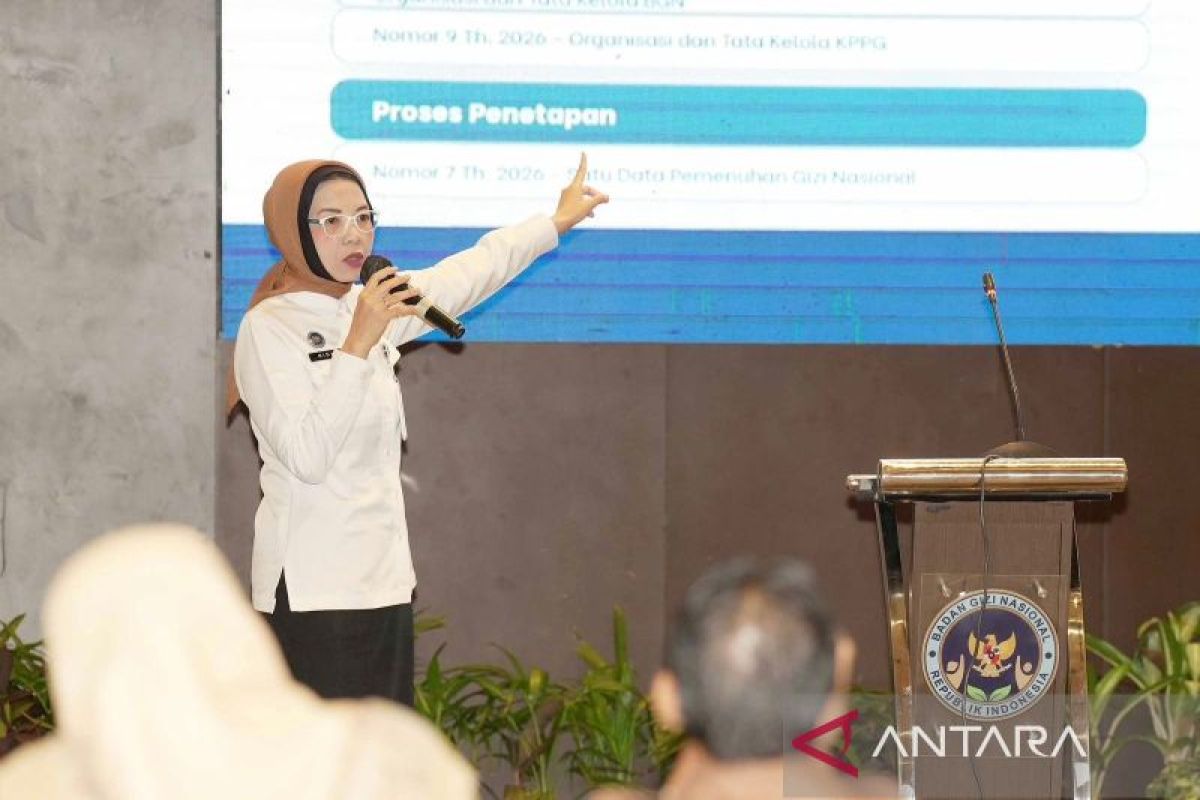
The Head of the Legal and Public Relations Bureau of the National Nutrition Agency (BGN), Khairul Hidayati, stated in an official release in Jakarta on Wednesday that accelerating the acquisition of SLHS is not merely an administrative matter but concerns the sustainability of the programme on a national scale.
Hida reminded that, in accordance with BGN Regulation No. 4 of 2026, SPPG units that do not yet have SLHS will have their operations suspended at the latest three months after the regulation is established, until the certificate is obtained.
“I want to emphasise that this policy is not intended to create difficulties. On the contrary, it is a form of our responsibility to protect the beneficiaries and ensure the programme’s sustainability. We must begin to change our perspective on SLHS. Do not view it as an administrative burden, but rather as a minimum standard for protecting the public,” she said.
“This concerns governance, public protection, worker protection, and the national sustainability of the MBG Programme,” she added.
According to her, the MBG Programme is a strategic national initiative implemented with a strong regulatory foundation through Presidential Regulation No. 83 of 2024 on the establishment of BGN, reinforced by Presidential Regulation No. 115 of 2025 on the Governance of MBG Implementation.
In addition, BGN has issued various technical regulations governing waste management, food safety assurance systems, nutritional standards, and technical guidelines for programme implementation.
She stated that the success of the programme is highly dependent on the quality of field implementation, particularly through the strategic role of SPPG as part of the national public nutrition service system.
“SPPG is not just a food production kitchen, but part of the national public nutrition service system. It is there that the quality of the programme is truly tested,” said Hida.
She explained that the public will judge the MBG Programme based on the daily quality of the food received, from distribution timeliness and cleanliness to food safety. Therefore, SLHS becomes a crucial instrument to ensure that food processing is carried out according to good hygiene and sanitation standards.
For Region III, Hida continued, there are 35 notable incidents, including two cases in South Sulawesi that do not yet have SLHS. This must be a serious concern for all SPPG managers.
“Often, problems arise not because we lack regulations, but because existing standards are not implemented with discipline. Therefore, I hope that all SPPG managers can view SLHS not merely as an administrative obligation, but as a moral responsibility to the public,” she concluded.