
BGN Addresses Concerns Over Price Gouging of Food Ingredients by SPPG Partners
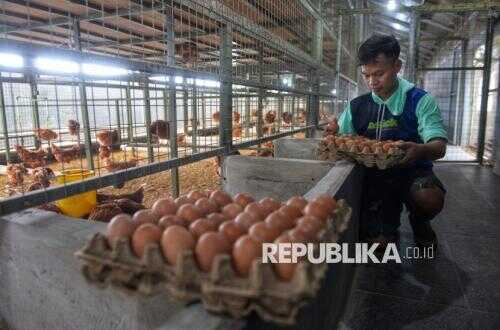
REPUBLIKA.CO.ID, SURAKARTA - Deputy Head of the National Nutrition Agency (BGN), Nanik Sudaryati Deyang, has received numerous reports about partners frequently inflating the prices of food ingredients for the Nutrition Fulfillment Unit (SPPG) kitchens. She reminded the SPPG heads, financial supervisors, and nutrition supervisors not to compromise with SPPG partners in fraudulent practices that undermine the Free Nutritious Meal (MBG) program.
“Remember! SPPG heads, financial supervisors, and nutrition supervisors, never agree to their demands, especially cooperate with SPPG partners who inflate the prices of food ingredients for this MBG program, especially with poor quality food ingredients,” said the Deputy Head of BGN for Public Communication and Investigation, in Solo, Tuesday (February 24, 2026).
Nanik conveyed her message during a Coordination Meeting with SPPG heads, financial supervisors, and nutrition supervisors in the Solo Raya region. The meeting was attended by 933 people involved in managing the MBG kitchens, consisting of SPPG heads, financial supervisors, and nutrition supervisors, from the cities of Surakarta, Boyolali, Sragen, and Karanganyar.
During the question-and-answer session, many SPPG heads reported that partners often inflated prices above the Highest Retail Price (HET) and forced them to accept poor-quality ingredients. Hearing this, Nanik immediately ordered the coordinators for the Surakarta, Boyolali, Sragen, and Karanganyar regions to collect all the data.
“Go around, check directly at the SPPGs, find out which SPPGs are experiencing this price inflation,” she said.
According to Nanik, this firm stance against compromise is very important. If the Supreme Audit Agency (BPK) finds price inflation of food ingredients above the HET in the SPPG’s financial reports, the SPPG head will be held responsible.
“Partners can relax, but you will be the one facing the law,” said Nanik.
Nanik not only reminded the managers of the MBG kitchens but also threatened the naughty partners who have inflated the prices of food ingredients above the HET and then forced the SPPG heads to accept food ingredients from only one or two suppliers they designate, especially with poor quality.
“SPPG heads, please tell your partners that if any partner is found to be inflating food prices and only providing one or two suppliers, then I will suspend them!” said Nanik.
Nanik said that the suppliers of food ingredients for the SPPG kitchens should not be dominated by one or two suppliers directed by the partners. SPPGs must empower farmer groups, breeder groups, fisher groups, cooperatives, and MSMEs around the MBG kitchens to become suppliers of food ingredients. The cooperatives in question should also not be artificial cooperatives created by partners just to circumvent the rules.
Nanik also prohibited SPPGs from arbitrarily rejecting supplies of food ingredients from local farmers, breeders, or fishermen. SPPGs are even required to foster and help them establish businesses so that they can become suppliers of food ingredients.
With the involvement of many food ingredient suppliers, it is hoped that the community around the kitchens will also benefit from the MBG program. This will keep the economy moving in the villages.
“SPPGs must use at least 15 suppliers of food ingredients to meet their respective needs,” said Nanik.
The involvement of local communities as suppliers for the MBG kitchens is clearly regulated in Presidential Regulation (Perpres) number 115 of 2025. “The implementation of MBG prioritizes the use of domestic products and the involvement of micro-enterprises, small enterprises, individual limited liability companies, cooperatives, village/urban cooperatives, and village-owned enterprises,” said Nanik, quoting article 38 paragraph 1.