
BFA Forum: Asia Still the Locomotive of Global Economic Growth
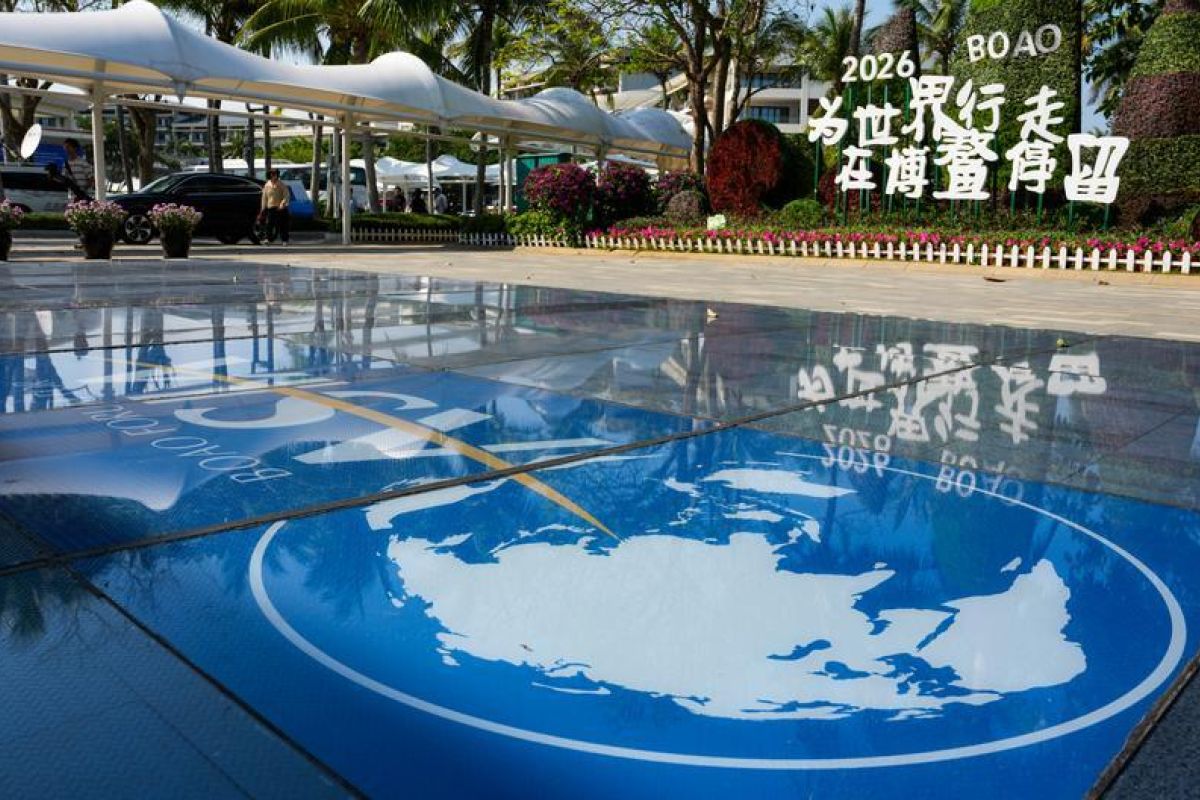
Boao (ANTARA) - Asia remains the world’s primary engine of growth, as the region’s share in global gross domestic product (GDP) continues to rise, according to a report released by the Boao Forum for Asia (BFA) on Tuesday (24/3), Xinhua reported on Wednesday.
Asia’s economy is projected to grow by 4.5 percent in 2026, while its share of global GDP this year has increased to 49.7 percent from 49.2 percent in 2025 based on purchasing power parity, as stated in the report titled “Asian Economic Outlook and Integration Progress Annual Report 2026”.
Many believe that the “Asian Century” has arrived, said BFA Secretary-General Zhang Jun during a press conference.
Despite facing significant challenges, Asia’s economy remains resilient with positive prospects and continues to make important contributions to the global economy, international trade, and sustainable development, Zhang said.
Established in 2001, the BFA is a non-governmental and non-profit international organisation committed to promoting regional economic integration and bringing Asian countries closer to their development goals.
Taking place from 24 to 27 March, this year’s conference is themed “Shaping a Shared Future: New Dynamics, New Opportunities, New Cooperation” and is being held again in Hainan Province, southern China.
According to the report, Asia remains the world’s top destination for foreign direct investment (FDI), recognised for its resilience, growth potential, and long-term appeal to global investors, with China and ASEAN leading as the most attractive destinations.
In terms of technology, the report mentions that the global centre for artificial intelligence (AI) development is progressively shifting from Europe and the United States (US) to Asia.
“Leveraging their large digital populations, diverse application ecosystems, and coherent policy frameworks, Asian economies are rapidly evolving from AI followers to pioneers,” the statement said.
The AI industry chain is now broader and more complex, with various Asian countries holding strengths in different vertical sectors, said Lydia Chen, research partner at Deloitte China. “Going forward, collaboration at the industry, software, data, and policy levels will help facilitate smoother and more efficient flows of key factors.”
A report on sustainable development in Asia was also launched on Tuesday, highlighting that Asia is emerging as a key force in the global shift towards more environmentally friendly and low-carbon energy, transitioning from the “largest traditional energy consumer hub” to a “leader in clean energy development.”
Regarding progress in Asian integration, the report states that the foundation for Asian trade integration continues to strengthen, with data showing intra-regional trade dependence rising from 56.3 percent in 2023 to 57.2 percent in 2024, as major economies in the region further bolster their trade ties with one another.
Asia-Pacific economies are increasingly shifting from individual integration into global value chains to a model of shared regional integration, with many countries climbing the value chain thanks to intra-regional support, the report mentioned.
Driven by rising investments in digital infrastructure, dividends from Asia’s vast market demand, and deepening regional economic integration, the region is gradually transforming from mere participants in global services trade to one of its primary growth engines, the report explained.
Describing Asia as a beacon of global growth in recent years, Denis Depoux, global managing director of Roland Berger, noted that China plays a strong role in this trend, driven by significant technological breakthroughs.
China, with its large market advantages, continues to expand its openness to the world, particularly by promoting a new form of inclusive and mutually beneficial economic globalisation, said Sang Baichuan, dean of the International Institute of Economics at the University of International Business and Economics. “This allows China’s open and vast market to provide more opportunities for Asian economies and the wider world.”
He added that as a result, the internal cohesion of Asia’s economy will be further strengthened, and its resilience to external shocks will increase.
Regional cooperation mechanisms are important instruments for maintaining openness and providing policy certainty, said Rebecca Fatima Sta Maria, former executive director of the APEC Secretariat. “This certainty can attract investment and promote more sustainable and long-term development.”
This year marks the APEC “China Year”, with the theme “Building an Asia-Pacific Community for Shared Prosperity”. China will host the 33rd APEC Economic Leaders’ Meeting in November.