
Beyond Rising Energy Prices, the Closure of the Strait of Hormuz Threatens Global Food Supplies
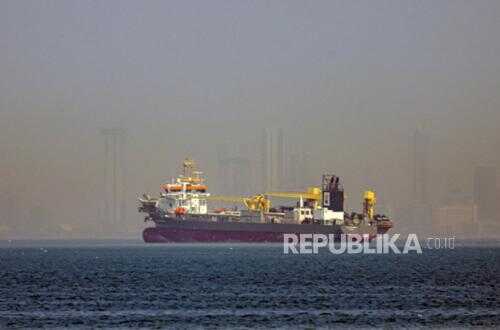
Washington — The military crisis in the Strait of Hormuz has evolved into a serious threat to global economic stability. The closure of the waterway that distributes energy, metals and food worldwide is beginning to trigger domino effects, from higher petrol prices to a fertiliser crisis. The commander of Iran’s Islamic Revolutionary Guard Corps (IRGC) on Monday affirmed that the strait is now ‘closed’. The IRGC warned that any vessel attempting to pass would be ‘burned’. In response, U.S. President Donald Trump said the U.S. Navy would escort tanker ships and offer political risk insurance to shipping companies in the Gulf region.
The Strait of Hormuz accounts for 25 percent of global maritime oil trade and 20 percent of LNG shipments. The blockage of the narrow passage is expected to push up global crude oil prices that have been creeping higher if the blockade lasts for a prolonged period. Hakan Kaya, senior portfolio manager at Neuberger Berman, warned that full closure for more than a month could push crude oil prices into triple digits (above $100 per barrel).
‘The scale of the stakes is enormous,’ Kaya said. The impact would not only be felt at petrol stations but also in the rise of jet-fuel prices, which would make air travel more expensive. While the U.S. is currently the world’s largest oil producer and not as dependent on Iran as in the 1979 crisis, global market shocks remain unavoidable.
Fertiliser crisis looming. According to Axious, the most worrying impact comes from the food sector. According to trading analytics firm Kpler, around 33 percent of global fertiliser supplies, including sulphur and ammonia, pass through the Strait of Hormuz.
Veronica Nigh, a senior economist at the Fertilizer Institute, said that almost 30 percent of global ammonia production and 50 percent of urea are now at high risk due to the conflict.
This is significant given that Saudi Arabia accounts for roughly 40 percent of US phosphate imports, which are a key fertiliser input. Meanwhile, fertiliser shortages will hurt major staple crops such as maize, soybeans, wheat and cotton.