
Beyond Mere Revenge: The Meaning of 'For Every Blood, There is Diyah' as Stated by Mojtaba Khamenei
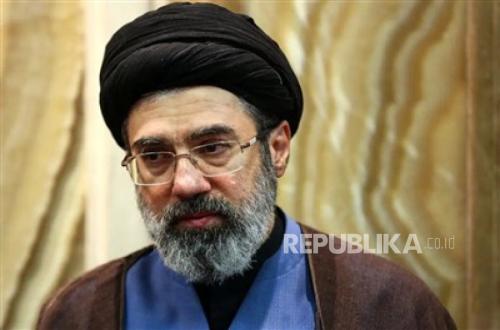
REPUBLIKA.CO.ID, TEHERAN — Amid the intensifying escalation between Iran, Israel, and the United States, a new voice has emerged from the heart of the Islamic Republic’s power centre. Following the assassination of senior figure Ali Larijani, Iran’s new Spiritual Leader, Mojtaba Khamenei, has issued a statement that is profoundly stirring.
Behind those words lies a ‘war of meanings’ that is often overlooked in Western translations. ‘For every blood, there is diyah… blood compensation that must be immediately paid by the criminal killers of these martyrs,’ stated Mojtaba, as quoted by regional media on 18 March 2026.
This statement came just a few days after he assumed the leadership role following the martyrdom of his father. To the international public, this message might sound like an ordinary threat of retaliation. However, for Muslim communities and Middle East observers, the use of the specific term ‘diyah’ is a declaration of a deep moral and legal framework.
Not merely a price
Many Western media outlets—and even some based in Doha, such as Al Jazeera—simplify the term diyah to ‘price’ (price/thaman). Yet, in the treasure trove of Islamic jurisprudence, diyah is not merely a material transaction or financial compensation for the loss of life.
Diyah is an institution of justice. It exists within a framework that involves qisas (equivalent retaliation) and forgiveness, writes the Palestine Chronicle.
Unlike ‘price’, which commodifies life, diyah acknowledges that every drop of blood creates a moral and social imbalance that must be restored. This term serves as a structured form of accountability aimed at preventing endless cycles of revenge (perpetual violence).
By choosing the word diyah, Mojtaba Khamenei is not talking about a ‘transaction’, but about an absolute ‘moral obligation’.