
Beware of Water Crisis During Long Dry Season in 2026, Bappenas Highlights These Regions
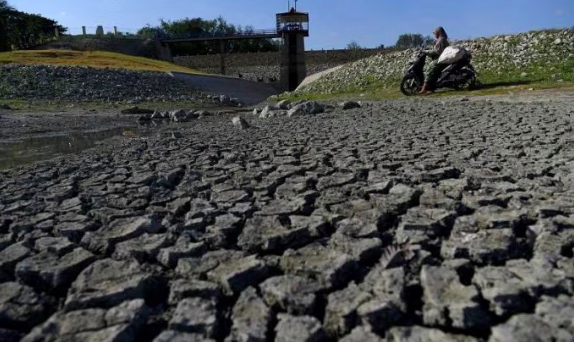
The Ministry of National Development Planning/National Development Planning Agency (Bappenas) has highlighted that several regions, particularly on Java, face potential water crises, especially during the prolonged 2026 dry season.
“Indonesia’s water situation is generally safe on average, but when we look at each island and region, Java is facing significant water shortages,” said Dadang Jainal Mutaqin, Director of Forestry and Water Resources Conservation at Bappenas, during the dissemination of the Indonesia Environmental Outlook (IEO) 2026 at the KEHATI Foundation in Jakarta on Friday, 13 March.
Specifically, he identified regions with water availability issues including Jakarta, East Java, several areas of West Java, and outside Java, regions around Medan and Makassar.
According to World Bank data from 2021, Indonesia’s potential water availability reaches 3.9 billion cubic metres annually. Agriculture and irrigation consume 80% of national water supplies.
Beyond agriculture, water is needed for renewable energy, with 7.5% of Indonesia’s electricity generated by hydroelectric power plants (PLTA).
There are several challenges relating to water resources in the country. Water demand is projected to increase by 31% in 2045 compared to 2015, driven by population growth and a fourfold increase in industrial demand.
Additionally, there is a threat of land subsidence due to groundwater extraction and 12.7 million hectares of critical land.
Water resource conservation has become a government priority, beginning with efforts to control pollution and monitor water quality to protecting and preserving water sources.
“Regarding water self-sufficiency, this is a watershed area conservation programme. It includes forest and land rehabilitation, irrigation system management, multipurpose dam construction, and other initiatives,” he explained.
Bappenas has calculated that funding requirements for post-disaster rehabilitation and reconstruction in Sumatra through 2028 amount to Rp56.3 trillion as a minimum initial figure.
The transition to a circular economy is regarded as important to support inclusive growth, enhance national competitiveness, and assist in achieving the Net Zero Emissions 2060 target.
Uncontrolled spatial planning changes have also affected water retention capacity in the Jabodetabek region.
According to him, one measure taken by the West Java provincial government is promoting more water-efficient agricultural commodity development.
The Meteorology, Climatology and Geophysics Agency (BMKG) predicts that the 2026 dry season in Indonesia will be drier than 2025, with the dry season beginning earlier in April 2026.
The suffering of flood victims in Sumatra from the 24-27 November 2025 floods continues, with the situation apparently not yet resolved three months later.
The duration of physical repairs depends heavily on weather conditions in the field.