
Beware of Sulphur Crisis Looming Over Indonesia, Nickel Downstreaming Could Be Disrupted!
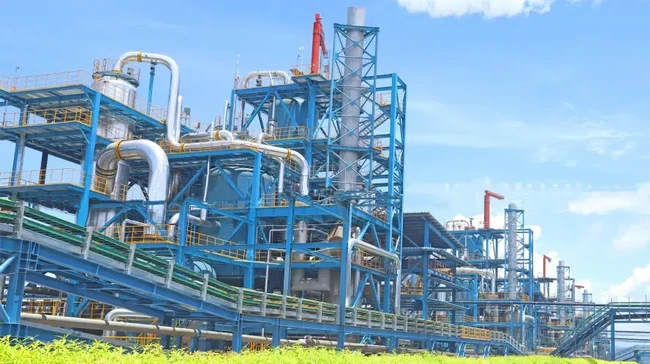
The government is beginning to be wary of potential disruptions in the sulphur supply chain that could impact the nickel downstreaming programme.
This was revealed in a report by the Chairman of the National Economic Council (DEN), Luhut Binsar Pandjaitan, to President Prabowo Subianto at the State Palace on Tuesday (21/4/2026).
In the meeting, Luhut conveyed several recent developments, including risks from prolonged global conflicts that could affect the energy sector and strategic commodities.
Through a post on his personal Instagram account @luhut.pandjaitan, he stated that over the next three months, Indonesia’s economic growth and activity would remain relatively stable.
Nevertheless, the government has prepared scenarios to anticipate various possibilities in facing a worsening global situation.
“Especially if this global conflict lasts longer than we anticipated. One thing we are monitoring is the surge in energy prices,” Luhut explained, quoted on Thursday (23/4/2026).
In addition, the government is also monitoring potential disruptions in the supply chain of other important commodities, particularly sulphur. Luhut assessed that this commodity plays a crucial role in the nickel downstreaming process and the development of electric vehicle batteries in Indonesia.
“Besides energy, we are also monitoring disruptions in the supply chain of other strategic commodities; such as sulphur, which is crucial for nickel downstreaming and electric vehicle batteries,” he said.
Nevertheless, Luhut assured that regardless of the current situation, various simulations conducted show that the economy and the state budget can still be controlled.
He also emphasised that the government would keep the state revenue and expenditure budget (APBN) deficit below 3% through strict spending efficiency. This effort would also be strengthened by additional state revenues from leading export commodity sectors such as coal and palm oil.
“Economic activity is maintained through accelerating deregulation as a form of non-fiscal stimulus for the business world. I conveyed to the President that structural obstacles in the field must be resolved so that permitting is simpler and the business world still has certainty to operate,” Luhut stressed.
Therefore, amid these global pressures, he sees an opportunity that the government needs to utilise. One of them is through accelerating digital transformation (GovTech), as well as promoting the development of the Indonesia Financial Center.
“Considering we need to prepare to take over the shift in global capital flows. With measured steps and solid collaboration, it is hoped that Indonesia will not only be able to maintain stability but also seize the opportunity to make a leap in progress,” Luhut explained.