
Beware of Riba: Islamic Guidelines Before Using Street Money Exchange Services
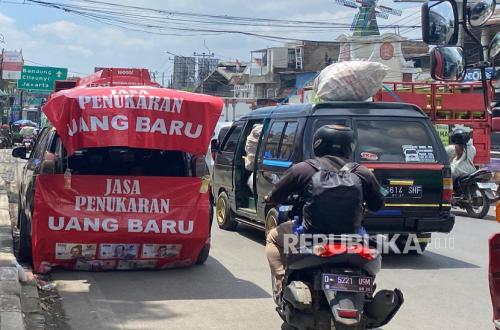
JAKARTA — Every Eid al-Fitr celebration, Indonesians customarily distribute money to family members, particularly children. Consequently, demand for small denomination notes increases significantly in the days leading up to Lebaran.
The rising interest in exchanging new notes has spawned a business opportunity: the buying and selling of new currency notes. Nowadays, it is not uncommon for people to offer such money exchange services at roadsides.
Islam teaches that buying and selling transactions are fundamentally permissible. In the Quran, Surah al-Baqarah verse 275, Allah states: “Allah has permitted trade and forbidden riba.”
This verse illustrates the fundamental distinction between commercial transactions and riba. One is permitted, whilst the other is prohibited or forbidden.
In the phenomenon of small denomination money exchange services at roadsides, there is essentially no buying and selling transaction occurring. Rather, what emerges is an element of riba.
If roadside money exchange services were viewed as buying and selling, they would not meet the requirements for valid transactions. This is because the goods supposedly being traded do not actually exist. What is ostensibly being sold is actually money itself, which should function as a medium of exchange rather than a commodity.