
Beware of Auto-Behaviour Syndrome During Exodus Travel: Eyes Open but Brain Asleep on a Motorcycle
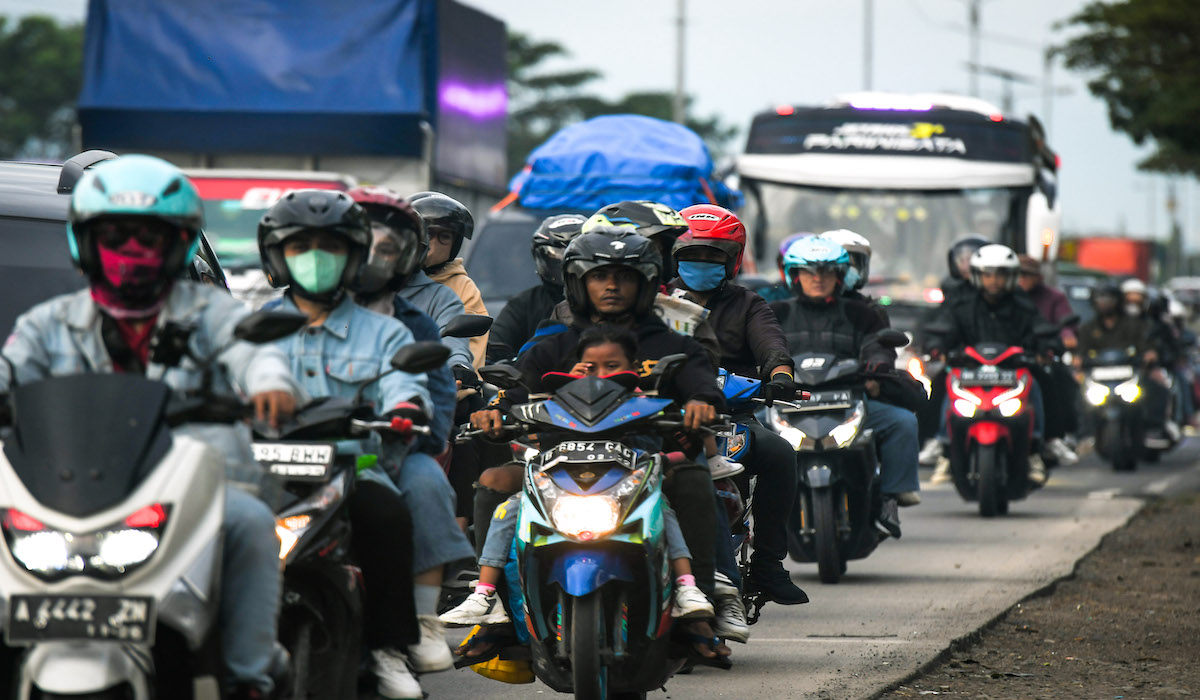
Lebaran exodus travel by motorcycle remains popular amongst Indonesians due to flexibility, time efficiency, and the ability to navigate extreme congestion. However, behind this convenience lies a silent threat often unrecognised by riders: Auto-Behaviour Syndrome (ABS).
Lilik Andi Baryono, senior trainer at Global Defensive Driving Consulting (GDDC), has highlighted a terrifying phenomenon affecting long-distance travellers. Many riders believe they remain alert because their eyes remain open, yet their brains have essentially “shut down” momentarily.
According to Lilik, there is a fundamental difference between ordinary drowsiness, microsleep, and Auto-Behaviour Syndrome. Whilst microsleep involves brief unconsciousness (several seconds) that can be interrupted or noticed upon awakening, ABS is far more dangerous.
“During ABS, you continue driving, your eyes remain open, your hands grip the handlebar, but your brain waves have actually entered the sleep phase. You move mechanically without full consciousness,” Lilik explained on Radio Dalam (10 March).
Riders often only become aware of the condition after striking road barriers, falling into ditches, or becoming involved in fatal accidents with other vehicles. This occurs because the body functions solely on muscle memory, whilst the ability to analyse road conditions has completely disappeared.
Lilik explained the concept of Circadian Rhythm—the human biological clock. Our bodies possess a natural schedule for when energy peaks and when it must decline. For normal individuals, energy “drop” phases occur from 12:00 to 15:00 in the afternoon and from 21:00 to 05:00 in the morning.
Ironically, many motorcycle travellers force themselves to depart at night to avoid the heat, or continue driving during midday to reach their hometowns on schedule. However, when the biological clock indicates a low-energy phase, concentration drops dramatically.
“Riding a motorcycle is an extremely demanding multitasking activity. Eyes, ears, hands, and feet work simultaneously. Even slight distraction from drowsiness carries the risk of death,” he added.
To avoid the threat of ABS and fatigue-related accidents, Lilik provided practical guidance for travellers:
Strict Rest Intervals: Do not wait for drowsiness to arrive. Stop every 1.5 to 2 hours. Perform light stretching for 15-20 minutes to restore oxygen flow to the brain.
Recognise Bodily Signals: If you feel restless, yawn frequently, or begin daydreaming (losing focus), this is your body’s urgent signal to pull over immediately.
Beware of Adrenaline: Riders often feel “fresh” due to adrenaline surges when overtaking other vehicles. However, adrenaline can mask genuine fatigue. Do not be deceived by thinking “just a bit further until arrival.”
Hydration and Nutrition: Ensure adequate water intake. Avoid eating too heavily during rest periods as digestion can trigger more severe drowsiness.
Motorcycles provide freedom on the road but lack the metal protection of cars. Our bodies are the primary protection.
“Remember, your family awaits you at home. Your aspirations for seeing your child succeed cannot fail simply because you forced yourself to ride when your brain needed rest,” Lilik concluded firmly.