
Beware: Jakarta's Air Pollution Exposure Could Shorten Life Expectancy
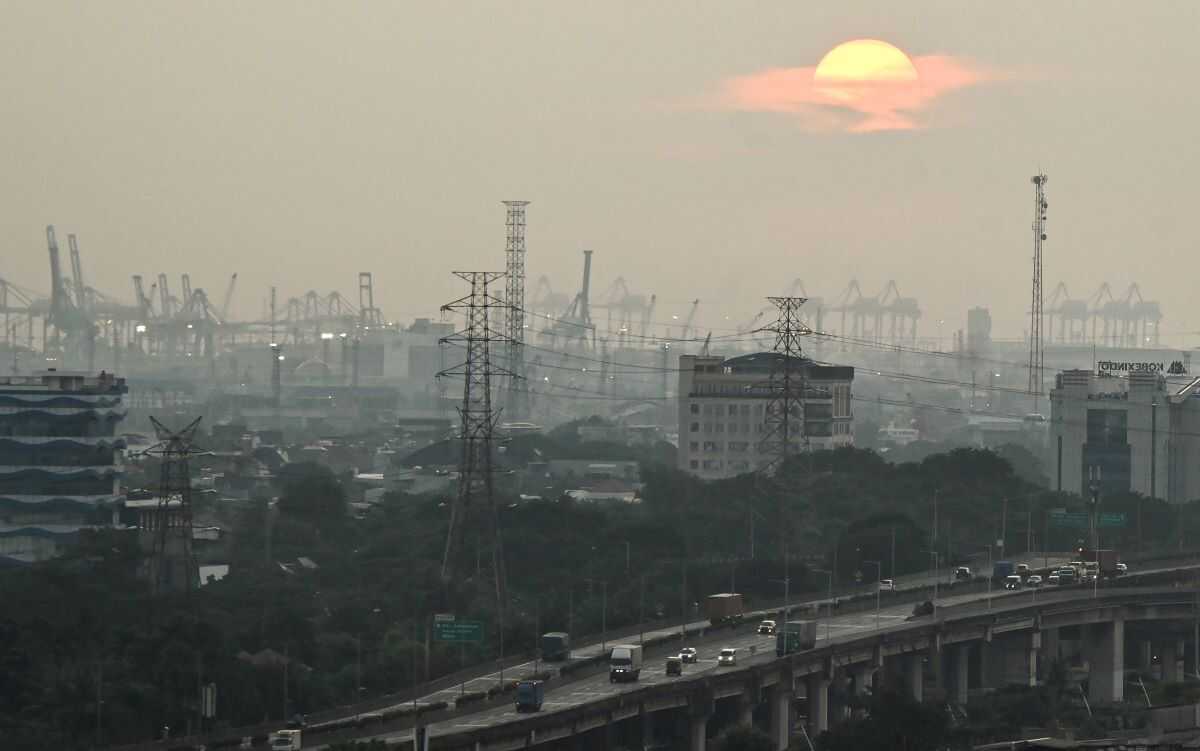
Exposure to air pollution, particularly PM2.5, is now a serious threat to public health in the capital. The high pollutant levels are said to have the potential to shorten life expectancy for Jakarta residents. ‘PM2.5 is very small particles that contain numerous toxic sub-particles. When inhaled, they enter the respiratory tract and reach the lungs,’ said Erni Pelita Fitratunnisa, Head of the Pollution Control and Environmental Damage Control Section of the Jakarta Environmental Agency (DLH). She spoke in Central Jakarta, on Wednesday, 5 March.
Correlation between Premature Death and Chronic Disease
Based on findings from the Global Expert Mortality Model, there is a strong link between exposure to air pollution and an increased risk of premature death. This shows that poor air quality does not only cause mild illnesses such as coughs and colds, but also impacts vital indicators such as life expectancy.
Erni added that research from the Faculty of Public Health, Universitas Indonesia (FKM UI) also reinforces a strong correlation between PM2.5 and health disorders, particularly Acute Respiratory Infections (ISPA). ‘PM2,5 is indeed a single particle containing many tiny and highly toxic sub-particles,’ she added.
Vulnerable groups, such as children under five and the elderly, are the most at risk. In the long term, continuous exposure can trigger chronic diseases and even death. ‘There has been much said that the impact extends to cancer risk. So if you ask about its influence on life expectancy, there is indeed a link,’ she asserted.
Public Awareness Challenges
At present, the DKI Provincial Government continues to monitor air quality through the Air Quality Monitoring Station (SPKU), with data accessible to the public via the JAKI app. However, Erni acknowledged that public awareness to limit outdoor activities during high pollution remains a major challenge. She described on-the-ground obstacles, such as schools resisting requests to reduce outdoor activities because of students’ sports assessments. ‘This is our task to intensify socialisation. When air quality is poor, outdoor activities should be reduced,’ she said.
Even the tangible impacts of pollution are felt by public officials. Erni recounted the experience of a deputy governor who experienced shortness of breath while exercising in the Sudirman-Thamrin area. ‘He felt suffocated. After checking at the station, PM2.5 was indeed high at that time. He did not dare to run there anymore because of exposure,’ she concluded.