
Beware! AI Could Cut 1 Million Jobs, These Are the Most Vulnerable Professions
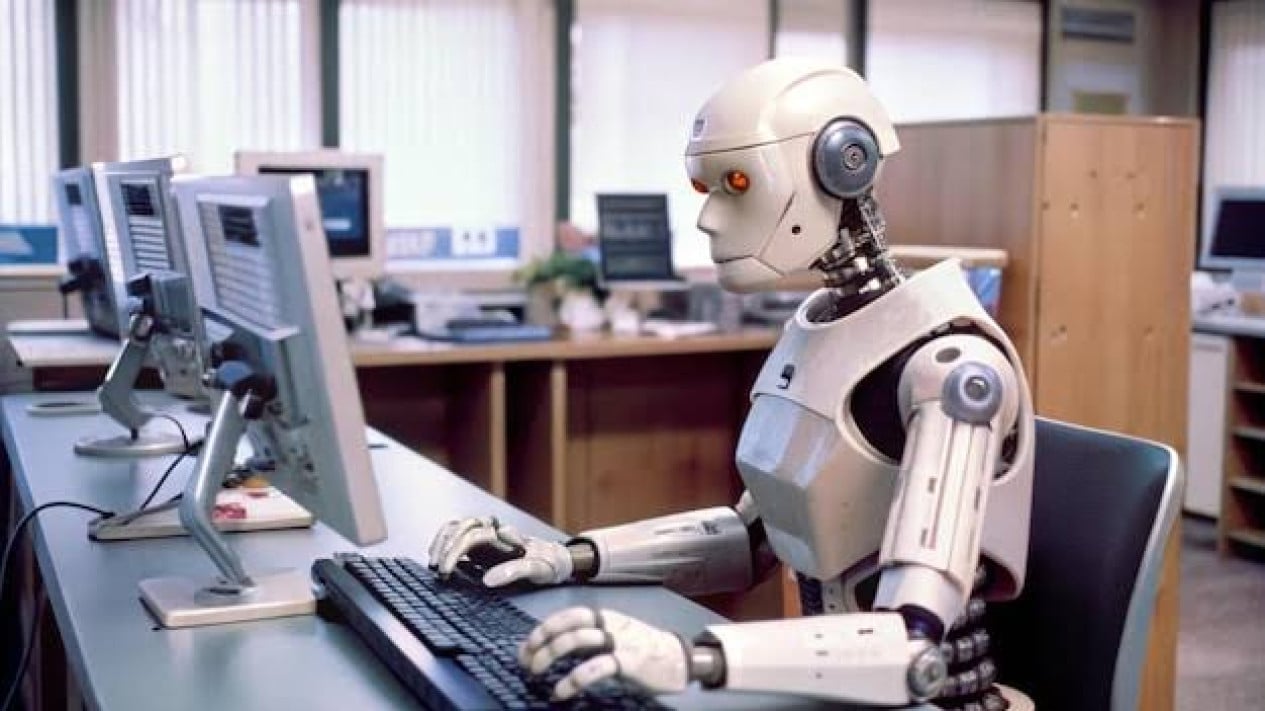
At least one million jobs in London are categorised as highly vulnerable due to advancements in artificial intelligence (AI), according to a new report from the Greater London Authority (GLA), the city’s government.
The 71-page report states that more than 300,000 jobs in administration face the highest exposure to automation, as their clerical tasks are most aligned with the capabilities of generative AI.
Additionally, around 748,000 other jobs in sectors such as information technology, data analysis, and secretarial work are also deemed at risk from AI, though the level varies depending on the type of tasks.
Overall, at least 46 per cent of workers in London, or about 2.4 million people, are in positions where generative AI could automate part of their duties.
“At least 46 per cent of London workers are in roles where GenAI can automate part of their tasks,” the report states, as quoted from the BBC on Wednesday, 29 April 2026.
Meanwhile, the other 54 per cent of workers are assessed to have lower exposure because their primary tasks are not as compatible with current AI capabilities. However, the report emphasises that this does not mean there is no impact at all.
Women are one of the most vulnerable groups because they are more represented in administrative and clerical sectors. Additionally, young workers and those with higher levels of education are also among the most affected groups.
Some professions deemed vulnerable to AI include brokers, web designers, telephone sales staff, and journalists. In contrast, jobs with the lowest risk include architects, barbers, chefs, chief executive officers (CEOs), driving instructors, florists, and funeral directors.
London Mayor Sir Sadiq Khan stated that high exposure to AI does not always mean jobs will be completely lost. “I want to emphasise that a high level of exposure to AI does not always mean job loss,” said Sadiq Khan in his speech in Madrid.
According to him, AI can also assist workers and increase productivity, rather than just replacing humans. “Our research shows a strong possibility that AI will augment capabilities and help London workers in these roles, rather than eliminating their jobs entirely,” he added.