
Between the Fires of War and Economic Resilience
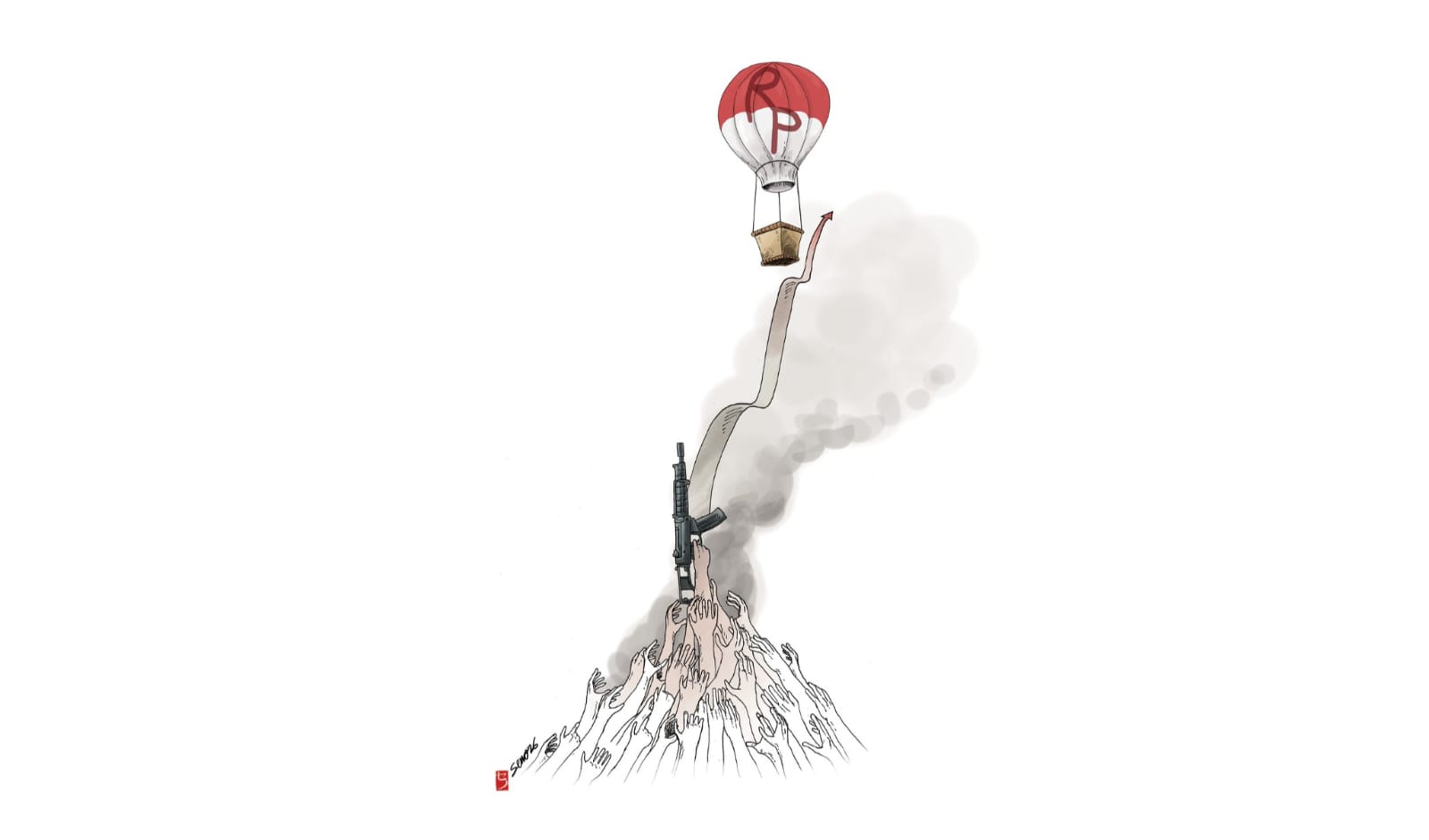
War is often described not merely as destruction, but as a mechanism that tests global balance. History demonstrates that modern warfare extends beyond the battlefield into energy markets, bond markets, and sovereign fiscal spaces. A conflict thousands of kilometres away can ripple through economies as inflation, currency weakness, and budgetary pressure. As the world watches the Middle East with growing concern, the critical questions for Indonesia are not simply about the conflict’s victor, but rather: how long will this conflict last, and how resilient is our economy to withstand it?
The conflict’s duration can be assessed through the configuration of American military force in the region. Currently, two US carrier strike groups—USS Abraham Lincoln and USS Gerald R Ford—are positioned near Iran. This concentration of two aircraft carriers in a single theatre of operations represents significant military deployment, typically signalling the early phase of conflict escalation. However, a third carrier, USS George HW Bush, remains in Virginia and has not yet moved towards the Middle East. Should this vessel be deployed, the journey to the Persian Gulf region typically requires 10 to 15 days of sailing before achieving full operational readiness.
This configuration provides important clues about the conflict’s timeframe. With two carriers already in the region, the United States possesses capacity for intense air operations in the short term. However, sustaining operations depends heavily on fleet rotation and logistics. In modern military operations, one carrier strike group can typically maintain intense operational tempo for approximately 3-4 days before requiring major replenishment. With two carriers, sortie rotation allows intense operations to be extended exponentially to roughly two to three weeks. Should USS Bush arrive in theatre, the logistical rotation cycle could extend the operational window to four to six weeks.
This suggests that, given USS Bush would require up to two weeks of sailing to reach the region, the duration of intense conflict would practically be in the range of one month before logistical pressures, operational costs, and political dynamics begin pushing towards de-escalation.
Beyond these military dynamics, another critical variable shapes global conflict: American political economy. In recent years, the 10-year government bond yield has emerged as a highly sensitive indicator for Trump administration policy. This yield determines the cost of financing American government debt. When yields rise too sharply, debt interest costs spike and fiscal pressures mount. Analysis shows that Donald Trump appears highly sensitive to this yield indicator. Rising yields represent not merely a financial market issue; they also become a domestic political problem because they affect borrowing costs, stock markets, and economic confidence.
Furthermore, the American electorate is highly sensitive to energy inflation. Petrol prices at the pump often serve as a stronger political indicator than many other economic metrics. When energy prices rise too sharply, political pressure to de-escalate global conflicts intensifies. By this logic, energy wars rarely last very long.
Yet even relatively brief conflicts can destabilise the global economy. The Strait of Hormuz—the narrow passage connecting the Persian Gulf to world energy markets—carries nearly one-fifth of global oil supply. When this corridor is disrupted, oil prices can spike rapidly towards three figures. And when oil moves to such levels, Indonesia’s state budget feels the impact.
Rising oil prices are almost universally read as a threat to the state budget. When energy prices increase, subsidies and energy compensations rise accordingly. In Indonesia’s fiscal sensitivity, every one dollar increase in global oil prices above US$70 per barrel (the 2026 budget’s ICP assumption) can add approximately Rp6.8 trillion in spending pressure. However, reading fiscal pressure solely from the subsidy side presents too narrow a picture.
Indonesia is also a major commodity exporter. When global conflicts drive energy prices upward, other commodity prices typically follow suit. Coal, nickel, palm oil, and various strategic minerals usually move in cycles aligned with global energy. Under such conditions, state revenues also increase through mining royalties, corporate taxes, and expanded export activity. In rough calculation, every one dollar increase in global commodity prices can add approximately Rp3 trillion to state revenues.
Thus, if additional spending reaches Rp6.8 trillion whilst additional revenues reach Rp3 trillion, the net burden on the deficit becomes approximately Rp3.8 trillion for every one dollar increase in oil prices. This net-off approach is important because it provides a more realistic picture of actual fiscal pressure. Even this fiscal cushion could become larger if the government successfully improves commodity export governance, particularly by reducing export under-invoicing practices that have long prevented optimal recording of export value.
In assessing global energy pressures, it must be remembered that this is not Indonesia’s first experience with such shocks. The nation has weathered multiple energy crises and demonstrated considerable economic resilience in navigating commodity-driven fiscal challenges. The key to managing this scenario lies in maintaining fiscal discipline, strengthening institutional capacity to monitor commodity flows, and preparing contingency measures should energy prices spike more severely than anticipated.