
Between Love and Leprosy
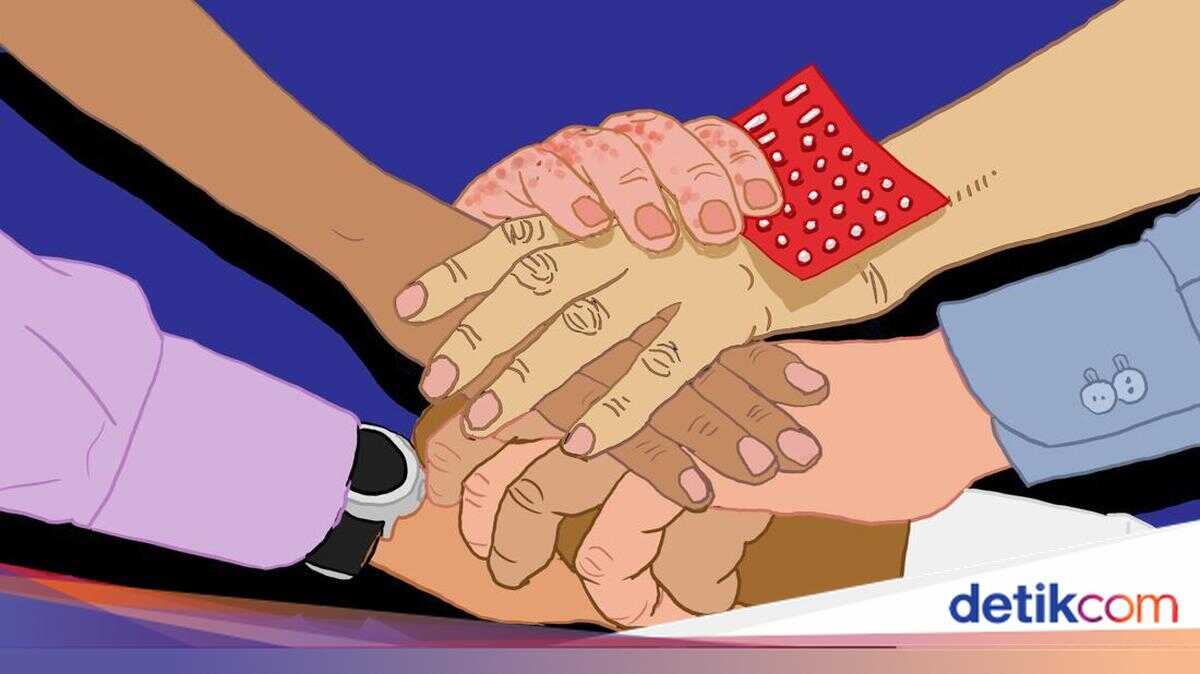
Rusdan Sidiqi, a 25-year-old man, experienced an unusual period in 2016. In the middle of the night, he was compelled to stay awake and perform rituals, whilst white patches resembling ringworm with numbness and swelling appeared on various parts of his body. However, he, his family, and the surrounding community did not understand that these were symptoms of leprosy (Hansen’s disease).
“They told me to drink mystical water, bathe with flowers at around 2:00 a.m.,” Rusdan told detikX. In his village in the Tangerang region, leprosy had never occurred in previous generations.
His relatives repeatedly pressured Rusdan to seek treatment from traditional healers or “wise men”. He consulted six different traditional practitioners, only to be told he was experiencing karmic consequences or a curse.
“Some said, ‘You’ve been hexed by a girl,’” he recounted. “Others blamed me: ‘You must have hurt someone.’ I felt I lived peacefully and never hurt anyone.”
Despite this, Rusdan did not strongly resent traditional rituals rooted in local wisdom. However, he hoped medical treatment would be prioritised.
“It was frustrating. If I had gone directly to a doctor, I wouldn’t have suffered so severely. Traditional healing is fine, but medicine must come first. Those treatments cannot kill the bacteria; they only involved drinking water, bathing with flowers, and recitations. That’s why I wrote a book about leprosy and mysticism,” he explained.
However, delayed diagnosis was not solely due to traditional beliefs. The healthcare facilities Rusdan visited faced challenges in detecting the disease, which the World Health Organisation (WHO) classifies as Hansen’s disease, part of neglected tropical diseases (NTDs). He initially visited a community health centre and local clinic, but was diagnosed with dermatitis, allergies, irritation, and even eczema.
Eventually, Rusdan experienced nasal congestion without flu symptoms. When he scratched his nose, it bled, revealing nerve swelling. He was referred to an ear, nose, and throat (ENT) specialist and diagnosed with concha hypertrophy, requiring surgery.
“Two weeks after surgery, the congestion returned. After that, I finally went to a dermatologist, who immediately diagnosed leprosy upon seeing me sit down,” Rusdan said.
The diagnostic process was lengthy. From the initial symptoms in 2016, it took seven years until 2023 for Rusdan to receive an accurate diagnosis.
“After starting leprosy medication, the nasal congestion never returned. By 2023, when I finally received treatment, the symptoms had spread extensively across my face. My fingers and eyelids were severely swollen and red,” he recalled.
Rusdan was prescribed Multi-Drug Therapy (MDT), comprising three medications. Rifampicin, one of them, turned his urine red. MDT also caused skin pigmentation darkening. The drug reactions caused him to collapse repeatedly and require hospitalisation.
“I was hospitalised 50 times. Sometimes twice in a month. The medication’s reaction made my body feel like dying, and hospitalisation was necessary due to collapse,” he stated.
Unfortunately, he once required a five-day hospital stay but could only complete it in instalments. The hospital’s policy required BPJS Health (national health insurance) patients to be discharged after three days. Rusdan was forced to leave, then return for further treatment days later.
“After three days, they sent me home limping, but the pain had subsided,” he complained.
Despite these challenges, Rusdan remained determined to recover to avoid transmitting the disease to his parents, siblings, and others.
“My goal was to recover so I wouldn’t infect my family or even my enemies. I didn’t want anyone to experience this disease. Even if it cost me my life, the important thing was to eliminate this disease completely,” he insisted.
The facial swelling resulting from advancing leprosy bacteria, combined with medication side effects, made Rusdan a victim of stigma. He felt isolated from his community and lost his employment.
“The changes to my skin and facial structure made me embarrassed to leave home. My face looked distorted, unlike my real self,” he said.
However, Rusdan faced these challenges with resilience. He was declared cured after two years of MDT treatment in March 2025. He now participates in the People Who Have Experienced Leprosy (Opmyk) community, providing education and creating spaces for leprosy patients to share their experiences. Among patients who sought his support, one had been abandoned by their family.
“Someone was abandoned by their family and forced to live in a hospital. But leprosy isn’t as contagious as people think. Compared to diseases like measles, flu, or COVID-19, leprosy is far less transmissible. It can spread, but not as sharply as other infectious diseases. When untreated, transmission is possible, but once treated, it’s safe. Even spousal contact is safe,” he explained.
Rusdan hopes the government will pay greater attention to leprosy patients by providing specialised services. Additionally, he calls for more frequent education programmes in medical schools and among the general public.
Negative labelling and discrimination worsen leprosy management in Indonesia. This was highlighted by Dr Christina Widaningrum, Technical Advisor of NLR Indonesia, a non-profit and non-governmental organisation focused on leprosy work.