
Between Longing and Risk: Why Homecoming by Motorcycle Remains the Choice
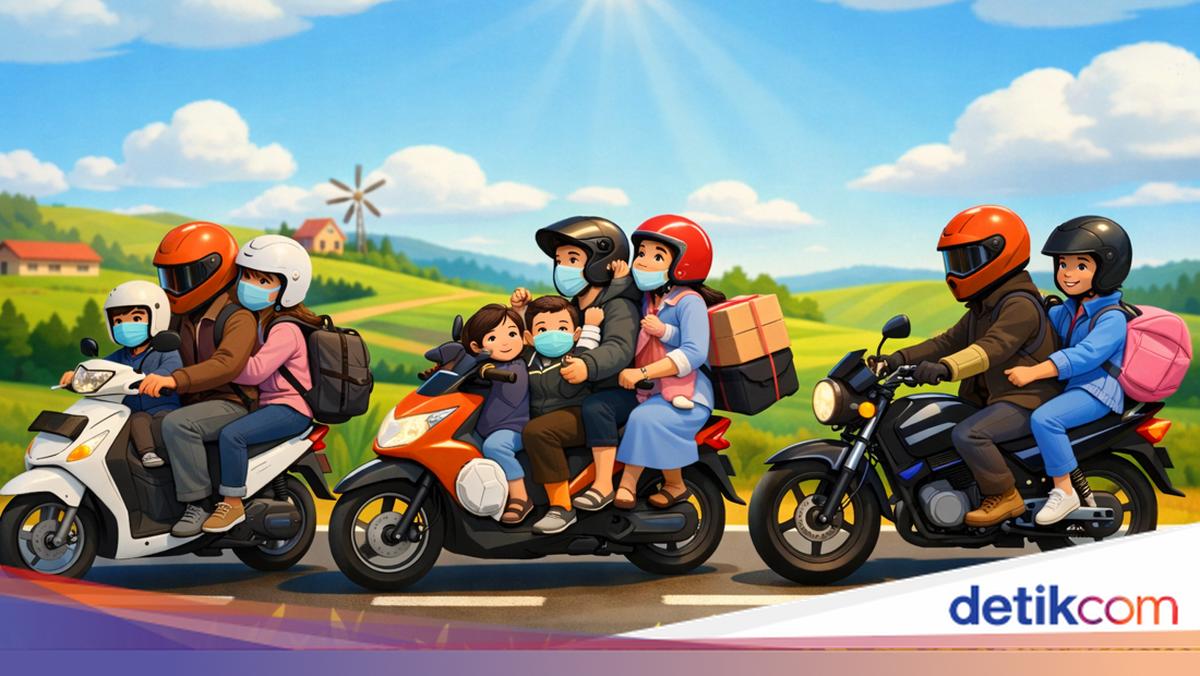
Every Lebaran, there is one sight that almost certainly appears on the roads: millions of motorcycles laden with what appears to be half a household. On the back seat sits a wife or young child, between the legs are crammed plastic bags, a large rucksack hangs behind, sometimes accompanied by gift boxes tied with raffia string.
They depart from the city before dawn prayers, hoping to arrive at their hometown before the evening becomes too dark. They return home, gather with their extended family, and eat together after a year of being occupied in the city.
The motorcycle becomes the most logical choice for many people. The cost is lower, the timing is flexible, and there is no need to compete for train or bus tickets that are often sold out weeks before Lebaran. Consequently, the numbers are always substantial.
A survey by the Ministry of Transportation estimates that approximately 24 million people will travel by motorcycle during the 2026 homecoming period. This figure has nearly doubled compared to the previous year, which saw approximately 12.7 million riders.
Notably concerning is that in recent years, approximately 75.9 per cent of accidents during the homecoming period involve motorcycles, far exceeding private vehicles, intercity buses, and logistics trucks, which likewise occupy the homecoming routes.
Many factors make this journey hazardous, including vehicle overloading, journeys covering hundreds of kilometres, bodies exhausted after hours on the road, and weather and road conditions that are not always favourable.
The tradition of returning to one’s hometown continues every year, and for motorcycle riders, the journey often becomes a gamble between longing and risk.